
If in the past, people in Pa Vay Su highland commune, Tuyen Quang province, wanted to have a health check-up, they had to travel dozens of kilometers of mountain roads to the district hospital (old), even down to the provincial center, now right at the commune health station, they can basically meet the requirements.
Ms. Leng Thi Ve (Pa Vay Su commune) has had diabetes for more than 30 years, in recent months she has regularly come to the commune health station to check her health, receive medicine and be advised on disease prevention measures.
The most convenient thing is not having to travel far, saving money and time while still ensuring health. People also get free health check-ups right at the commune health station, facilities are much better than before," Ms. Ve shared.
To do this, the quality of grassroots healthcare from equipment and people must be improved, ensuring effective medical examination, prevention and treatment for people from the beginning.
After a period of implementation, the new management model has created conditions for grassroots healthcare to be more closely linked to residential areas, close to the people, close to the people, and promptly grasp and solve problems arising in public health.
For example, at Lam Binh Commune Health Station, the total number of officials and employees of the station is 17 people, including 1 specialist doctor in diagnostic imaging. On average, each month, the station receives about 600 people coming for examination and treatment, mainly initial medical services.
Mr. Truong Van Quang - Chairman of Lam Binh Commune People's Committee said that when the health station is placed under the direct management of the local government, it has gradually been promoted more clearly. Tasks on preventive medicine, primary health care, disease prevention and control... are effectively implemented.
However, along with the initial results are many difficulties and challenges, requiring synchronous solutions, especially in human resources and infrastructure investment.
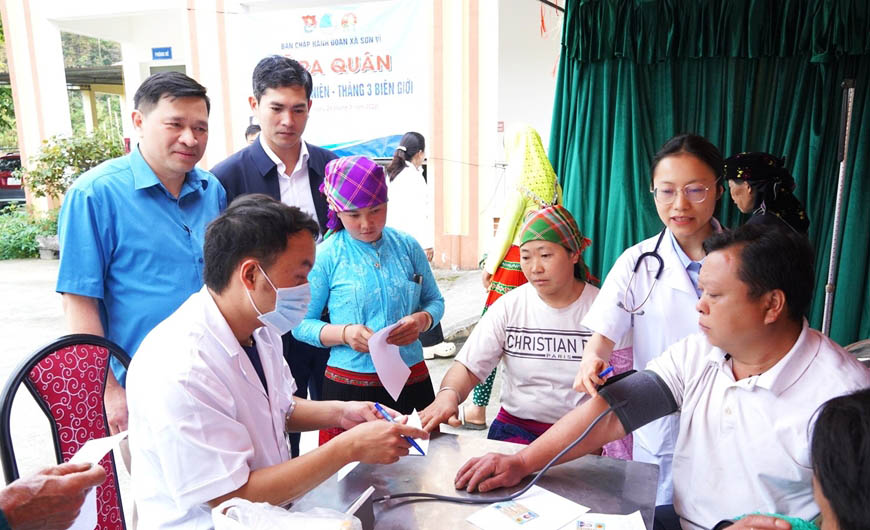
According to Dr. Nong Hong Loi - Director of Lam Binh Commune Health Station, as the functions and tasks of the health station are increasingly expanded, the professional pressure on commune-level health officials is increasing.
To ensure quality, the requirements for medical examination and treatment in the new context are very necessary to supplement doctors with specialized qualifications, along with synchronous investment in facilities and modern medical equipment, suitable to local practical conditions," said Dr. Nong Hong Loi.
According to the Department of Health of Tuyen Quang province, so far the province has completed the transfer of 101 commune and ward health stations and 26 regional general clinics, along with stations and the entire team of officials and employees to the People's Committees of communes and wards for direct management.
People have access to medical services right at the grassroots level, reducing travel costs, and contributing to reducing the burden on upper levels. This is an important premise to gradually improve the quality of grassroots healthcare, especially in difficult areas.
Talking to PV, Mr. Nguyen Thanh Hung - Director of Tuyen Quang Provincial Department of Health said that the biggest problem currently is still ensuring high-quality medical human resources for the commune level.
Through review, the whole province currently has 24 communes with only 1 doctor/medical station, 72 communes with 2 doctors, 22 communes with 3 doctors and 6 communes and wards reaching 4 doctors/medical station. This is a significant challenge in the context of increasing healthcare needs of the people," Mr. Hung informed.
According to Resolution No. 72 of the Politburo, by 2030, strive for 100% of commune-level health stations to be synchronously invested in facilities, equipment and human resources, and by 2027, each health station will have at least 4-5 doctors.


