In the context of non-communicable diseases such as cancer, cardiovascular disease, stroke, diabetes tending to increase and progress silently, the needs of workers and businesses are also beginning to change. They not only want to know if their current indicators are normal, but are also more concerned about the risk of pathology that may form in the body, before there are clear signs.
This is why modern medicine is shifting its focus from treatment to early detection. However, early detection is not just about getting an early check-up, but also depends on whether the screening method is capable of identifying very small changes in the body.
Different examination objectives require different screening categories
With business health check-ups, periodic categories such as blood tests, urine tests, electrocardiograms, lung X-rays, eye, ear, nose and throat check-ups,... are still necessary for overall health assessment. However, if the goal is to detect silent diseases early, the check-up list needs to be designed more deeply, combining multiple tests, diagnostic imaging to assess risks and monitor health data over time.
From the end of 2024 - early 2025, many large banks such as Vietcombank, Agribank, Techcombank,... or Vietnam Medical Union units, Vietnam Airlines,... have had a major shift in health screening benefits for employees, proactively selecting specialized units to apply AI technology for early detection.
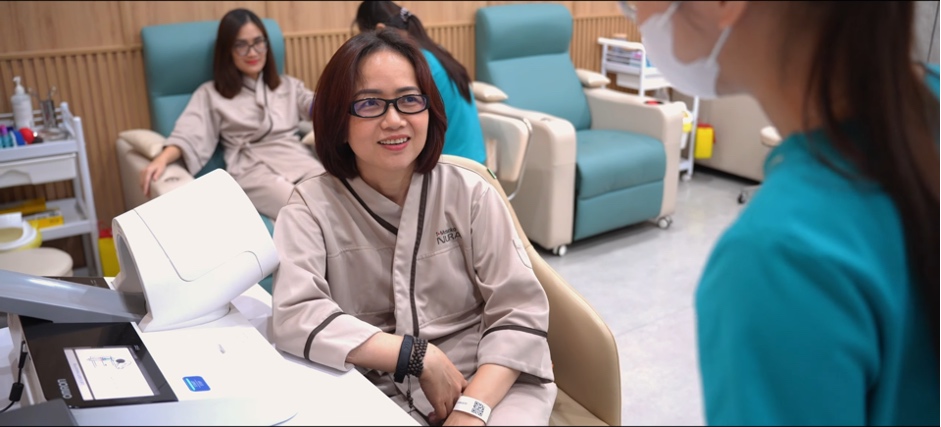
According to the American Cancer Society, each type of cancer, age group, and risk group requires different screening methods: fecal or endoscopic tests for colorectal cancer, mammography for breast cancer, and annual low-dose CT scans for high-risk lung cancer.
This shows that traditional and modern methods do not replace each other, but need to be combined according to the goals of examination, age, risk factors and the level of expertise that businesses want to give to employees.
Lesions are too small to be easily seen
MSc.BS Nguyen Tat Dat - Deputy Director of T-Matsuoka NURA IMAGING Center said: "Many early-stage lesions are only a few millimeters, do not cause symptoms and do not significantly change test indicators. This is why it is necessary to combine imaging diagnosis: ultrasound, X-ray, CT, MRI,... in modern screening".
The case of Ms. H. (56 years old, Hanoi) is a typical example. Although maintaining periodic health check-ups for many years and the most recent check-up about 4 months ago did not record any worrying abnormalities, when conducting in-depth screening using an AI application system, doctors discovered breast lesions of only 7mm. The subsequent biopsy results determined that this was breast cancer that had just progressed to stage 2.
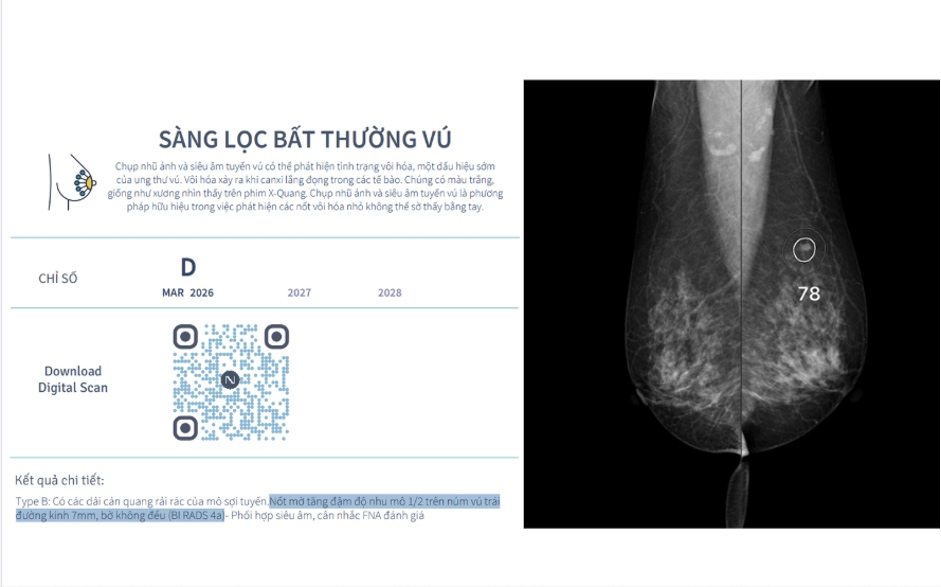
Ms. H was operated on in time to remove cancer cells, while preserving function and breasts.
Technology helps narrow "blind spots
In modern medicine, technology does not replace the role of doctors, but becomes an important support layer to enhance the ability to analyze, compare and detect abnormalities. Especially in diagnostic imaging, AI can support processing large amounts of data, identifying very small signs and suggesting suspicious areas for doctors to evaluate more carefully.
At NURA, the Fujifilm AI system is developed from about 400 million medical images accumulated over a decade and has been deployed in many countries. This technology is integrated into the screening process to support doctors in assessing images, detecting potential risks and monitoring health changes over time.
The trend of upgrading screening standards is not only in equipment or software, but also in the way the entire examination experience is redesigned: shortening waiting times, integrating data, personalizing risk-based lists and increasing long-term trackability.
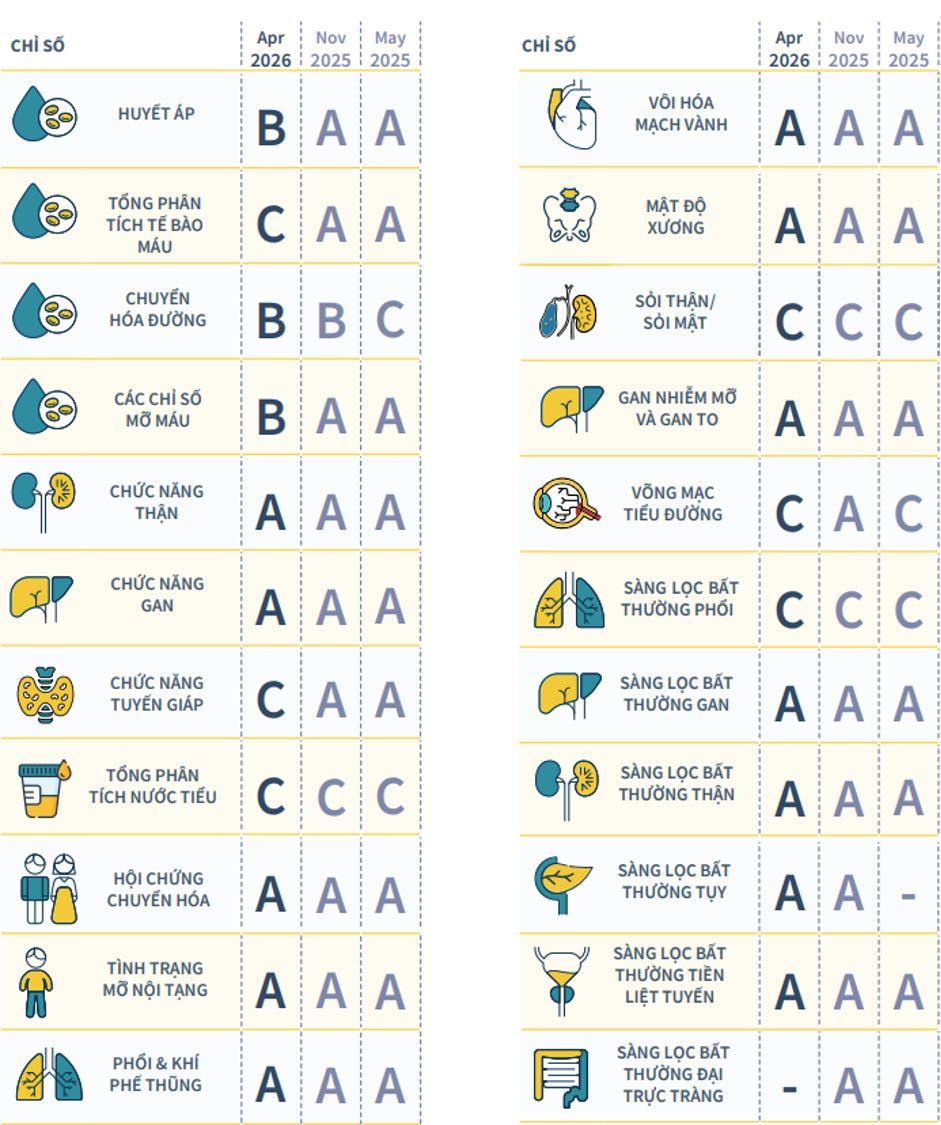
Need to shift from routine health check-ups to early detection screening
For many years, the familiar question has been: "Do you have regular health check-ups? " But as non-communicable diseases are becoming younger and progressing silently, the question needs to be broadened: "Is that examination program sufficiently specialized to support early risk detection?
Because not every health check-up brings the same value. This change shows that many businesses are considering health check-ups not only as periodic benefits, but as part of a strategy to care for and retain personnel.
When workers have access to more in-depth screening programs, businesses also have more opportunities to reduce long-term health risks, protect the labor force and build a culture of real concern for people.
NURA - Active Health Screening with AI Technology
1800 6467 88
www. nura. vn
🏥 NURA 1: 1st Floor, MIPEC Tower, 229 Tay Son, Kim Lien, Hanoi
🏥 NURA 2: 2nd Floor, Thao Dien Pearl, 12 Quoc Huong, An Khanh Ward, Ho Chi Minh City
🏥 NURA PREMIUM: VJM Building, 154 Nguyen Thai Hoc, Ba Dinh, Hanoi