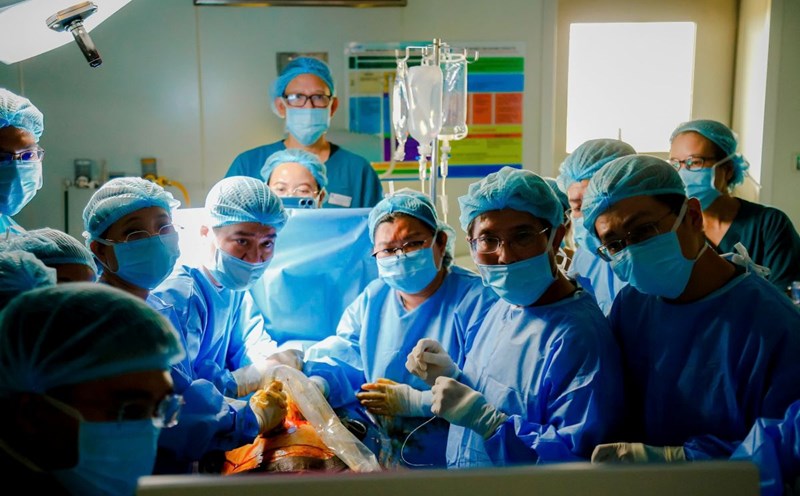
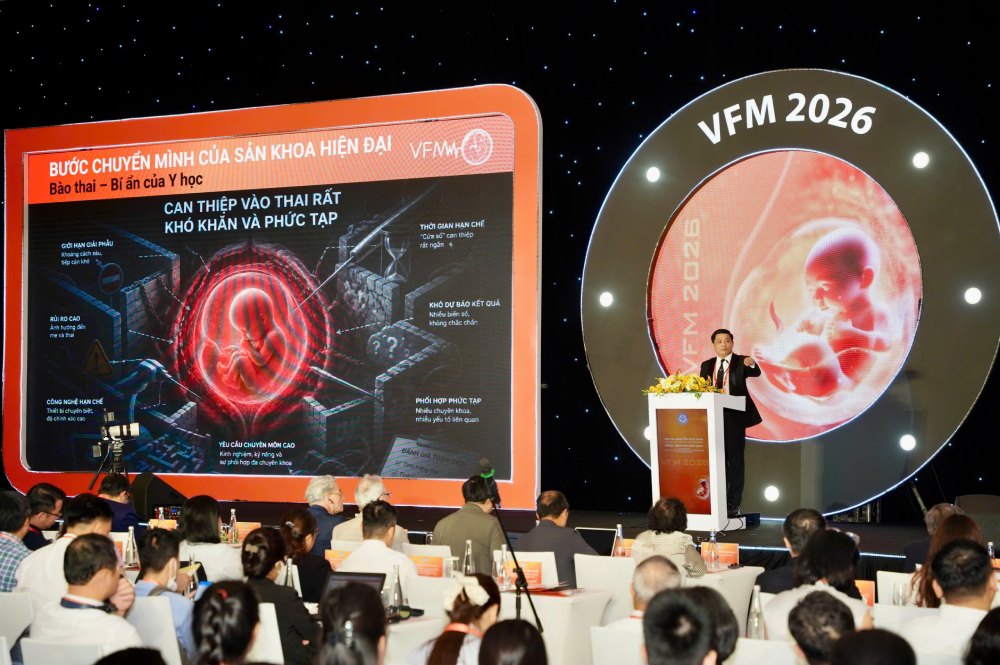
At the 4th Annual Conference of Embryonic Medicine held in Hanoi on May 29, TTND. GS. TS. BS Nguyen Duy Anh, Director of the Central Obstetrics and Gynecology Hospital, said that embryonic medicine is opening up many opportunities to save fetuses right from the womb thanks to its ability to diagnose early and intervene promptly.
According to Professor Nguyen Duy Anh, with the support from international cooperation and the continuous efforts of domestic medical staff, Vietnam has gradually mastered many modern fetal intervention techniques. This brings hope to many families with fetuses suffering from dangerous diseases or complex congenital defects.
This year's conference focused on discussing many in-depth contents such as pathological twins, congenital defects, diaphragmatic hernia, fetal arrhythmia, laser techniques and minimally invasive intervention methods. These are all advanced trends of fetal medicine in the world today. The event attracted more than 500 delegates including experts, scientists, clinicians and health managers from many countries such as Vietnam, France, the United States and Australia.
Every year, Vietnam has about 1.6 million children born, of which about 2% suffer from congenital abnormalities or serious diseases. According to Professor Nguyen Duy Anh, the decisive factor for success in treatment is early detection and timely referral. He emphasized that there are cases where there are only "a few golden hours" to intervene, if delayed, the chance of saving the fetus is almost gone.
From the first intervention cases that were still difficult and unfamiliar, to date, Vietnamese fetal medicine has made significant progress in gradually mastering many complex techniques. These achievements not only help save thousands of fetuses right from the womb but also contribute to improving the quality of life for children after birth, thereby having great significance for the quality of the population in the future.
Currently, the Central Obstetrics and Gynecology Hospital has routinely deployed many modern intervention techniques such as laser treatment of twin blood transfusion syndrome, selective treatment of slow-developing twins, placement of pleural, abdominal and bladder-amniotic cavity drainage shunts, or tracheal balloon placement to treat severe congenital diaphragm hernias. These achievements are also highly appreciated by international experts, showing the rapid development of Vietnamese fetal medicine in recent years.
However, this is still an area that requires a long-term process of accumulating experience and high professional qualifications. Therefore, hospitals continue to invest in facilities, promote in-depth training and strengthen international cooperation to standardize treatment procedures according to global standards.
Speaking at the conference, Minister of Health Dao Hong Lan said that Vietnam has achieved many important achievements in maternal and child health care. In which, the maternal mortality rate has decreased more than four times, while the infant mortality rate is currently only about 10 out of 1,000 live births.
According to the Minister, these results have an important contribution from the field of obstetrics and gynecology and fetal medicine. Many modern diagnostic and interventional techniques have been successfully deployed, especially the fetal interventional cardiac catheterization technique, helping to save many fetuses right from the uterus.
Minister Dao Hong Lan also emphasized that fetal medicine is gradually becoming one of the spearhead specialties of Vietnamese healthcare. In the coming time, the Ministry of Health will continue to improve the legal corridor, standardize expertise, expand prenatal screening programs and promote the development of specialized intervention techniques to improve the quality of health care for mothers and babies.