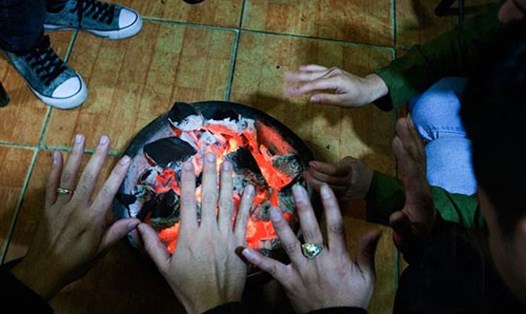
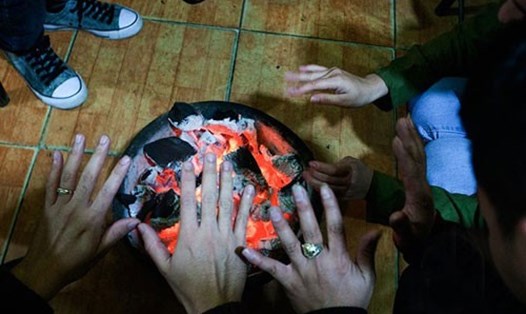
During this time, the Poison Control Center - Bach Mai Hospital continuously received many cases of emergency hospitalization due to CO (carbon monoxide) poisoning. A common worrying point is that most cases are related to burning charcoal and firewood in closed spaces for heating.
Successive critical hospitalizations
Typically, the case of a father and son in Hong Son commune (Hanoi). Due to the cold weather, the family burned charcoal and brought it into the room, closed the door to keep warm overnight. Around midnight, the younger brother came home from work and discovered the two victims in a state of cyanosis, pain all over the body, vomiting, and immediately taken to the emergency room. Doctors determined that this was CO poisoning.
In another case, an 88-year-old female patient in Ninh Binh was also transferred to the Poison Control Center in a state of deep coma. Family members said that at about 2 pm on January 22, the patient burned charcoal and was taken to a closed room for heating. At 4 pm on the same day, the family discovered the patient lying motionless, unresponsive to calls, with vomiting next to her. The patient had to have endotracheal intubation, mechanical ventilation and emergency transfer.
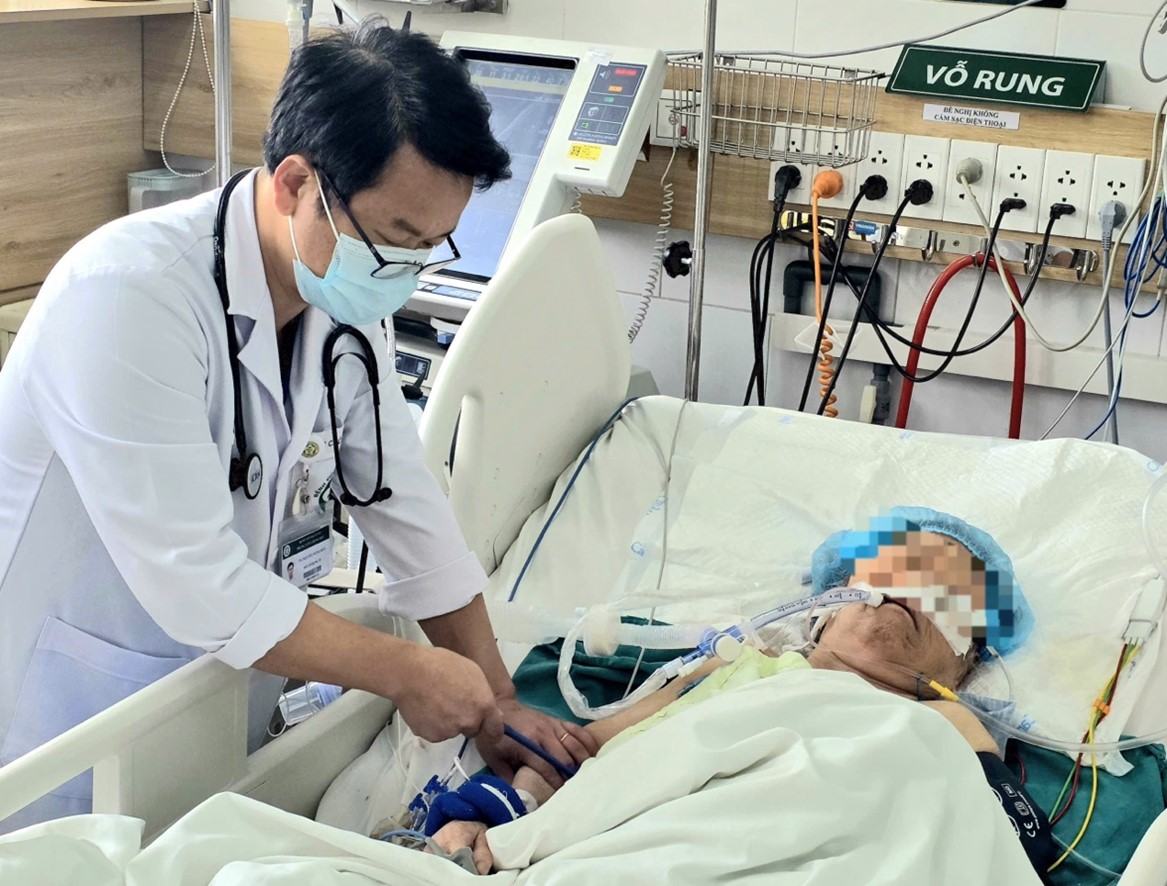
The most heartbreaking case occurred on January 26th, a 43-year-old female patient in Hanoi was hospitalized in a state of metabolic acidosis, heart and muscle damage. Family members said that the couple burned charcoal in a closed room to heat up. The husband placed a charcoal pot that was burning in a smoke hut to steam and sat inside. When discovered, the husband died right in the room, while the wife was sometimes awake, sometimes asleep, and was taken to the emergency room.
Serious consequences, risk of long-term sequelae
Dr. Nguyen Dang Duc - Poison Control Center, Bach Mai Hospital said that all three cases above have a common cause of burning charcoal in a closed room, causing CO gas to accumulate quickly.
Currently, patients are being actively resuscitated, closely monitoring injuries. Male patients have brain damage, female patients have heart damage, heart failure, myocardial digestion. The risk of leaving mental and neurological sequelae is very high," Dr. Duc informed.
According to Dr. Nguyen Trung Nguyen - Director of the Poison Control Center, when burning carbon-containing fuels such as firewood, charcoal, honeycomb coal, gasoline, gas... in a closed space, the incomplete burning process will generate CO - an extremely toxic gas but colorless, odorless, and tasteless.
Co gas is absorbed into the body very quickly, causing blood to lose the ability to transport oxygen, causing cell suffocation, inhibiting the heart muscle, and brain damage. Victims can faint for a short time without having time to call for help, especially dangerous while sleeping," Dr. Nguyen warned.
Notably, studies show that about 50% of patients with CO poisoning, even at a mild level, may experience long-term complications such as dementia, mental disorders, tremors in limbs, memory loss, Parkinson's disease, paralysis, motor disorders, urinary incontinence...
Some cases have symptoms of vomiting, abdominal pain, easily confused with food poisoning, leading to missing the "golden time" in treatment.
Dr. Nguyen Trung Nguyen emphasized: "Absolutely do not burn honeycomb coal, firewood, charcoal or any kind of fuel in a closed space. If forced to use, open the door to be ventilated, ensuring adequate air circulation.