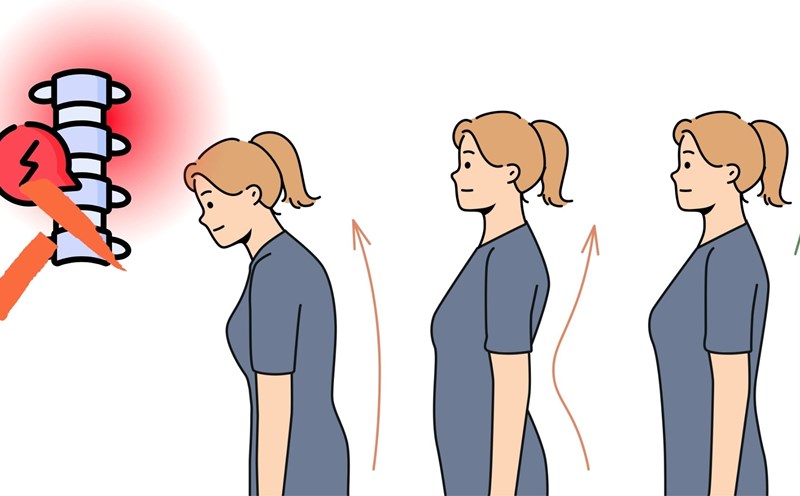
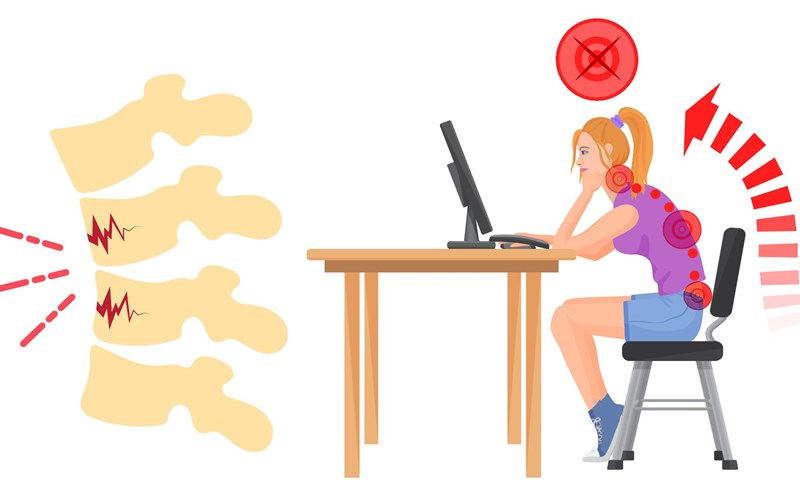
Many people come to the gym with the desire to have firm abs, better posture and a balanced figure. However, trying your hand at long-term crunches or planks while ignoring the support muscles around your spine can silently put pressure and damage your lower back.
According to Dr. Naveen MA, Head of the Department of& highly Consulted - Reduce Invasion of brain and spine Surgery, Gleneagles Hospital BGS, Bengaluru (India), the core of the body is not only the abdominal muscles but also includes the interlace muscles, pelvic floor muscles, diaphragm, deep spinal muscles and hip stabilization muscles. When you only focus on the front abdominal muscles but ignore the remaining muscles, the spine will be subjected to unbalanced load, increasing the risk of injury.
The impact of excessive crunches on the spine
Each time you bend forward during crunches, it puts pressure on the lumbar spine discs. Exercising too much or in the wrong position can lead to:
Lower back stiffness
Neurological irritation
Early disc output
Disney detoxification in serious cases
In addition, fatigue during exercise will make the form of exercise worse: The practitioner tends to curl the back, squeeze or hold breath to complete the movement, leading to small damage accumulated over time, manifested through back pain for a few days or a few weeks after exercise.
The role of the glutes and support muscles
Weak glutes are a common cause of lower back strain. When the glutes, hip muscles and stabilized muscles are not strong enough, the spine is subjected to unnecessary loads, causing posture problems and back pain. Signs of muscle imbalance include:
Tight hip flexor muscles
Lower back pain after exercise
Difficulty maintaining a neutral stance
Weak or ineffective glutes
Focus on real strength instead of six-pack image
According to Dr. Naveen MA, firm abdominal muscles do not mean strong core muscles. Core strength requires the smooth coordination of many muscle groups to protect the spine, improve posture and movement, not only for aesthetic purposes.
How to do center-force exercise safely and effectively
Focus on form, not number of repetitions: Do the movements slowly, controlfully and with the right technique, instead of exercising too many times without ignoring form.
Activate the entire upper body: Use exercises such as plank, side plank, bird hunting dog, hip bridge or dead insect to simultaneously impact many muscle groups, not just the front abdominal muscles.
Prioritize glutes and hip strength: Strong glutes and hips help reduce pressure on the lower back. Suggested exercises: bus, push your hips, shell, step up.
Avoid over-cline movements if you have back pain: When your back shows signs of pain, you should temporarily avoid strength training, instead do exercises to maintain balance and stabilize the core.
Combine breathing and correct posture: Pull your abdomen gently in, breathe naturally and hold a neutral position to reduce pressure on the spine.
Don't forget to recover: Get enough rest, stretch and maintain a comfortable position in daily activities to help the body recover and maintain long-term strength.
Studies in the Journal of Orthopedic Physiotherapy and Sports also demonstrate that focusing on core stability is more effective than severe crunches in reducing back pain and improving functional strength.