
Coffee contains caffeine, polyphenols and many other biological compounds. Some studies record that drinking coffee at an appropriate level is associated with some health benefits, but the impact may vary depending on the amount used, how brewed, health status and caffeine tolerance of each person.
Coffee contains many biological compounds that can bring benefits to the digestive system and cardiovascular health. Choosing the right time to drink will help the body absorb better.
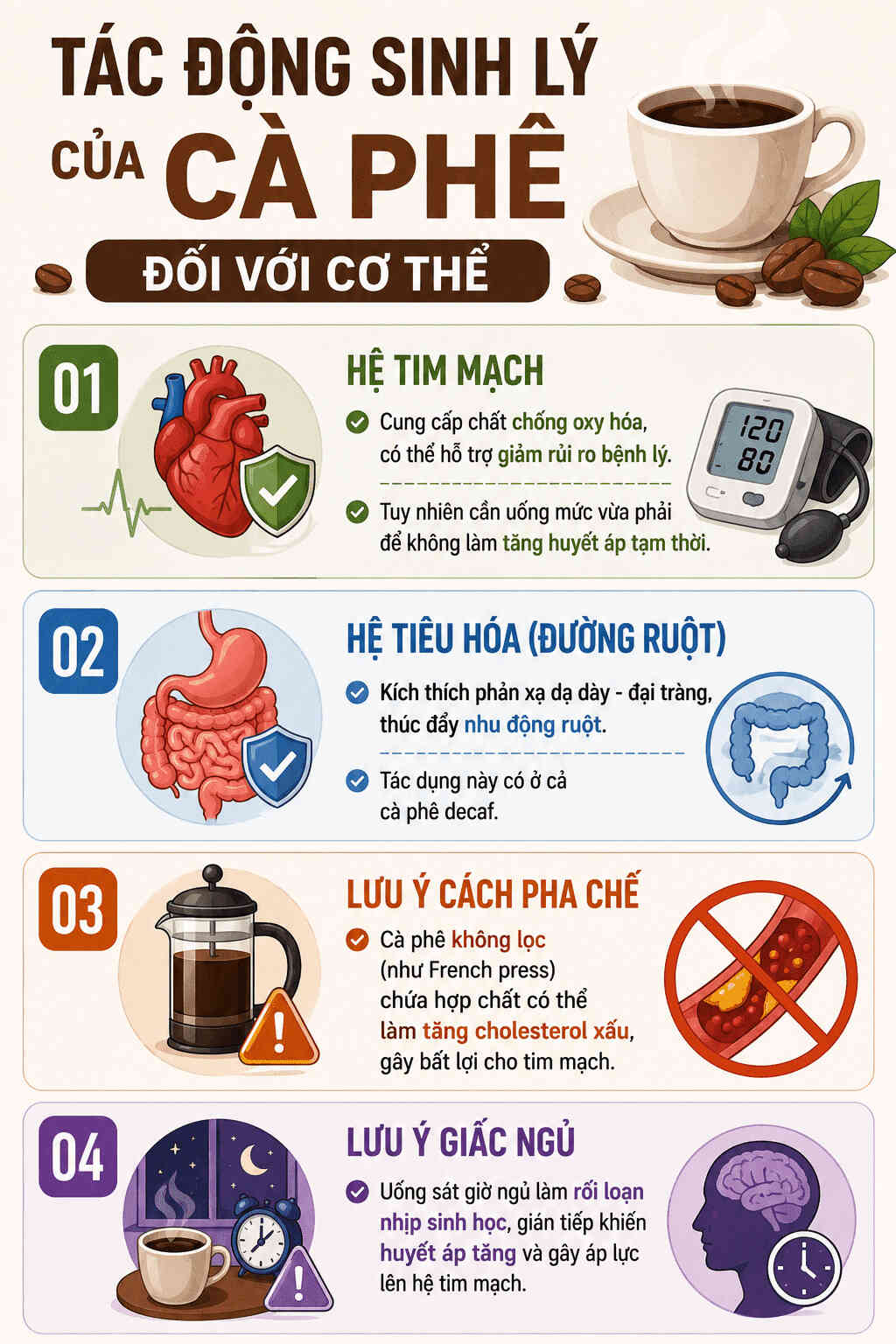
How does coffee affect the gut and cardiovascular system?
Some studies show that drinking coffee in appropriate amounts is associated with a lower risk of some cardiovascular diseases. However, this association does not mean that coffee directly helps prevent heart disease.
Caffeine can temporarily increase blood pressure in some people, the level of impact depends on the amount used and sensitivity to caffeine. Therefore, people with high blood pressure, rapid heartbeat or palpitations after drinking coffee should monitor their body's reactions and talk to their doctor if necessary.
For the digestive system, both coffee with caffeine and decaffeinated coffee can stimulate colon activity in some people.
How to make it also needs to be noted. Some types of coffee that are not paper-filtered, such as French press coffee or boiled coffee, have a higher content of cafestol; frequent use in large quantities can contribute to increasing LDL cholesterol.
Ideal time of day
Drinking coffee in the morning, especially after meals, can help optimize digestion and limit bloating. People who maintain the habit of drinking this drink before lunch are recorded to have a significantly lower risk of cardiovascular disease than drinking sporadically throughout the day.
| Coffee drinking time | Impact on health |
|---|---|
| It can cause irritation, bloating or discomfort to the stomach. | |
| Caffeine can cause difficulty sleeping or reduce sleep duration and quality in sensitive people. You should consider limiting drinking near bedtime. |
Safety notes when using
The effects of caffeine vary from person to person. Drinking coffee at the end of the day can disrupt sleep, especially in people sensitive to caffeine. Some studies show that caffeine used within about 6 hours before bedtime is still likely to affect sleep.
For the majority of healthy adults, a total caffeine intake of about 400 mg/day is often considered a level that does not cause adverse effects in the majority of people. However, the appropriate level may be lower in pregnant women, people sensitive to caffeine, or people with certain medical conditions and currently taking medication.
Coffee drinkers should also limit the amount of sugar, fatty cream and supplements if they want to control the total energy of their diet. People with high blood pressure, arrhythmia, frequent chest palpitations, insomnia or digestive discomfort after drinking coffee should adjust the amount and time of use, and consult a doctor when needed.
The information in the article is for reference only, not to replace medical diagnosis or treatment.


