
Old age is no longer lonely in nursing homes
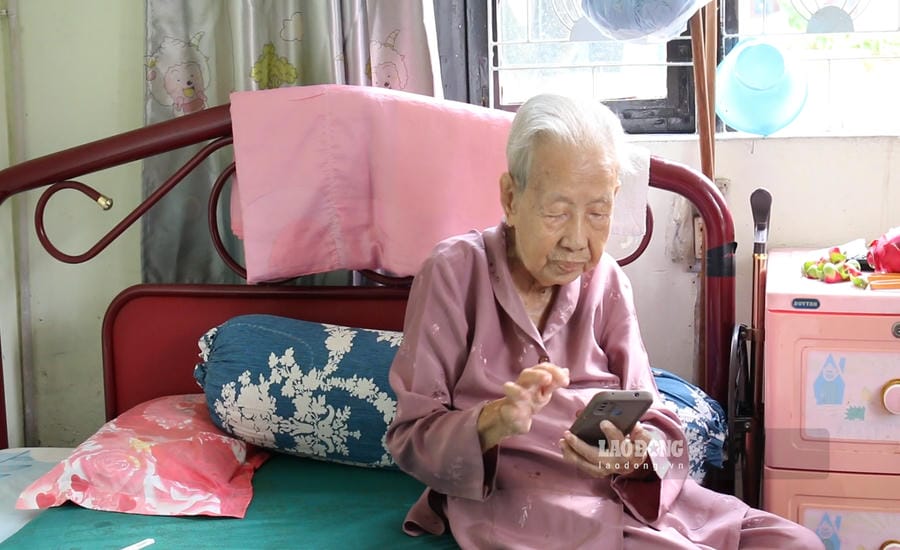
Ms. Tran Thi Minh (90 years old, Ho Chi Minh City) has lived for 8 years at a nursing home. Recalling this decision, she said: "Tears flow down. If we raise our children to adulthood, now create conditions for our children to raise grandchildren.
Formerly an official, former Chairwoman of the Women's Union of District 10, Ms. Minh said that when she is old and her health declines, living with her family sometimes becomes a burden for her children. "I came here to create conditions for my children, so that they can wholeheartedly take care of their families," she recounted.
Initially, one child objected because he was afraid of being considered unfilial by colleagues. After a period of persuasion, the children gradually understood and agreed.
Living here for eight years, Ms. Minh realized that she had a more convenient life. Every morning, her blood pressure is measured, she has friends of the same age, caregivers and support when needed. Meals are prepared regularly, suitable for her needs. Once when she went to the hospital, a friend pushed a cart with her until her child arrived. "Someone here helped me like that, I am very grateful," she shared.
Ms. Pham Thi Ngoc Lan (77 years old, Ho Chi Minh City) also found relief when living at the Thi Nghe Nursing Center in Ho Chi Minh City. Without a husband and children, she used to live alone and was often sad. "Being alone is also sad. Coming here, I feel happier than at home," Ms. Lan confided.
At the center, Ms. Lan maintains exercising, exercising and walking every day. She has stomach disease, so pay attention to her diet. Meals are prepared fully and on time, helping her feel healthier, and the pain is also gradually reduced.
For Ms. Lan, the most precious thing is no longer having to live alone. Having friends to talk to, having caregivers and daily activities help her old age become lighter.
Population aging, Ho Chi Minh City's nursing model still has many gaps
According to nurse Nguyen Ngoc Ngung, Thi Nghe Nursing Center in Ho Chi Minh City, most elderly people here suffer from chronic diseases, many cases have 2-3 diseases at the same time. Therefore, care requires close monitoring of both physical and mental health and changes in the daily life of each elderly person.
Most elderly people have many chronic diseases, one elderly person can have 2-3 diseases at the same time. Therefore, we must closely monitor their health status, both physically and mentally, and personality, to understand and have appropriate care," nurse Ngung said.
Common diseases include high blood pressure, cardiovascular disease, diabetes, and musculoskeletal diseases. Among them, high blood pressure, cardiovascular disease, and joint pain account for a high proportion.
For the elderly who still have the ability to take care of themselves, medical staff monitor their health, support treatment, guide movement and maintain appropriate living. The Center coordinates with Nguyen Trai Hospital to conduct periodic check-ups and dispense medicine according to health insurance. Medical staff receive, distribute and dispense medicine to each elderly.
Nutrition and exercise regimes are also emphasized. Nurse Ngung said that the biggest difficulty is taking care of elderly people with cognitive decline, unstable spirit or lack of cooperation. Staff must patiently explain, encourage and spend more time creating coordination.
Regarding human resources, the center is currently lacking doctors. According to Mr. Huynh Khac Hieu, Director of Thi Nghe Nursing Center, the center currently cares for 129 people, including 41 people with meritorious services, 5 artists and 83 people using paid services. In recent years, the center has expanded services for the elderly who need resorts combined with health care.
Mr. Hieu shared that this need is increasing as the population is aging. Elderly people not only need accommodation but also care about health care, examination and treatment right at the facility.
However, the source of public nursing care in Ho Chi Minh City is still limited. The Thi Nghe Nursing Center in Ho Chi Minh City is currently a public facility performing the task of caring for the elderly. The expansion of services is implemented after the number of people with meritorious services decreased.
Another difficulty is human resources. The Center is assigned 53 staff positions, but the recruitment of doctors and direct care staff still faces many obstacles. According to Mr. Hieu, the specific nature of the work, facilities and the lack of many specialized training programs on elderly care make it not easy to recruit suitable human resources.
In the context of population aging, Mr. Hieu believes that the demand for nursing models combining care, resort and healthcare will continue to increase, requiring more facilities suitable for the increasingly diverse needs of the elderly.


