
Applying prevention and early cancer screening
Within the framework of the program to contribute opinions on the Project to organize health check-ups and screening for city residents in the period 2026-2030, Assoc. Prof. Dr. Hoang Thi Diem Tuyen - Director of Hung Vuong Hospital, emphasized the necessity of implementing the program to eliminate cervical cancer with a comprehensive approach, in which special attention is paid to the cost and long-term effectiveness problem.
According to Assoc. Prof. Dr. Hoang Thi Diem Tuyet, cervical cancer is one of the most common cancers in women, most patients come for examination at a late stage. This causes treatment costs to increase, possibly up to 500 million VND to 1 billion VND per case of late-stage cancer.
Meanwhile, the cost of prevention and screening is much lower. According to calculations, the cost of HPV vaccination ranges from 3 to 9 million VND per person. If precancerous lesions are detected, the treatment cost is only about 5 million VND, while early-stage cancer treatment is about 50 million VND. "Clearly, investing in prevention and early detection will save a lot of budget compared to treatment in the late stage," Assoc. Prof. Dr. Hoang Thi Diem Tuyet emphasized.
The screening program also requires significant resources but is still much lower than the treatment cost. The city currently has about 5 million women aged 30 to 65. If periodic screening is carried out, the cost each time is about 380,000 VND. The total cost for the entire life cycle of screening is large but is considered an effective investment, helping to significantly reduce the number of cancer cases and treatment costs later.
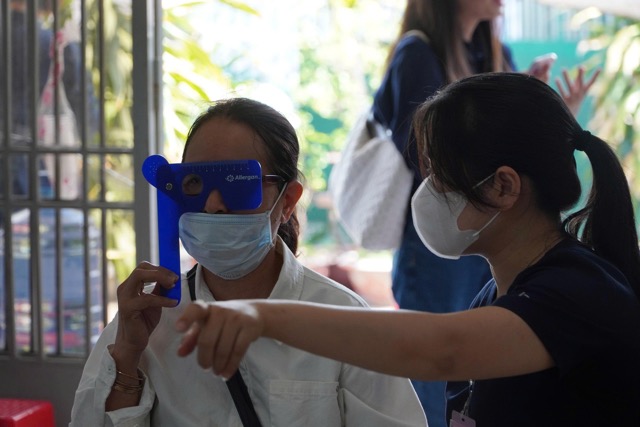
The project is not aimed at organizing mass examinations or chasing after quantity.
Ho Chi Minh City is a special urban area with a large population scale, high population density, diverse population structure and strong fluctuations. Speaking at the Conference, Assoc. Prof. Dr. Nguyen Anh Dung - Deputy Director of the Ho Chi Minh City Department of Health said that the city is currently facing a "double burden" including infectious diseases and non-communicable diseases, especially in the elderly group. Increased life expectancy, urban lifestyle and environmental factors make chronic diseases such as high blood pressure, diabetes, and cardiovascular disease increasingly common.
According to Assoc. Prof. Dr. Nguyen Anh Dung, in this context, the health system cannot only focus on treatment when people have contracted the disease, but needs to shift to a health management model according to the life cycle, in which early risk detection, disease screening and long-term management play a key role.
The project does not aim to organize mass examinations or chase after quantity, but to build a standard program on expertise, with clear scientific evidence, bringing real benefits to the community and capable of being implemented on a city-wide scale," Assoc. Prof. Dr. Dr. Anh Dung emphasized.
An important point of the project is to build a digital data platform and electronic health records for each citizen. “Each citizen will have a unique health identification code, helping to monitor continuously.
Through the comments of the health sector, Mr. Nguyen Phuoc Loc - Member of the Party Central Committee, Deputy Secretary of the City Party Committee, Chairman of the Vietnam Fatherland Front Committee of Ho Chi Minh City said that the city identifies health and education as two key areas. By 2030, Ho Chi Minh City aims to develop to the regional level; by 2045, become a livable city, with three important criteria: economy, health and education.
Mr. Nguyen Phuoc Loc emphasized that it is necessary to mobilize the entire political system to participate, deploy universal health check-ups at least once a year, and implement them strongly immediately after the conference, without waiting for the project to be officially approved. At the same time, strengthen communication to create spread, mobilize society to participate in caring for, protecting and improving people's health.


