
Chinese government scientists warn that El Nino this year could increase global demand for fossil fuels, while exacerbating the upward momentum of energy prices due to the Iranian crisis.
Mr. Wang Yaqi - senior engineer at the National Climate Center of China - said: "El Nino can have a heavy impact on areas dependent on hydropower, thereby forcing them to burn more fossil fuels to generate electricity. This will increase carbon emissions and energy import costs, creating a harmful loop, both exacerbating climate change and putting pressure on the economy.
Last weekend, the China Meteorological Administration warned that El Nino conditions from moderate to strong are forecast to appear globally from May and continue to develop throughout this year.
If El Nino reduces electricity production in hydropower-dependent regions such as South Asia, Southeast Asia and some parts of Africa, these regions will be forced to use more oil and gas to generate electricity. This could cause demand to soar and push energy prices even higher.
An El Nino wave is confirmed when the ocean surface temperature rises by at least 0.5 degrees Celsius for 5 consecutive months or longer. Higher temperatures also increase extreme weather phenomena, as warmer air can retain more moisture by about 7% for every 1 degree Celsius increase. This causes evaporation speed to increase rapidly, making drought more severe and prolonged. At the same time, when this amount of moisture condenses into rain, it can cause violent storms and floods.
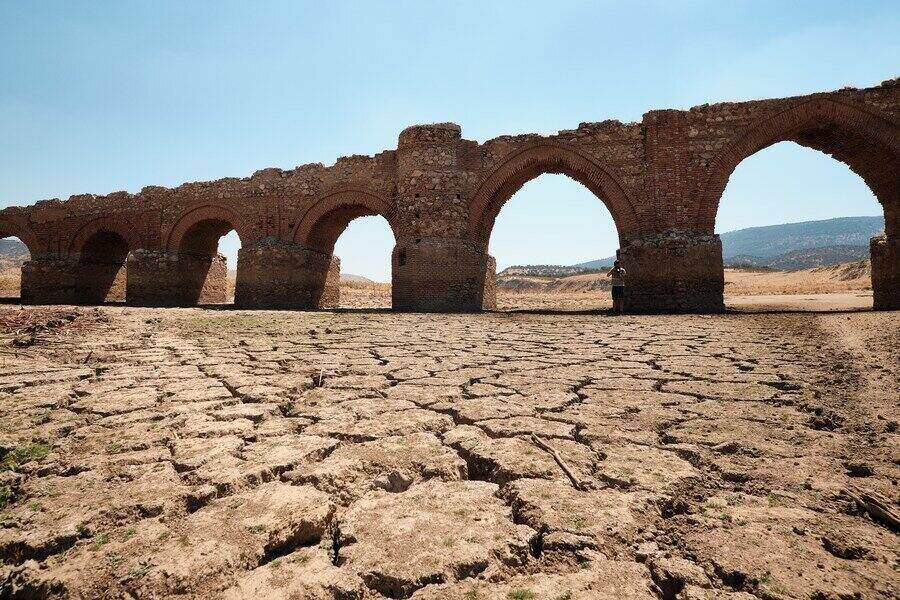
Strong El Nino waves are often accompanied by high temperatures, droughts and extreme rains, creating overall impacts affecting many sectors such as energy and public health," Mr. Wang said.
He further analyzed: "A very strong El Nino could cause serious flooding, causing hydropower plants to reduce capacity or stop operating, while damaging power lines and substations due to landslides and rising water levels. Conversely, in drought conditions, electricity output will decrease sharply due to water shortages.
He emphasized that the risk from El Nino does not only come from the phenomenon itself but is the result of the interaction between many different factors. In that complex system, El Nino often plays a role in amplifying or triggering risks.
The most recent strong El Nino occurred in 2015, and in 2026 the global average temperature record was broken. Another El Nino appeared 3 years ago, and 2024 continues to set new records for the global average surface temperature.
However, the China National Climate Center also called for caution in the face of speculations circulating on social media about the impact of El Nino.
Ms. Chen Lijuan - Head of the forecasting department of the center - said that caution is needed with statements that this will be the strongest El Nino in 140 years or may cause a global heat emergency.
Due to the delayed impact of El Nino, it is too early to say that the Earth will reach a new record temperature this year, but it is clear that related risks are increasing significantly," she said.


