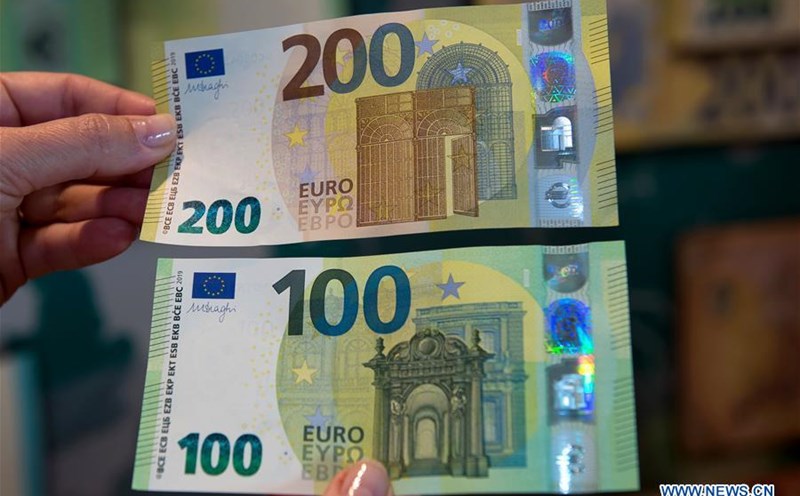
The Financial Times reported that Europe's largest powers are backing efforts to seize more than €200 billion in frozen Russian assets as they plan a ceasefire in Ukraine.
France and Germany, which previously opposed the seizure of all Russian assets in the EU, are discussing with the UK and other countries how to use the huge sum.
According to sources familiar with the matter, French authorities have proposed that if Russia violates the future ceasefire agreement, European countries will seize the assets to ensure Ukraine's post-conflict security.
The seizure plan is seen as a shocking move by European countries considering it a lever to pressure Russia to comply with any peace agreement, a financial security source for Ukraine after the conflict, and a major turning point when the EU can break up previous legal barriers.
The talks come as Europe is stepping up diplomatic efforts, led by France and the UK, to propose a peace plan for Ukraine.
The negotiations were also fueled by US President Donald Trump's decision to hold a bilateral dialogue with Moscow to end the Russia-Ukraine conflict.
The G7 allies have frozen about 300 billion euros in assets of the Russian Central Bank in 2022 after the country launched a military campaign in Ukraine. The majority of the money - about 190 billion euros - is in Belgium's Euroclear depository, the rest is held by France, the UK, Japan, Switzerland and the US.
Currently, profits from these assets - mainly cash and government bonds - are being used to support Ukraine, but the capital has not been touched.
Countries including Ukraine, Poland and the Baltic countries have long promoted the seizure of all capital, but the EU's top countries such as Germany, France and Belgium have previously opposed it because they are concerned that the seizure of state assets will set a precedent.
The European Central Bank is also concerned that the euro's position in the foreign exchange reserve market will be threatened.
In talks with US President Donald Trump last week, French President Emmanuel Macron admitted that the immediate seizure may not be in accordance with international law, but it could be a dead-end card in negotiations to end the conflict.
The future German Chancellor Friedrich Merz said he would consider supporting a proposal related to the seizure of frozen Russian assets. Mr. Merz is scheduled to discuss with interim Prime Minister Olaf Scholz on March 5 to agree on a stance before the summit of EU leaders on March 6. A Scholz spokesman declined to comment.
British Prime Minister Sir Keir Starmer said on March 3 that London is considering how to use the frozen assets. Mr. Starmer has signed a deal with Ukrainian President Volodymyr Zelensky, under which the UK will lend Ukraine £2.26 billion, which is guaranteed by the profits earned from frozen Russian assets.
Concerns about the US suspending military aid to Ukraine have prompted many European countries to consider seizing Russian assets as a tool to pressure and support Ukraine both financially and strategically.