
On March 9, speaking on television, President Vladimir Putin affirmed that Moscow is ready to cooperate again with European customers if they accept long-term agreements and are not under political pressure.
This statement was made in the context that Brent crude oil prices jumped more than 30% last weekend, at one point exceeding the threshold of $119/barrel. This is a record high since the conflict in Ukraine began to break out in 2022.
The direct cause of this energy shock is the Hormuz Strait - a vital shipping route accounting for about 20% of global oil and liquefied gas - which is being completely blocked. The breakdown at this "bottleneck" has caused the global market to fall into a red alert on supply.
Faced with the urgent situation, Hungarian Prime Minister Viktor Orban has urged the European Union (EU) to suspend sanctions against Russian oil and gas to cope with the escalating price situation.
However, despite Moscow's proposal, reality shows that Europe's dependence on Russian energy has decreased sharply in the past 4 years.
According to statistics, before 2022, Russia supplied more than 40% of Europe's gas, but by 2025, this figure had fallen to only about 13%. Europe has made efforts to diversify supply sources and promote renewable energy to reduce the impact from Russia's oil and gas pipelines.
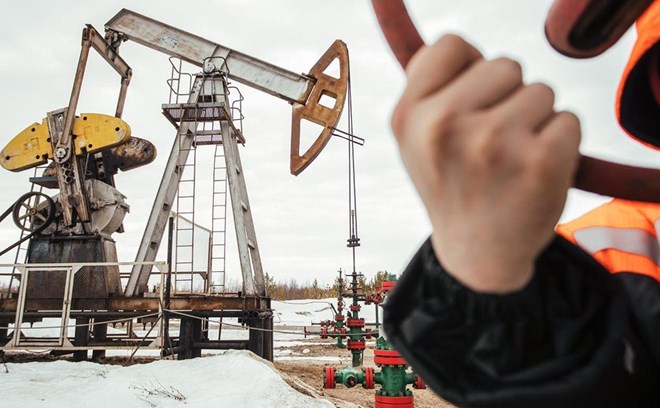
Besides political barriers, restoring energy flow also faces major technical and legal obstacles. Strict sanctions from the EU and the serious damage to the Druzhba pipeline running through Ukraine since January 2026 have not been overcome. This makes it difficult to bring Russian oil and gas back to the European market along old routes in the short term, even if the parties reach a principle agreement.
While the G7 countries are urgently considering implementing necessary measures to stabilize the market, Mr. Putin believes that Russian energy companies should take advantage of this time to consolidate their global position.
Observers believe that returning to long-term cooperation with Moscow will be an extremely difficult decision for the EU. The bloc still maintains its strategic goal of completely eliminating Russian fossil fuels in the near future to ensure energy security autonomy.


