
The latest storm news at noon on July 30th said that super typhoon Dolphin has strengthened into a Category 5 super typhoon - the strongest category on the US storm scale.
The Joint Typhoon Warning Center (JTWC) of the US Navy said that super typhoon Dolphin has sustained winds of 270 km/h.
The latest super typhoon of the 2026 storm season is 335km south-southwest of Wake Island and moving west-northwest at a speed of 20 km/h in the past 6 hours.
It is forecasted that super typhoon Dolphin will continue to move northwest in the next 3 days and then shift more westward.
In terms of intensity, super typhoon Dolphin is forecast to maintain this intensity in the next 24 hours and continue to increase slightly in intensity in the next 2 days because the typhoon is still in a very favorable environment.
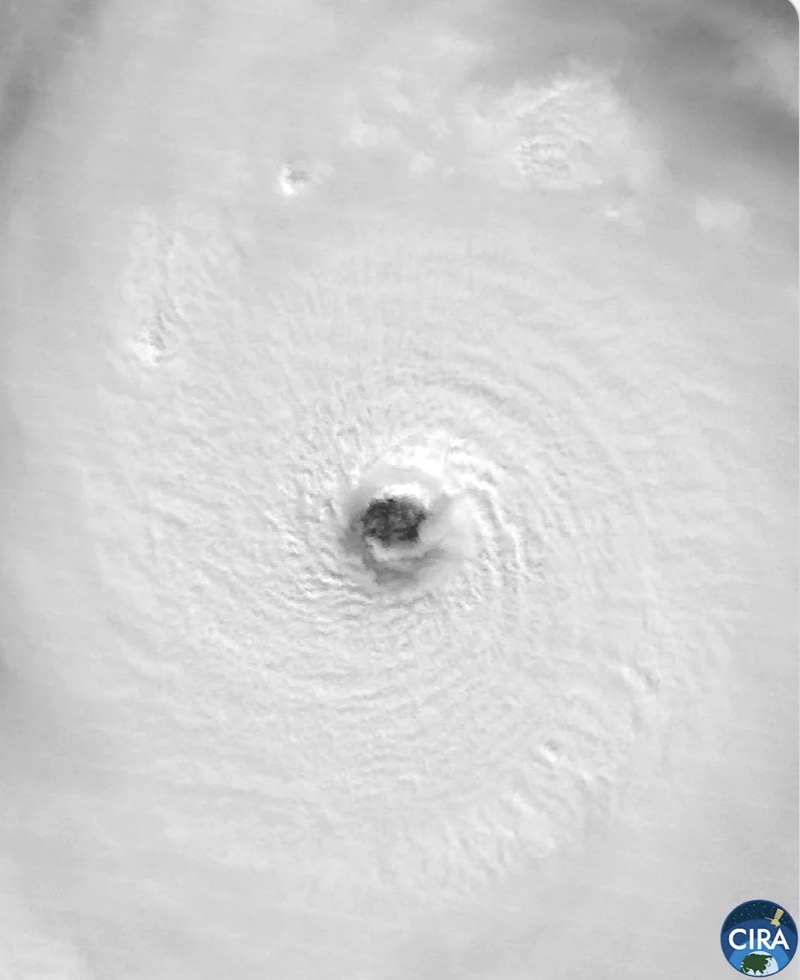
Notably, Dolphin set a new record when it became a Category 5 storm formed furthest to the east in the northwest Pacific region. The storm reached Category 5 intensity at longitude 166.5 degrees east, surpassing the previous record of Super Typhoon Faye in 1968, reaching Category 5 at longitude 162.7 degrees east.
2026 is also recording many rare milestones. To date, 3 category 5 super typhoons have appeared in the northwest Pacific basin, marking the first time since 2015.
July 2026 also recorded the first time since 2014 that 2 level 5 super typhoons appeared in the same July, and also the 3rd time in the history of data storage that this phenomenon has occurred.
While JTWC ranked Dolphin as a super typhoon, the Japan Meteorological Agency (JMA) ranked Dolphin as a severe typhoon.
According to the latest forecast from JMA, Dolphin's direction is almost unchanged. In the next 48 hours, the super typhoon will continue to move northwest, then gradually move west-northwest. By August 3, Super Typhoon Dolphin is forecast to move westward more.
Typhoon forecasters predict that there is still a small possibility that the typhoon will glide through the northeastmost region of the Philippine Area of Responsibility (PAR) before heading towards Japan's Ryukyu Islands.
If this scenario occurs, the Philippine Atmospheric, Geophysical and Astronomical Services Administration (PAGASA) will name the local name for the storm Luis.


