
On December 4, a rare and interesting weather phenomenon was just recorded during the record cold spell in the US. According to comparison data, the cold in Minneapolis ( bang Minnesota, USA) at the end of November was so severe that it defeated the surface temperatures of Mars - a planet famous for its ice desert.
Minneapolis is known as the "frost cabinet" of the United States due to its unique geographical location: Located deep in the northern continental, in the midwest and close to the cold border of Canada. Although the people here are used to the harsh winter, the recent cold still surprised everyone.
On Thanksgiving Day (November 27), the city's highest temperature of the day only increased to -2.7 degrees Celsius. This price increase lasted for many consecutive days with lower temperatures than the historical average, marking the coldest day streak that Minneapolis has experienced since February.
During the same period, in a world 362 million km away from us, NASA's Curiosity self-driving probes working diligently on the surface of Mars sent surprising data. In the Gale Census area, Curiosity's measuring devices recorded the highest daytime temperature of around -1 degrees Celsius.
Thus, in a brief moment of the universe, the dusty and rocky surface of the Red Star is actually warmer than a crowded city in the northern United States.
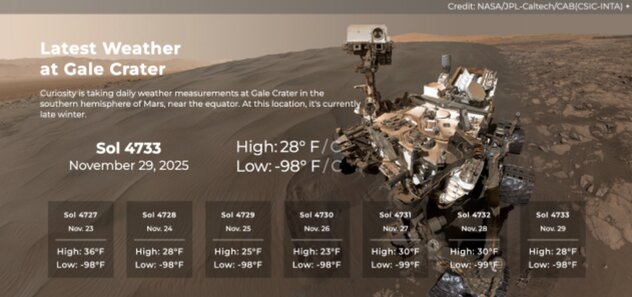
However, meteorologists and astronomers note that this interesting comparison is only true at the time of sunlight. As night falls, the true harsh nature of the universe is revealed.
In Minneapolis, the night temperature has dropped sharply but is still within the limits of human tolerance thanks to the Earth's dense atmosphere helping to retain heat.
On Mars, the extremely thin atmosphere and lack of water and steam make it impossible to retain the heat from the sun.
As a result, as soon as the sunset is gone, the temperature on Mars plummets unstoppably to near -73 degrees Celsius. This shows that even though there are moments warmer than Earth, Mars is still an extreme environment.
For the people of Minneapolis and the midwest of the US, the story of comparing to Mars could be a good example of the harshness of this year's weather, but the reality is still challenging.
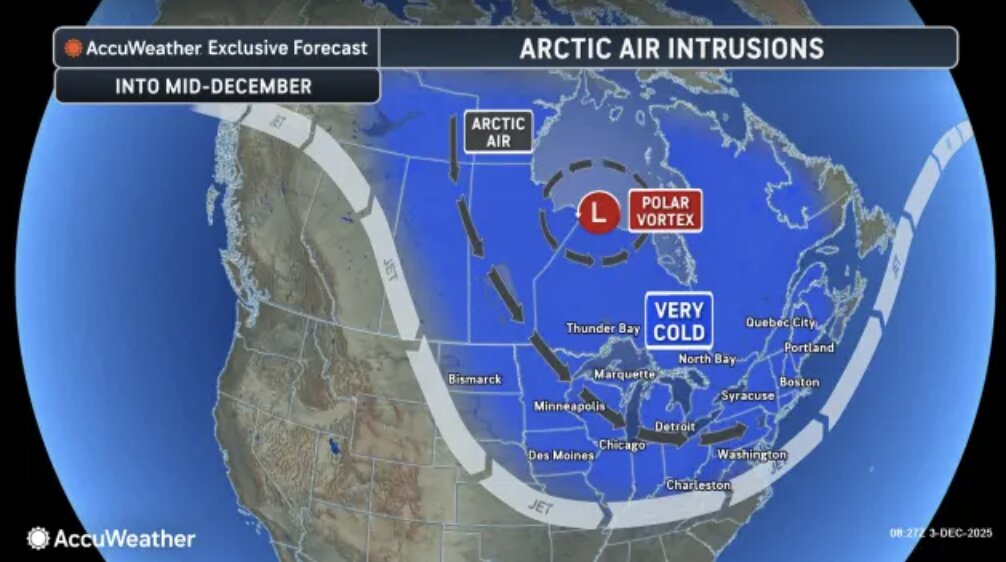
Meteorological agencies warn that this cold spell is not the end. People are preparing to face increased cold air waves from the Arctic caused by the phenomenon of extreme cyclone fluctuations.
This extreme weather pattern is forecast to last until mid-December with even higher price bouts, threatening to break many temperature records in history.


