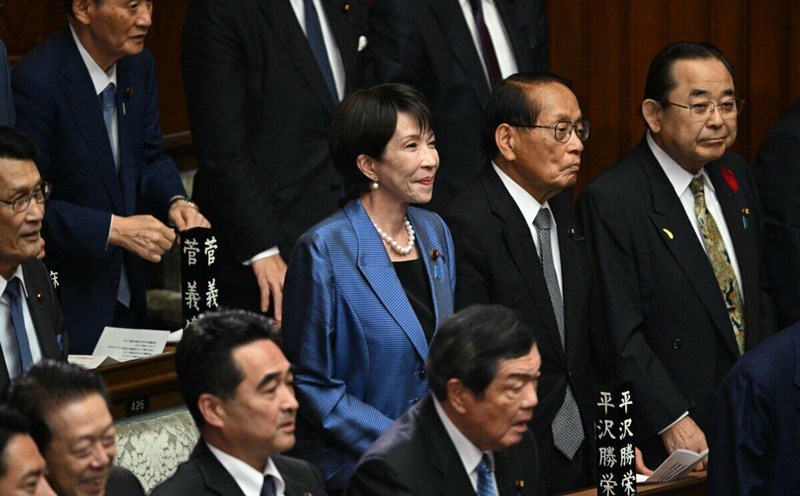
The ruling Liberal Democratic Party (LDP) in Japan is approaching a landslide victory in the early House of Representatives election on February 8, thereby firmly consolidating the position of Prime Minister Sanae Takaichi just a few months after she took office.
According to data compiled from local media, the LDP-led coalition is expected to win 352 out of 465 seats in the House of Representatives.
The LDP alone is said to have won about 316 seats, enough to hold an absolute majority. LDP's current coalition partner, the Japan Renovation Party (Ishin), won about 36 seats, while opposition parties only accounted for a total of 113 seats.
The early election was called by Ms. Takaichi just 4 months after becoming leader of the LDP, with the goal of seeking clear authorization from voters.
This decision was once considered a political gamble, especially in the context that the LDP in 2024 lost control in both houses of Parliament, the traditional alliance with the Komeito party collapsed, and the party's prestige was affected by corruption scandals and increased cost of living pressure.
However, the high level of personal support for Ms. Takaichi seems to have helped the LDP reverse the situation. The approval rating for the new government largely remains above 70%, reflecting the expectations of a part of voters for change in leadership.
During the election campaign, Ms. Takaichi emphasized a conservative stance, calling for tightening immigration policies, reviewing foreign land ownership rights, and handling tax evasion and failure to participate in health insurance.
The LDP's expected victory also received attention from the international community. US President Donald Trump sent congratulations to Ms. Takaichi, describing her as a leader "respected and very popular".
US Treasury Secretary Scott Bessent called it "a big win", while Indian Prime Minister Narendra Modi assessed the election results as a "milestone" for bilateral relations.
However, challenges for the new government are still numerous. Analysts warn that Ms. Takaichi's commitments to increase spending and cut taxes will be difficult to implement in the context of Japan's public debt being among the highest in the world.
With the ability to control up to 2/3 of the seats in the House of Representatives, Ms. Takaichi will have a large political space to promote the conservative agenda, which includes the long-term goal of considering amending Japan's pacifist Constitution - an issue that has always caused deep debate in this country's society.