
According to the announcement of the Indian Embassy in Hanoi, the Indian Government has issued the 5th amended Plant Quarantine Order in 2026, according to Notice No. S.O. 3828(E) dated July 9, 2026. The Order was published in the Indian Gazetteer on July 13, 2026 and takes effect from the date of announcement.
According to new regulations, Vietnam is added to the list of countries allowed to export fresh durian fruit, scientific name Durio zibethinus, to the Indian market for consumption.
Notably, the Indian side does not require supplementary plant quarantine declaration on the plant quarantine certificate, and does not stipulate special import conditions for fresh durian from Vietnam.
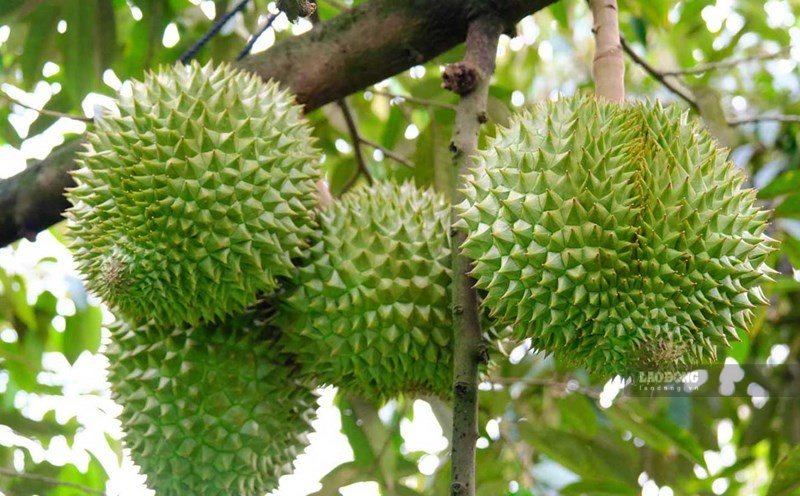
India's official market opening is assessed as the result of the process of exchange and technical coordination between the national plant protection agencies of the two countries. This is also a positive sign in agricultural and trade cooperation relations between Vietnam and India.
India is a large-scale market with a large population and demand for high-quality imported agricultural and food products is increasing.
Accessing this market will create more opportunities for Vietnamese businesses to diversify export markets, reduce dependence on some traditional markets, and at the same time enhance the value and position of Vietnamese durian in the international market.
However, according to the Department of Crop Production and Plant Protection (Ministry of Agriculture and Environment), India is still a new market for Vietnamese durian. In the early stages, consumption capacity is forecast to be mainly concentrated in large cities, high-end retail systems, imported fruit stores, restaurants, hotels and e-commerce platforms.
Therefore, export businesses need to carefully study market tastes, purchasing power, product specifications, transportation methods and distribution systems to develop appropriate market access plans.
The Department of Crop Production and Plant Protection said it will continue to coordinate with Indian functional agencies, units under the Ministry of Agriculture and Environment, the Ministry of Industry and Trade, Vietnamese representative offices in India, localities and industry associations to guide businesses to deploy exports.
Relevant agencies will also promptly exchange and handle difficulties and obstacles arising during the implementation process.
The opening of the Indian market is a positive sign for Vietnamese fresh durian. However, long-term effectiveness will depend on the ability to maintain quality, comply with import regulations, build product reputation and develop real consumption needs.
This is not only an opportunity to expand the market but also raises the requirement to continue to professionalize the production, packaging, preservation and export chain of Vietnamese durian.


