Domestic enterprises are ready to participate
The Government has just signed and issued Decree No. 319/2025/ND-CP, officially effective from January 1, 2026, specifically stipulating the criteria for selecting Vietnamese organizations and enterprises assigned tasks or ordered to receive technology transfer to serve railway projects.
Decree 319 marks a strategic turning point in Vietnam's infrastructure development thinking, which is the shift from the "comprehensive import" model to the " partial localization model, towards mastery".
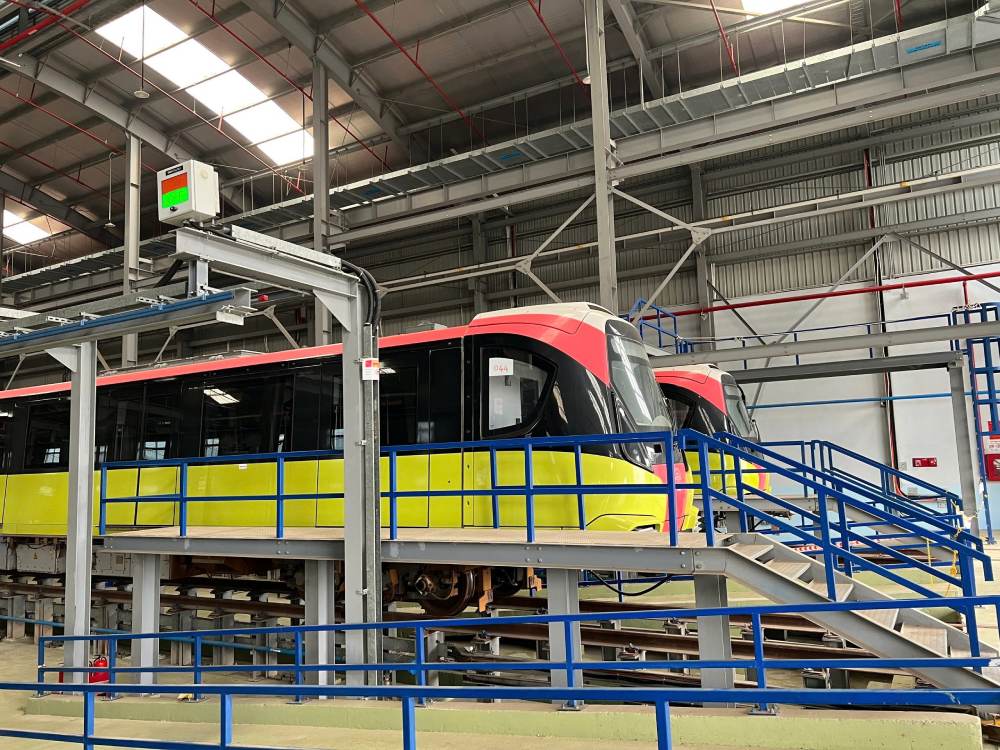
The railway network planning until 2050 aims to build 25 routes with a total length of more than 6,300km, including 18 new routes. Urban railway, high-speed railway and local railway routes alone will need thousands of new dynamic cars, passenger cars and cargo cars. The North-South high-speed railway alone is expected to have 1,100 EMU cars (Electric Multiple Unit).
Director of the Vietnam Railway Authority (Ministry of Construction) Tran Thien Canh informed that the demand for railway industrial products is concentrated in 4 groups: First is the railway infrastructure construction industry. The second is the locomotive and carriage. Third is the information and signal system. Fourth is the traction power system.
"The Vietnamese railway market is big enough for domestic enterprises to pay attention to and invest in developing the railway industry," said Mr. Tran Thien Canh.
Forming a railway industrial economic group
According to Mr. Tran Dinh Long - Chairman of the Board of Directors of Hoa Phat Group (HPG), the North - South high-speed railway project is a "one-off time for a thousand years" to form the railway industry in Vietnam. In fact, China started building the railway industry from a first project. To date, they have a complete industry.
Mr. Long emphasized that implementing a high-speed railway project is not only about building a route but also creating a new industry. With the Hoa Phat Dung Quat railway and special steel production project (Quang Ngai) officially started on December 19, Hoa Phat is committed to being able to provide the entire 10 million tons of high-speed railway steel, a high-quality product.
Meanwhile, according to Vice Chairman of the Board of Directors of Deo Ca Group Nguyen Minh Giang, to achieve the goal of participating in railway projects, the group has cooperated with universities to enroll high-quality human resource training with a cooperative model including source-based orders and on-site training, promoting training for workers, engineers and managers.
The unit also organizes foreign work programs, studies practical training processes in the fields of railways and urban railways, actively promotes cooperation with international partners with experience in high-speed railways, such as Japan, China... to transfer technology and advanced technical solutions.
Associate Professor, Dr. Tran Dinh Thien - former Director of the Vietnam Economic Institute, expressed his opinion that when assigning large projects to private enterprises with sufficient capacity, qualities and experience, it is not only about saving budget capital in particular and national resources in general, but more importantly, about speed and efficiency.
Mr. Thien said that it is important to establish a reasonable mechanism for both sides to share risks and ensure national interests. It is necessary to design a transparent, supervisory management mechanism with technical standards, instead of letting the private sector do it.
At the 13th Party Congress of Vietnam Railways Corporation, Deputy Prime Minister Tran Hong Ha emphasized the task of training, researching, developing and mastering modern and pioneering railway technologies.
Build a special mechanism, treat talent because "to transform digitally, we need leading experts in digital transformation, to plan, we need the best strategist and manager, to design the train, we need the best designer".
The goal is to aim to form a strong railway industrial economic group, form an industrial, service and trade ecosystem, maximize the functionality and efficiency of the infrastructure system.