
According to Conclusion No. 27 on the main situation of localities in the first quarter, directions and tasks for the second quarter of 2026, the Secretariat requests urgent completion of the arrangement of residential groups, villages, and hamlets; arranging public non-business units according to the direction and guidance of the Central Government.
According to Article 33 of Decree 33/2023/ND-CP, non-specialized personnel in villages and residential groups with no more than 3 titles (including Secretary of Party Cell, Village Head or Residential Group Head, Head of Front Work Committee) are entitled to monthly allowances. In case the law has other regulations, it shall be implemented according to the provisions of that law.
The Decree also encourages concurrently holding the title of Secretary of the Party Cell and also Village Head, Neighborhood Group Leader or Head of the Village and Neighborhood Group Fatherland Front Committee.

Along with the requirement to accelerate the arrangement of units at the grassroots level, the problem of organizational structure, personnel arrangement and preferential treatment for staff operating in villages and residential groups is also raised more clearly.
In which, the opinion of concurrently holding the positions of Secretary of the Party Cell and Village Head is considered one of the contents that needs to be carefully calculated to both ensure streamlining and maintain operational efficiency at the grassroots level.
Talking to Lao Dong Newspaper, Dr. Dao Hung - Department of Public Management, Faculty of Business Administration, University of Economics and Law (Vietnam National University Ho Chi Minh City), said that in the context of streamlining the apparatus and social development, the application of a rigid framework regulation on the number at the community level, villages, and residential groups may reveal many limitations in practical implementation.
According to Dr. Dao Hung, the current regulations on quantity are built for the old model and are at risk of being outdated when the new model is applied, in the context of the number of people in charge reducing but the scale of management increasing.
He also said that encouraging concurrent positions may increase the imbalance between human resources and workload.
There needs to be a short-term trade-off between operating efficiency and streamlining the apparatus. After the merger, efficiency needs to be prioritized, ensuring that the new system operates smoothly, instead of only focusing on streamlining in quantity" - Dr. Dao Hung said.
From there, experts give some recommendations in the policy implementation process.
First of all, it is necessary to create a buffer period of 3 - 6 months for personnel transfer. In the initial stage after the merger, old personnel should be maintained to ensure smooth operation, and at the same time create time for people to observe, evaluate capacity and choose suitable people.
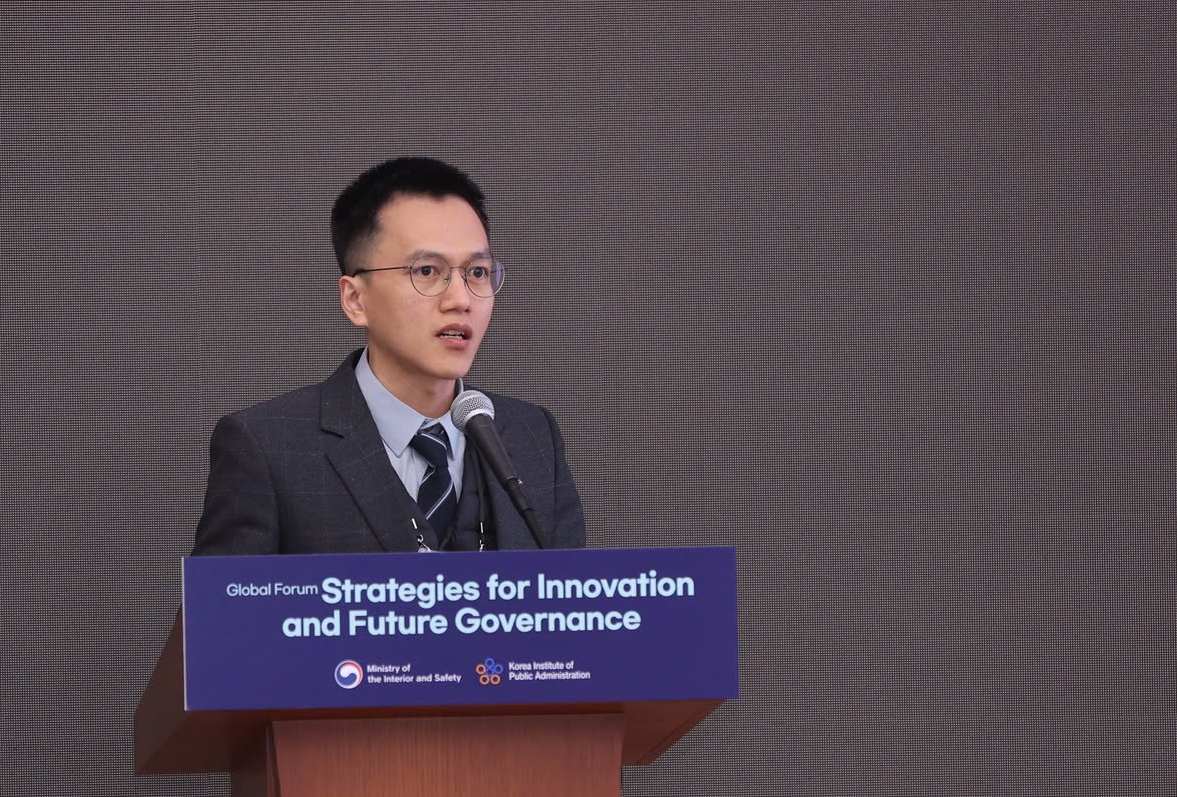
Next, according to experts, it is necessary to minimize the arrangement of personnel according to administrative orders from top to bottom. "The team of village and residential group officials is a bridge between people and the government, the greatest value is people's trust. If arranged too quickly, without time to evaluate and choose, this trust may be affected" - he said.
In particular, Dr. Dao Hung emphasized the need to increase allowances from surplus funds due to mergers and concurrent positions. Reducing the number through mergers and concurrent positions will create a saved budget, so consider this as a resource of the local community to increase the allowance level for this force.


