
On the morning of February 27, Prime Minister Pham Minh Chinh chaired the thematic Government meeting on law-making in February 2026 to consider and discuss opinions on 5 contents.
According to the Government Portal, regarding the draft revised Capital Law, the Prime Minister and delegates contributed many opinions and proposals for specific, superior, stable, long-term vision mechanisms, suitable to the position, role, and unique nature of the Capital, placed in the overall situation of national development and world trends.
Building the revised Capital Law project has a long-term vision, thinking deeply and doing big, stabilizing longer, and a hundred-year development direction.
The Prime Minister emphasized the spirit of decentralization and delegation of power to the maximum extent, thoroughly, "localities decide, localities do, localities take responsibility", going hand in hand with resource allocation and having tools to strengthen inspection, supervision, and control of power.
With specific regulations, difficult contents, unprecedented issues, contents that are not regulated or exceed current regulations, Hanoi is allowed to issue pilot mechanisms and policies.
Hanoi is exemplary, pioneering, and a pilot place for policies, contributing to firmly protecting the independence, sovereignty, unity, and territorial integrity of the country, promoting rapid and sustainable national development, and contributing to improving the material and spiritual life of the Capital's people.
Regarding the draft revised Law on Civil Status Registration, the Government focuses on supplementing and amending regulations to improve the effectiveness and efficiency of state management activities, promote decentralization and delegation of power in accordance with the 2-level local government model in the field of civil status...
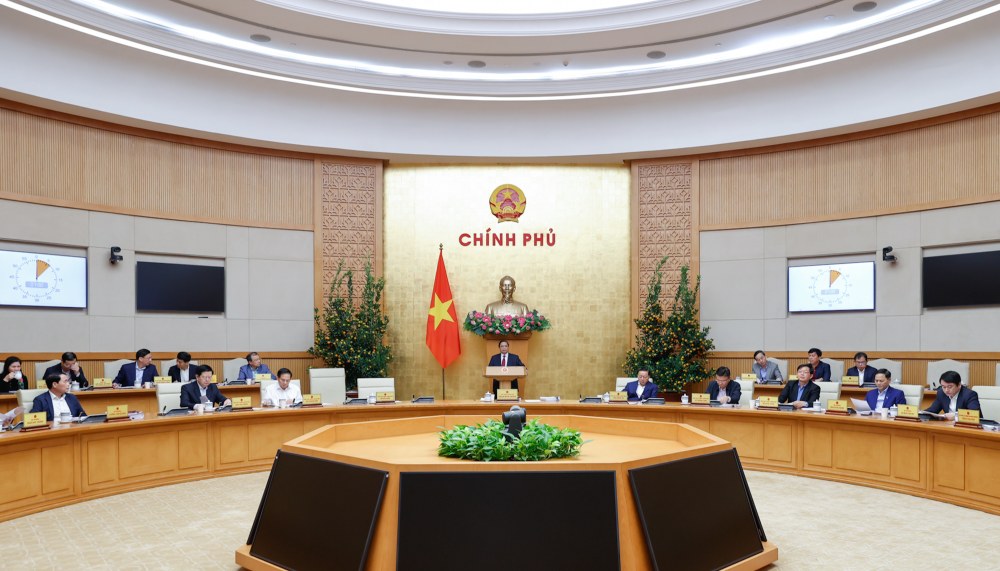
Concluding the general session, the Prime Minister noted that in the process of law-making, it is necessary to fully institutionalize the Party's guidelines and policies; remove obstacles, bottlenecks, and difficulties from practice; implement thorough decentralization and delegation of power, in parallel with resource allocation, improve implementation capacity and design tools for inspection, supervision, and power control.
The Prime Minister noted to review and minimize administrative procedures, reduce inconvenience, and reduce compliance costs for people and businesses.
The law only stipulates issues of principle nature, and specific contents are assigned to drafting agencies to include in guiding decrees to ensure flexibility, feasibility, and effectiveness in the implementation process.
In particular, ministries and sectors must closely coordinate with each other and with the agencies of the National Assembly, creating high consensus in the process of verifying, explaining, receiving, and revising the draft Law according to the opinions of the National Assembly Standing Committee and National Assembly deputies.
The Prime Minister clearly stated that the spirit is to both ensure timely progress, improve quality, and ensure strict regulatory procedures; pay attention to assessing the impact of new regulations and have transitional clauses.
Regarding the preparation for the First Session of the 16th National Assembly, the Prime Minister said that it is expected that the Government will submit 34 dossiers and documents to the National Assembly for approval, including 15 draft laws and resolutions with many difficult and complex draft laws that have a profound impact on all aspects of social life.
Therefore, the head of the Government requests ministries and sectors, especially ministers and heads of ministerial-level agencies, to focus on prioritizing time, focusing the highest resources, directly leading and directing the completion of draft laws and resolutions that have been considered and commented on by the Government to submit to the National Assembly for consideration and comments at the first session to ensure quality and progress as required.


