
On August 3, at the First Extraordinary Session, General Luong Tam Quang - Member of the Politburo, Minister of Public Security presented the Draft Resolution of the National Assembly on specific mechanisms and policies to handle violations of laws related to the state economy, private economy and application of science, technology, innovation, and digital transformation.
According to the Minister of Public Security, the promulgation of the Resolution aims to institutionalize the Party's viewpoints and policies, and at the same time, create a legal basis to protect dynamic and creative cadres who dare to think, dare to do, for the common good, not corrupt, wasteful, or negative.
Ensuring the strictness of the law, no forbidden zones, no exceptions, understanding, reasonable, right people, right violations, showing the humanity and leniency of the Party and State.
In Chapter II of the draft Resolution, there are 7 articles regulating the handling of legal violations related to the state economy, private economy and the application of science, technology, innovation, and digital transformation.
Accordingly, this chapter has 4 articles to regulate criminal handling policies including: No criminal prosecution; exclusion of criminal liability for people who encounter risks and damages due to the application of science, technology, innovation, and digital transformation; suspension of criminal prosecution and exemption from criminal liability.
At the same time, to implement these criminal policies, Articles 9 and 10 of the draft resolution stipulate the order and procedures of criminal proceedings and the order and procedures in criminal judgment enforcement for implementation.
According to the draft Resolution, competent procedural agencies do not prosecute criminal liability when sufficient conditions are met:
1. No corruption;
2. For the common good;
3. Investment, production, business, application of science, technology, innovation, and digital transformation activities have been completed, bringing socio-economic efficiency to localities and the country;
4. There are no complaints or denunciations or there are complaints or denunciations but the related complaints and denunciations have been resolved definitively according to regulations;
5. Not causing loss or waste of property. In case of causing loss or waste of property, all consequences have been remedied.
6. The person committing the violation has clearly declared the incident, effectively contributing to the detection and handling of crimes.
The draft resolution stipulates the exclusion of criminal liability for people who encounter risks and cause damage due to the application of science, technology, innovation, and digital transformation.
Specifically, the act of causing damage while implementing innovation and digital transformation activities, even though it has complied with the correct procedures and regulations, and fully applied preventive measures, is criminally excluded.
The exclusion of criminal liability for acts causing damage while performing science and technology application activities is carried out in accordance with the provisions of Article 25 of the 2015 Penal Code (amended and supplemented in 2017, 2025).
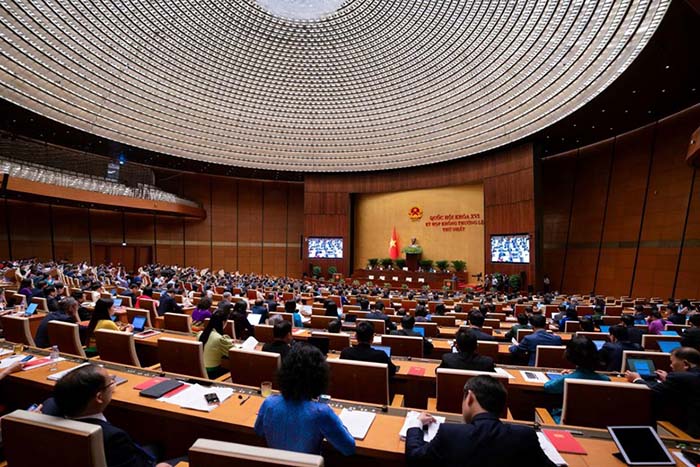
Presenting the thẩm tra report, Chairman of the National Assembly's Economic and Finance Committee Phan Van Mai said that the committee basically agreed with the necessity of issuing a resolution to promptly institutionalize the Party's guidelines and viewpoints; creating a legal basis to handle urgent issues when some laws have not been amended or supplemented.
Regarding not prosecuting criminal responsibility, according to Mr. Phan Van Mai, the majority of opinions agreed to apply it to cases that are not corrupt, for the common good, operations have been completed and have socio-economic efficiency, no more complaints or denunciations, no losses or waste, or all consequences have been remedied.
However, it is proposed to consider the condition "having clearly declared the incident, effectively contributing to the detection and handling of crimes" to avoid narrowing the policy of leniency and ensure uniform application to similar violations.


