
Localities are focusing on implementing the arrangement and reorganization of villages and residential groups (TDP), expected to be completed in June. In which, the arrangement of non-specialized personnel and people participating in activities in villages and TDPs has received public attention.
According to Directive No. 21/CT-TTg dated May 20, 2026, along with building a project to arrange villages and residential groups, localities need to pay special attention to the selection and introduction of non-specialized personnel in new units.
In that spirit, in Bac Ninh province, the Department of Home Affairs has guided localities to proactively select and introduce personnel to hold leadership positions in villages and residential groups according to their authority.
In the immediate future, focus on arranging, reviewing, and improving the quality of the team of Party cell secretaries, village heads, and residential group leaders.
Accordingly, villages and residential groups that have not yet been arranged will retain non-specialized personnel as they are now. For the 923 newly established villages and residential groups, localities will appoint temporary apparatus to ensure continuous operation; after 6 months, village heads and residential group leaders will be elected according to regulations.
According to the orientation, non-specialized workers in villages and residential groups must be reputable, healthy, dedicated, responsible, and capable of gathering and mobilizing people.
At the same time, rejuvenate the team to meet the requirements of digital transformation, community management skills and quality of service to the people.
In Hue, the city is gradually standardizing the team of non-specialized personnel at the grassroots level in the direction of streamlining, clarifying titles, and clarifying responsibilities.
According to the overall plan approved by the City People's Committee, after arrangement, each village and residential group will arrange no more than 3 non-specialized personnel, including: Party cell secretary, village head or residential group leader and head of the Fatherland Front work committee.
The whole city is expected to have 1,767 non-specialized workers in villages and residential groups, a decrease of 1,277 people compared to before the arrangement. At the same time, there are 4,123 people directly participating in activities in villages and residential groups belonging to branches and mass organizations, a decrease of 1,640 people.
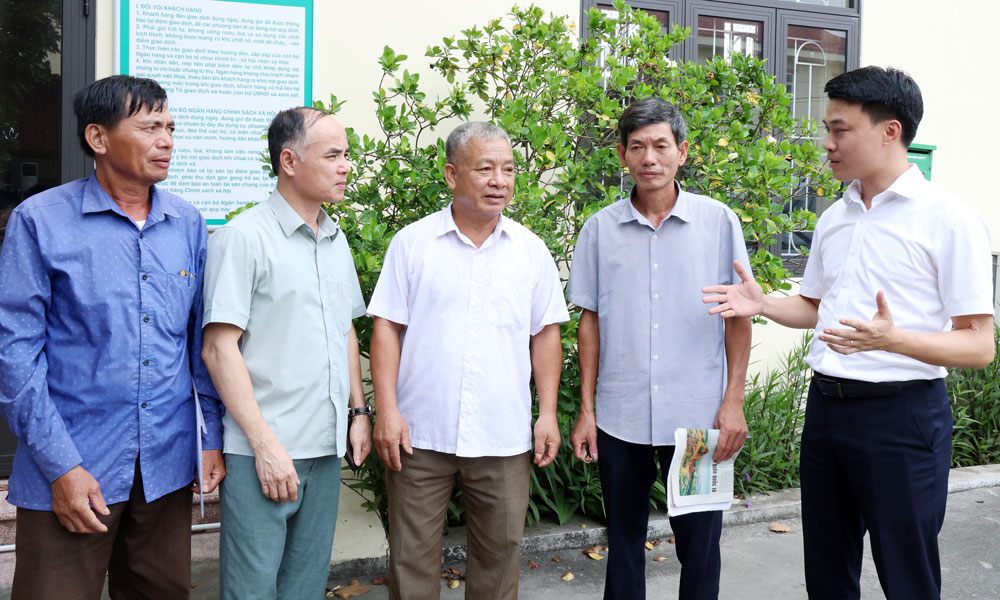
In Tay Ninh, the Provincial People's Committee assigned the People's Committees of communes and wards to urgently develop specific projects; strengthen propaganda, create consensus among the people; review, evaluate, and arrange non-specialized personnel in the direction of selecting people with qualities and capabilities to meet task requirements at new units.
Localities must pay attention to retraining, supporting and fully resolving regimes and policies for cases that do not continue to work after arrangement.
Departments and functional sectors shall take the lead in monitoring, guiding, and urging localities to implement plans; advising on building support policies and resolving regimes for non-specialized workers.
At the same time, consolidate the Fatherland Front Work Committee, Party organization and the arrangement of non-specialized personnel in hamlets and neighborhoods after arrangement; summarize arising difficulties and obstacles to promptly report to the Provincial People's Committee for consideration and handling.
In Tuyen Quang province, from June 20, 2026 - June 25, 2026, the Commune-level People's Council will issue a Resolution on arranging villages and residential groups in the area.
Immediately after the Commune-level People's Council issues a Resolution, the Party Committee, People's Committee, Chairman of the People's Committee, Standing Committee of the Fatherland Front Committee, socio-political organizations and relevant agencies and organizations issue decisions for personnel participating in activities (including non-specialized personnel and other participants) in new villages and residential groups, and decisions to terminate positions for those who are arranged to retire after arranging villages and residential groups.


