
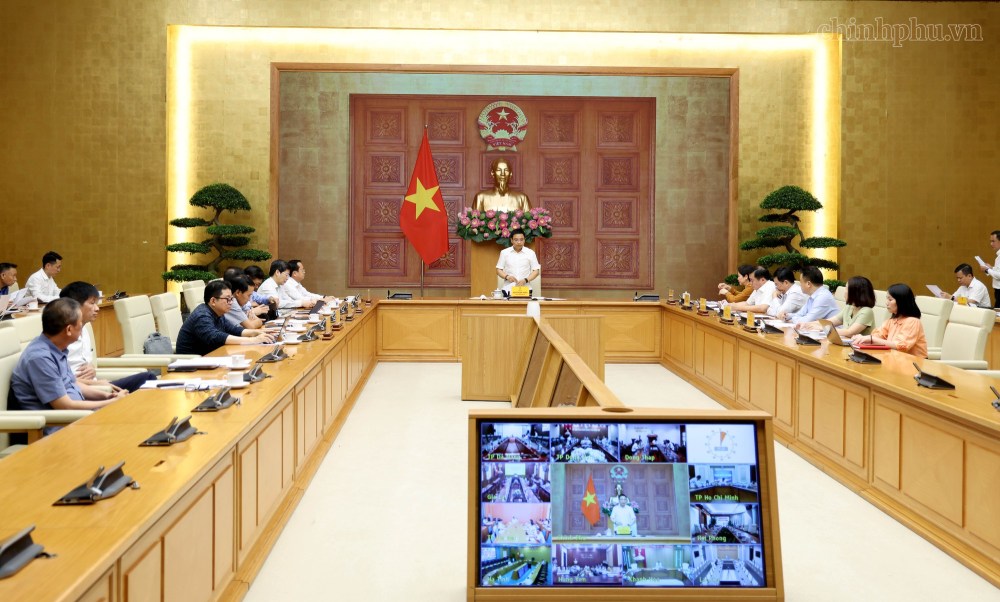
On the afternoon of September 4, at the Government Headquarters, Member of the Party Central Committee, Deputy Prime Minister Nguyen Van Thang - Head of the Price Management Steering Committee chaired a meeting to assess the results of price management and administration in the first 8 months of 2026 and orient price management in the last 4 months of the year.
At the meeting, the Ministry of Finance updated 2 inflation scenarios for 2026, with increases in the range of 4.5% and 5%. The State Bank of Vietnam forecasts that the average inflation in 2026 will increase in the range of 4.5-5.0% (in the 5% ±0.5 range). International organizations forecast that Vietnam's average inflation will increase by about 3.8-5.2%.
Concluding the meeting, Deputy Prime Minister Nguyen Van Thang assigned the Ministry of Finance to continue to effectively implement appropriate policies on exemption, reduction, and extension of taxes, fees, and charges to reduce input costs for businesses and support people's lives.
The State Bank of Vietnam manages monetary policy proactively and flexibly, closely coordinating with fiscal policy to control inflation and support economic growth. Closely monitor exchange rate, interest rate, credit, money supply and international capital flows; proactively take measures to limit the impact of import inflation.
The Ministry of Industry and Trade directs key enterprises to ensure the supply of gasoline and oil for production, business and consumption, not to let the situation of supply disruption or hoarding goods waiting for price increases occur.
The Ministry of Construction requests transport enterprises to adjust fares down correspondingly when fuel costs decrease, ensuring accurate reflection of input cost fluctuations.
Inspect and strictly handle cases of taking advantage of fluctuations in gasoline and oil prices to unreasonably increase fares or slow to adjust fare reductions when fuel prices decrease.
The Ministry of Health closely monitors the developments of drug prices, medical supplies, testing chemicals, medical equipment and medical examination and treatment services. Ensure sufficient supply of drugs and medical supplies to serve the medical examination and treatment needs of people at reasonable prices.
Develop a roadmap for adjusting medical service prices in accordance with the goal of controlling inflation and people's affordability.
Strengthen inspection and examination of price declaration and listing of prices of medicines and medical supplies; strictly handle violations of the law on prices.
The Ministry of Education and Training directs to provide enough textbooks for parents and students to easily access and buy books at prices not higher than the listed price printed on the cover. Strengthen inspection and strictly handle acts of selling at prices higher than the listed price.
People's Committees of provinces and cities strengthen inspection and examination of compliance with the law on prices; strictly handle acts of speculation, hoarding goods, price manipulation, taking advantage of natural disasters, epidemics or market fluctuations for profit.
Ministries and central agencies with directly affiliated educational institutions and People's Committees of provinces and cities direct relevant agencies, units and directly affiliated educational institutions to fully and promptly allocate funds to implement policies on tuition fee exemption and reduction, tuition fee support, and learning cost support in localities.
Strictly implement the provisions of law for revenues in the field of education and training; publicize revenues and expenditures in schools; do not abuse socialization of education to increase parents' contributions or replace the budget that must be ensured.


