
2026 is a pivotal year after the 14th Party Congress, major strategic orientations have been established. The issue at this time is how to organize implementation so that the economy both maintains the necessary stability and creates new, substantive and sustainable growth momentum.
Stepping into 2026, the Vietnamese economy is facing a significantly different context compared to 2025. The growth of the previous year reached a high level, creating a large comparative basis; while the international environment continues to fluctuate. In that context, higher growth expectations put great pressure on macroeconomic management, institutional reform and resource mobilization.
In that context, the smooth and effective coordination between monetary policy and fiscal policy, between the Central Government and localities, will determine the quality of growth and the level of safety of the economy in 2026.
National Assembly Deputy Hoang Van Cuong (Hanoi Delegation) said that the target of 10% growth is very challenging. Therefore, he believes that institutional reform is still a key task, but needs to go deeper. Reducing administrative procedures is necessary but not enough to create fundamental changes.
More importantly, strongly shift the management method from pre-inspection to post-inspection, except for some specific areas such as security - national defense and public health.
Another important direction is to promote public-private partnerships (PPP), not only in infrastructure investment but also in management and research - development.
The delegate from the Hanoi delegation cited the example of building a model of real estate transaction center managed by the State, instead of the State directly organizing and operating the apparatus, public-private partnership models can be applied with organizations and businesses that already have capacity, facilities and service experience, under the close supervision of the State. This approach both improves management efficiency and avoids encroaching on the administrative apparatus.
Public-private partnerships in scientific research, development and technology transfer also need to be strongly promoted. Research institutions must be closely linked to businesses with needs and the ability to receive technology, forming a companion mechanism from research to application.
This not only helps remove bottlenecks in disbursing science and technology capital, but also ensures research creates products and real value for development.
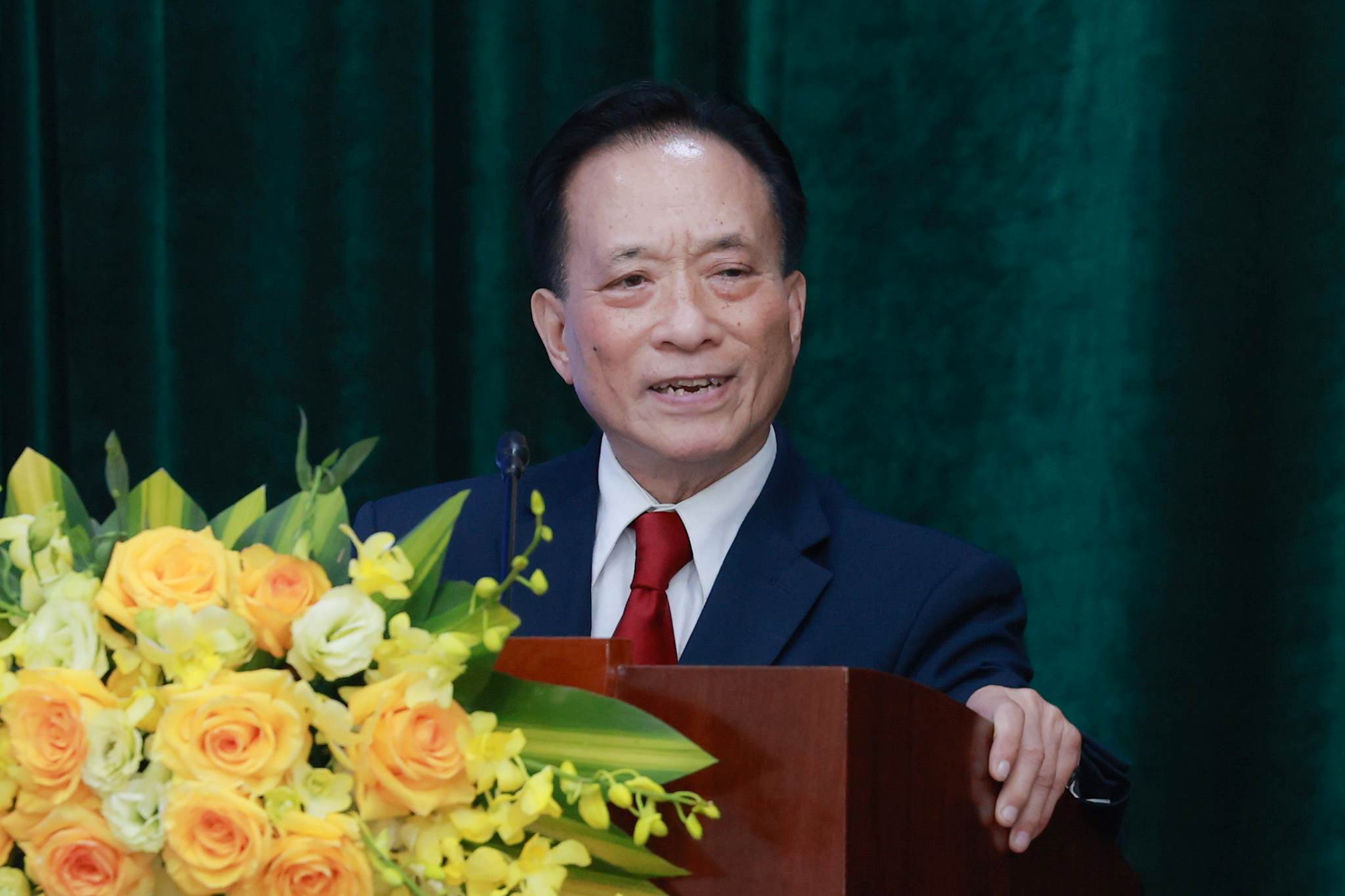
Economic expert, Dr. Nguyen Tri Hieu - Director of the Institute for Research and Development of Global Financial Markets and Real Estate - emphasized that institutional clearing must go hand in hand with capital flow clearing.
He believes that current regulations on collateral and business credit ratings need to be flexible based on international standards so that capital can truly flow into the production sector. When institutions are transparent and legal risks decrease, lending interest rates will have room to decrease accordingly, helping businesses reduce the financial cost burden.
Analyzing in more depth the growth momentum, Dr. Le Xuan Nghia - member of the Prime Minister's Policy Advisory Council - said that 3 very important factors determining economic growth are labor, investment and science and technology.
Dr. Le Xuan Nghia especially emphasized the role of foreign investment, especially in areas requiring large capital such as energy. According to him, with the scale of energy investment being very large, if only relying on domestic resources, it will be difficult to meet and mobilizing foreign investment capital is inevitable.
Dr. Le Xuan Nghia emphasized three directions that need to be particularly promoted. The first is to expand foreign direct investment (FDI) attraction.
The second is investing in energy, especially mobilizing foreign resources.
The third is to expand free trade zones as a tool to attract FDI and promote technology localization through science and technology transfer from abroad.


