
Need for a mechanism for connecting two degree systems
On the morning of December 4, the National Assembly Standing Committee gave opinions on the explanation, acceptance and revision of group 5 of draft: Law amending and supplementing a number of articles of the Law on Education; Law on Higher Education (amended); Law on Vocational Education (amended); Resolution of the National Assembly stipulating specific mechanisms on a number of policies and guidelines in Resolution No. 71-NQ/TW dated August 22, 2025 of the Politburo on breakthroughs in education and training development; Resolution on the policy of investing in the National Target School for the modernization and improvement of education and training quality for the period 2026-2035.
At the meeting, the outstanding issue discussed by delegates was related to the postgraduate training program for the medical industry.
Chairman of the Committee for Science, Technology and Environment Nguyen Thanh Hai said that the reports of the Committee and the Ministry of Education and Training show that the Ministry has received a number of contents and assigned a specific specialized postgraduate training program in the field of health to grant the degrees of resident doctors and specialist doctors managed by the Ministry of Health.
However, Ms. Hai said that, through the opinions of National Assembly deputies and voters in the industry, a major unresolved problem is related to the graduation system of the medical sector and the general graduation system.
Specifically, medical students have to have a very long training period: 6 years of university, then boarding, and have CK I and CK II degrees.
Ms. Hai said that this training system is more practical, similar to the international model at postgraduate level and in many countries there are degrees such as practical engineer, practical master, practical doctor.
Ms. Hai is concerned that if the I and II specialized programs are maintained but not connected with the national general graduation program ( master's and doctoral degrees), it will create disadvantages for learners.
According to Ms. Hai, most specialists do not require "transfer" to a master's degree, but there needs to be an equivalent and inter-related mechanism, for example, recognizing the clinical - practical subjects, the number of credits, the number of clinical periods... so that they can study additional lacking academic subjects and continue to study. On the contrary, in the case of people who have a master's degree but want to study majors I and II, a suitable connection mechanism is also needed.
"In my opinion, designing a mechanism for connecting two degree systems ( master's - doctoral and I - II - boarding) is very necessary" - Ms. Hai said.
No boarding doctors, specialties equivalent to masters
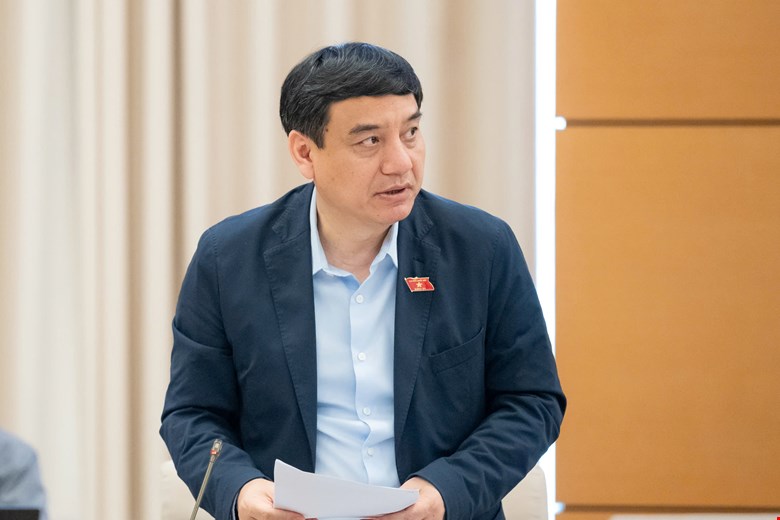
Speaking at the meeting, Chairman of the Committee on Culture and Society Nguyen Dac Vinh emphasized that in the national education system, it is necessary to clearly distinguish between qualifying training and specific practical training. According to him, master's and doctoral degrees are in the training system to recognize degrees, have programs, standards and separate regulations.
The boarding doctor programs, CK I and CK II are recognized as specialized practical training in the medical industry, with specific characteristics, but not in the postgraduate training system to grant degrees.
In the medical industry, master's and doctoral training and academic titles such as associate professor and professor are still conducted in accordance with current regulations, according to general requirements. According to Mr. Vinh, for graduate students, general research and thesis implementation are the basic foundations.
"I still maintain the view that the two training systems need to be clear. If the specific requirements of an industry are taken into account to adjust the general framework, that could disrupt the education system.
Every profession is very noble. Never say that a specialist II doctor is not as good as a doctorate. But in terms of policy, there is a completely regulation that specialist II doctors are entitled to the same policy as doctors" - Mr. Vinh said and emphasized his point of view, it is impossible to classify specialist I and II doctors as doctors.
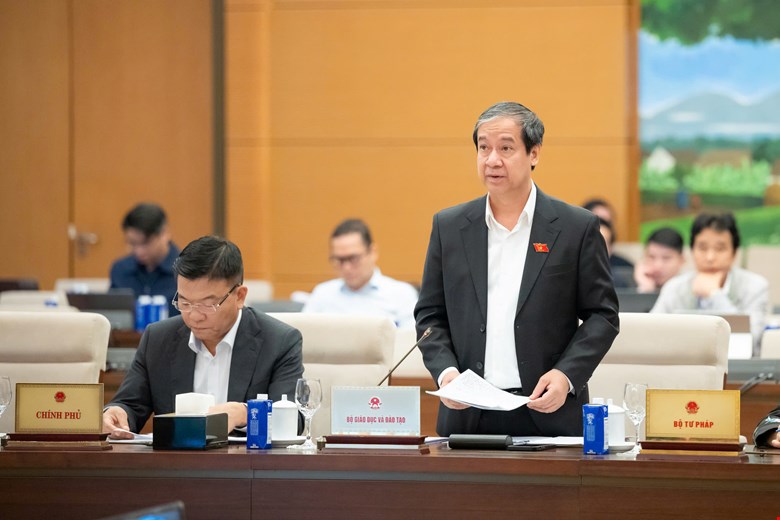
On the side of the education sector, Minister Nguyen Kim Son also affirmed the view that these are two separate systems: Master's and doctoral training is an educational level on the National training scale; Doctoral training CK I, II inpatient training is training to enhance capacity and specialized vocational skills very specific to the health sector.
Regarding connectivity, the Minister said that current laws stipulate that joint training programs, for example training for doctors and nurses, have subjects, credits similar to those for master's and doctoral training recognized, shortening the training process at the other level and vice versa.
Under university autonomy, the right to consider recognizing equivalent certificates is decided by the higher education institution, without having to go to the Ministry level the Minister affirmed.


