Eliminate all imports, implement partial localization
The Government has just signed and issued Decree No. 319/2025/ND-CP, officially effective from January 1, 2026. This Decree specifically stipulates the criteria for selecting Vietnamese organizations and enterprises assigned tasks or ordered to receive technology transfer for railway projects, the Government Electronic Information Portal on December 16 informed.
Accordingly, enterprises must own facilities, factories, and equipment to meet the requirements for receiving and operating technology lines; and have financial capacity or the ability to mobilize capital to pay and settle transfer costs. The human factor is considered the key.
Decree No. 319 was issued in the context of the whole country implementing key and important national projects in the railway sector, including: Lao Cai - Hanoi - Hai Phong railway project; Hanoi - Lang Son and Hai Phong - Mong Cai railways; investment project to build the North - South high-speed railway; urban railway projects in Hanoi and Ho Chi Minh City.
The Government's issuance of Decree 319 marked a strategic turning point in Vietnam's infrastructure development thinking, which is the shift from the "comprehensive import" model to the " partial localization model, towards mastery".
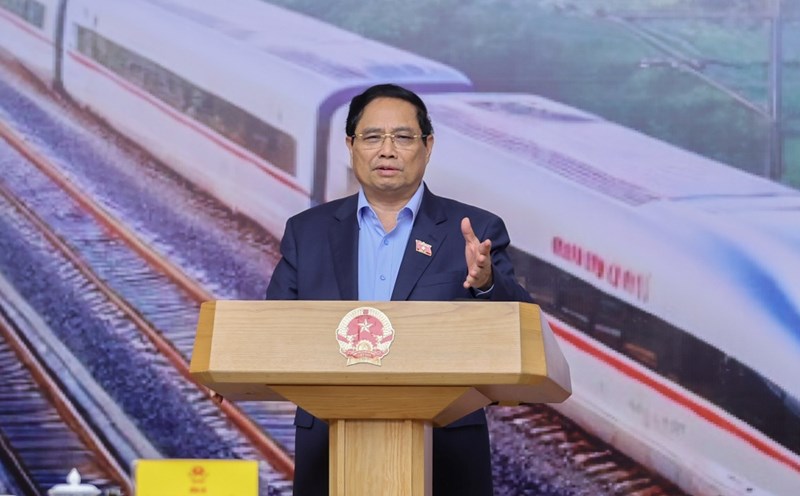
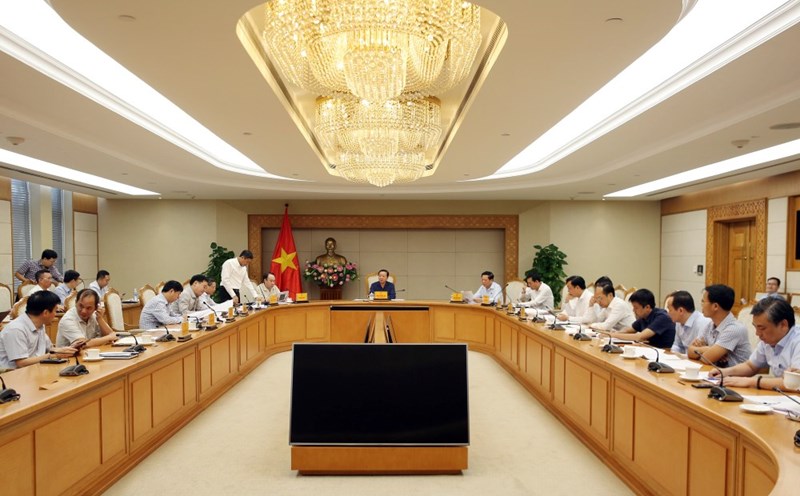
Previously, at the 4th meeting on October 26 of the Steering Committee for key projects and national important projects in the railway sector, Politburo member and Prime Minister Pham Minh Chinh emphasized that the approach is technology transfer, step by step development, railway technology autonomy, metro, and railway ecosystem development.
The head of the Government requested that there must be a project and implementation process, preparing human and material resources to transfer technology to ensure feasibility and efficiency.
The Prime Minister stated that we are determined to build a railway industry, master technology, produce carriages and locomotives, and develop a railway industrial ecosystem.
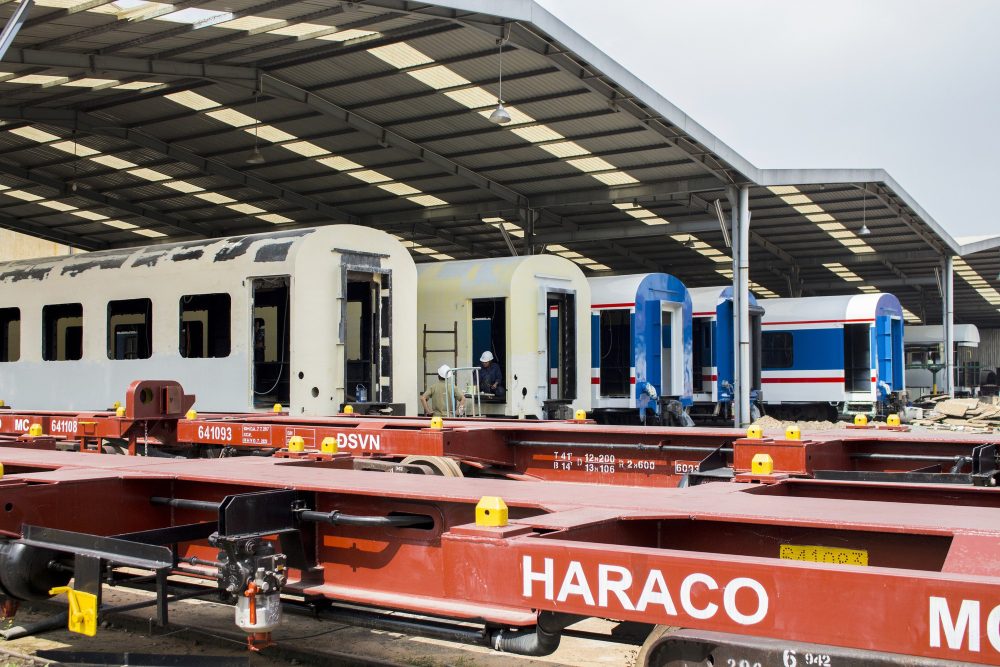
Private enterprises can participate deeply in the railway industry
In the past, a number of domestic enterprises have prepared resources to participate in providing goods and services for the railway industry. These include large corporations such as Vingroup, Hoa Phat, Thaco and a series of mechanical - supporting technology enterprises.
Of the total 234 projects officially started and inaugurated on December 19, there are 2 notable projects selected as the main bridge points, including the start of Component Project 1 of the Lao Cai - Hanoi - Hai Phong railway construction investment project and the start of the Hoa Phat Dung Quat special rail and steel rail production project (Quang Ngai).
In addition, to implement the North-South high-speed railway project with a total preliminary capital of about 1.7 million billion VND, equivalent to 67 billion USD, in early 2025, the Prime Minister also "commissioned" Truong Hai Group ( Thaco) to produce North-South high-speed railway carriages.
Thaco Group is expected to cooperate with Hyundai rotem to receive technology to produce locomotives and carriages, and organize production right in Vietnam according to international standards.
For urban railways in Hanoi, Ho Chi Minh City and type 1 urban areas, with a total capital for 2030-2050 of about 40 billion USD, Ho Chi Minh City has recently approved the investment policy and approved the investor for the Ben Thanh - Can Gio railway project to Vinspeed Expressway Investment and Development Joint Stock Company.
According to Ms. Nguyen Minh Thao, Deputy Head of the Department of Enterprise Development and Business Environment (Institute of Strategy and Economic - Financial Policy, Ministry of Finance), Decree 319 has a special significance in creating a foundation for the development of the domestic railway industry.
With a new approach, the State changes the participation methods of the private enterprise sector, creating conditions for enterprises to directly participate in large projects, have the opportunity to accumulate capacity, participate more deeply in the value chain, gradually master technology and improve competitiveness, instead of only implementing stages with low added value.