
Stepping stone direction
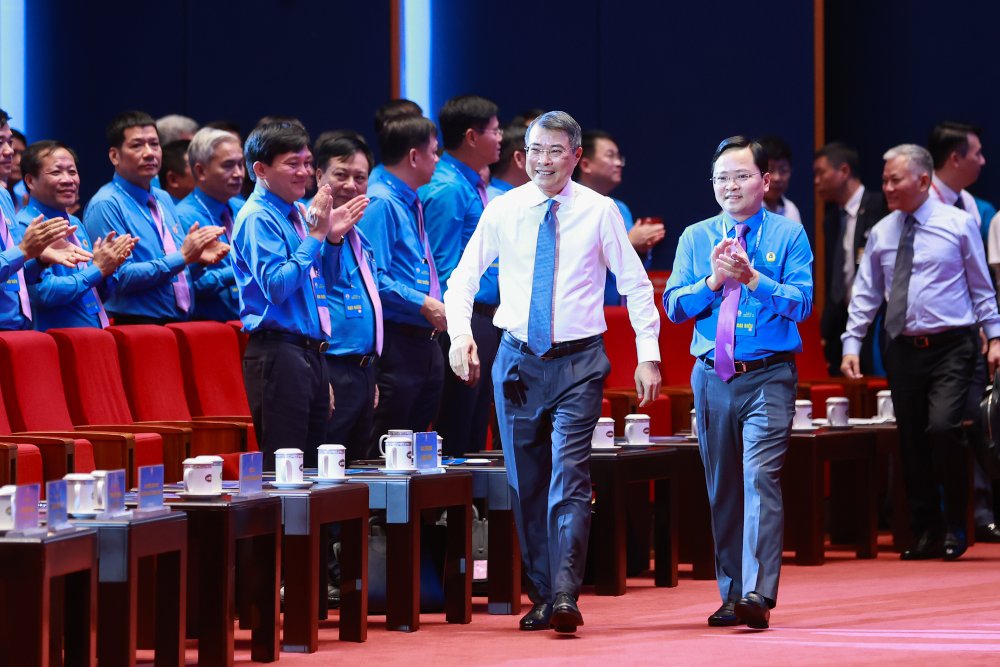
Presiding over the dialogue with delegates attending the 14th Vietnam Trade Union Congress on June 5, Politburo Member, Prime Minister Le Minh Hung expressed that the Prime Minister as well as government leaders, ministries and sectors are very sympathetic to the fact that most workers currently do not have housing, have to rent houses among the people with limited infrastructure, cramped, high prices...
The head of the Government said that he has urgently and drastically implemented specific tasks and solutions on developing long-term, stable, and reasonably priced rental housing, especially in localities with many industrial parks and many workers.
Not only does the State spend money to build, operate, and manage rental housing, but it can also hire businesses to operate, manage and buy back social housing areas for immediate lease, meeting urgent needs.
Previously, at a working session with the Government Party Committee on May 19 on social housing development in the new situation, General Secretary and President To Lam emphasized the view that "houses are for living, not for business or accumulation", and at the same time requested to identify rental housing as one of the strategic pillars of housing policy in the period up to 2030.
Breakthrough in rental housing
Talking to Lao Dong Newspaper, Dr. Nguyen Viet Chuc - Deputy Chairman of the Advisory Council on Culture and Society (Central Committee of the Vietnam Fatherland Front) - said that the sharing of Party and State leaders with the majority of workers who currently do not have housing and have to rent houses among the people is a major policy that needs quick and strong measures.
The implementation steps informed by the Prime Minister above are the lightning-fast concretization step, bringing the Party's strategic vision into life in just over half a month when General Secretary and President To Lam issued a landmark directive: "Leased housing must be a strategic pillar".
According to Dr. Nguyen Viet Chuc, housing is not simply a place to shelter from the sun and rain for families, but must be placed in the national urban development strategy.
Therefore, the major policy of the Party and State on rental housing requires a "thinking revolution" for ministries, departments, branches, localities, businesses, people, in general, the whole society, in the concept of accommodation for Vietnamese people.
Therefore, it is necessary to study mechanisms to encourage businesses to participate in investing in rental housing for workers, while ensuring synchronous technical infrastructure, schools, healthcare, cultural institutions and convenient transportation connections.
The goal is to gradually form civilized, safe, and stable worker housing areas so that workers can feel secure in their work and be attached to the Capital for a long time.
Dr. Nguyen Viet Chuc expects trade union levels and localities to continue to reflect difficulties and obstacles from practice so that the Ministry of Construction can improve policies and bring social housing and rental housing development programs into life, meeting the increasing needs of the people.
Speaking more about this content, Chairman of the Government Office Dang Xuan Phong said at the Government press conference in May that the policy of developing rental housing has received high consensus.
Over the past time, the Prime Minister has worked with many localities with large demand such as Ho Chi Minh City, Hanoi, Can Tho, Hai Phong and Bac Ninh to remove difficulties and promote the development of social housing and rental housing. Many localities have committed to implementing rental housing projects right in June.
Thanks to the attention and drastic direction of Party and State leaders, the social housing development program has recorded many positive results.
According to a report by the Ministry of Construction, to date, there are 781 social housing projects being implemented nationwide with a scale of more than 720,000 apartments, equivalent to 72% of the target of the Project to build one million social housing units.
Among these, 231 projects have been completed with more than 180,800 apartments, contributing to improving housing conditions for hundreds of thousands of households.


