
The arrangement of villages and residential groups is raised in the context of streamlining the apparatus, improving management efficiency and serving people. The policy of merging villages and residential groups is being planned by many localities to be implemented in a methodical and synchronous manner.
On May 20, the Inspection and Supervision Team of the Standing Committee of Tuyen Quang Provincial Party Committee worked with localities on the organization and operation of local governments at 2 levels.
The working session requested localities to proactively review and develop plans for arranging and merging villages and residential groups, and fully prepare the necessary conditions for implementation.
In Dong Van commune (Tuyen Quang), the plan is expected to reduce from 69 villages to about 20 villages.
In which, it is expected that 4 villages including Ma Pi Leng, Seo Xa Lung, Sa Lung and Seo Sa Lung will merge into a new village, Ma Pi Leng. The total number of households after the merger is about 244 households. The new village center and village cultural house will be located in Seo Sa Lung village.
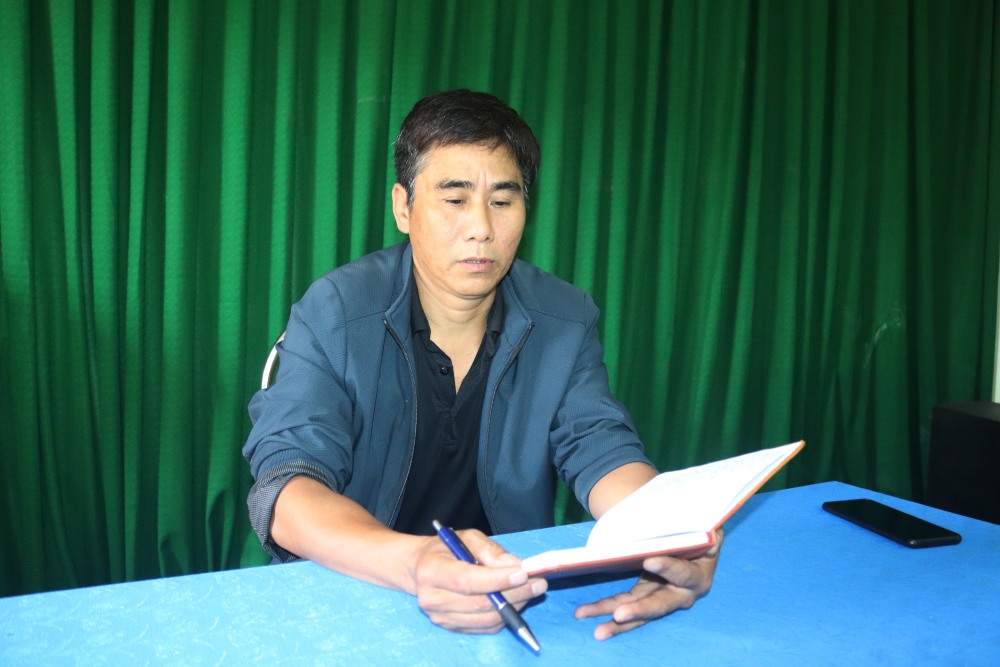
Mr. Dinh Ngoc Thiet - Secretary of the Party Cell, Head of Seo Sa Lung village - said that if the name Ma Pi Leng is kept for the new village, it will be a great advantage in developing community tourism, attracting tourists and promoting local products in the rocky plateau. This is an opportunity for people to do tourism, open homestays, sell agricultural products, and increase income.
Also in Dong Van commune, many other villages are also implementing the merger plan. In which, people's meetings have been held to get opinions on the merger of 4 villages including Thanh Tam, Xom Moi, Ngai Lung and Ngai Lau. After the merger, Thanh Tam village is expected to have about 540 households.
Similarly, for many mountainous localities of Lao Cai, this is not simply "merging names on the map", but a change that directly impacts the community life that has been shaped from many generations.
In Xuan Hoa commune (Lao Cai), the locality currently has 30 villages and hamlets, with a natural area of up to 306 km2, a population of over 78,000 people, but the population density is low.
Therefore, the most important thing in the process of developing the plan is to be suitable for local practice, not rigid according to mechanical criteria.
While waiting for the Ministry of Home Affairs to have specific instructions, the locality is also gradually calculating a reasonable arrangement plan, suitable for customs, habits, ethnic characteristics, naming plans... to create the highest consensus.
According to Document No. 277/UBND-NC of Lao Cai Provincial People's Committee, in the period before the arrangement of villages and residential groups is implemented, if the term of the village head and residential group head ends, the Chairman of the People's Committee of communes and wards shall carry out the consolidation of the titles of village head and residential group head according to current regulations.
In case it is necessary to serve the election work or to ensure stability and continuity in the organization and operation of villages and residential groups, the Chairman of the People's Committees of communes and wards decides on the appointment of temporary village heads and residential group heads to ensure the maintenance of operations.
Previously, at a meeting with voters held on the afternoon of May 5 in Da Nang City, Politburo Member, Standing Secretary of the Secretariat Tran Cam Tu emphasized that arranging villages and residential groups is an objective requirement to streamline focal points, improve management efficiency and serve the people.
However, the implementation must ensure caution, science, and suitability to the characteristics of each locality, avoiding mechanical implementation.


