
Many areas are supported
On December 11, Director of the Department of Agriculture and Environment of Quang Tri Tran Quoc Tuan discussed with Lao Dong Newspaper about the implementation results, existing problems and further handling plans when the end of 3 months of sending cadres to communes and wards is over.
Director of the Department of Agriculture and Environment of Quang Tri, Tran Quoc Tuan, said that bringing 48 staff to the grassroots has brought about clear changes, especially in procedures related to land, a field that is under great pressure from the amount of backlogged records.
The most obvious change is that many complicated records that have been previously extended have been completely handled. The professional support team and the staff brought to the commune have removed more than 320 obstacles, of which 75% are related to land management. Thanks to that, records of registration of changes, measurement, plot division, determination of land origin... are processed faster and in accordance with procedures" - Mr. Tuan said.
According to the Director of the Department of Agriculture and Environment, the major impact of this transfer is the ability of commune-level land officials to be significantly improved. Communes and wards have been proficient in operating the software.
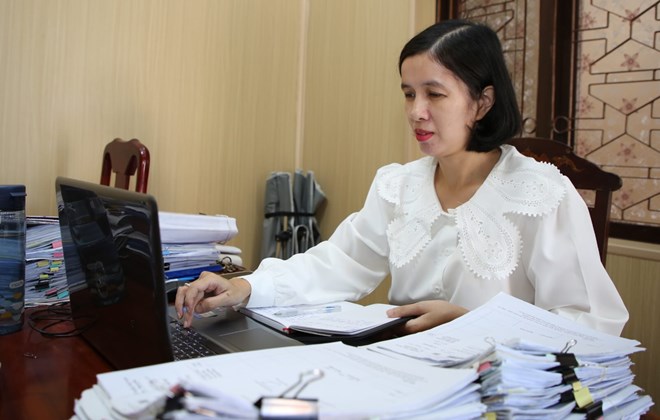
Mr. Tuan affirmed that in addition to handling professional matters, the increased staff also helps the commune resolve issues related to compensation, site clearance, environment, farming, forestry, disease prevention, etc. Many outstanding cases have been resolved at the grassroots level, reducing pressure on superiors, and reducing people's frustration.
Finding a direction for the future
According to Mr. Tuan, despite positive changes, many communes still have a large number of land records with problems. The main reason explained by Mr. Tuan is that the amount of backlogged records is too large, lasting through many stages, even decades, in which many records lack documents, do not have standard maps, and must be verified from the beginning.
Next is the lack of specialized human resources. Many communes have only one land and environmental officer concurrently holding many positions. When the two-level government model is in operation, the number of jobs will increase sharply, but human resources and skills will not be able to meet the demand.
Finally, digital infrastructure is still limited, especially in mountainous communes. Online public services have been deployed but transmission lines are slow, equipment is lacking, and staff are still confused.
Mr. Tuan said that standardizing documents and guiding the certification process according to the correct authority is the decisive task. Just supporting the handling of problems with land division, changing purposes, determining land for traffic planning... has helped reduce the rate of late records significantly.
The Director of the Department of Agriculture and Environment informed that the Department will continue to group complex documents to provide guidance according to the topic, and at the same time require communes to arrange staff with the right expertise.
"We suggest that the People's Committees of communes proactively grasp the decentralization regulations, not move the work to higher levels when it can be resolved on the spot" - Mr. Tuan said.
The Department is also building a shared database on land, environment, and agriculture to synchronously connect with the province's system. The most important thing is still coordination.
"In reality, the 3 months showed that when the right people and skills were brought to the commune, the effectiveness increased significantly. That is of great significance for the two-level government model, said Mr. Tuan.


