In the context of the country entering an era of rise with increasingly strict requirements on national governance, control of power and prevention and combat of corruption, wastefulness, and negativity, the Court's mission is no longer confined to the scope of adjudicating isolated cases. Moreover, the Court's activities are strategic in scale, directly impacting socio-political stability and the foundation of sustainable development of the nation.
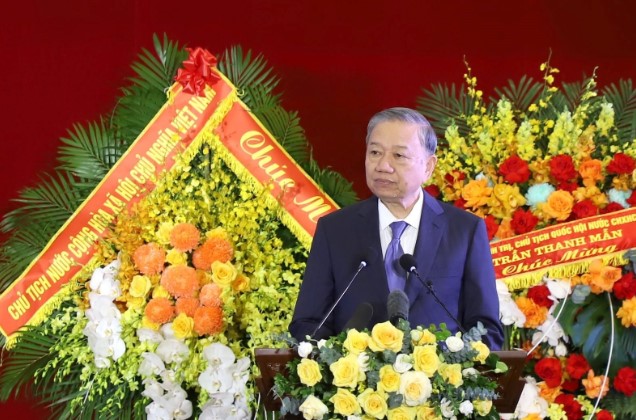
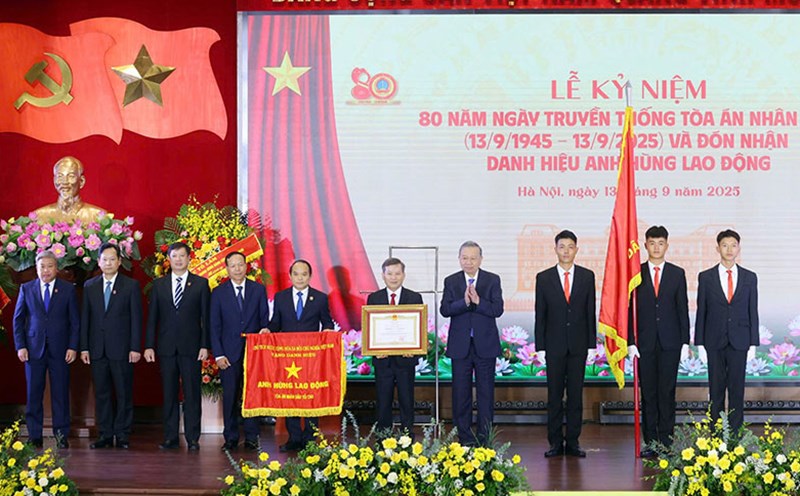
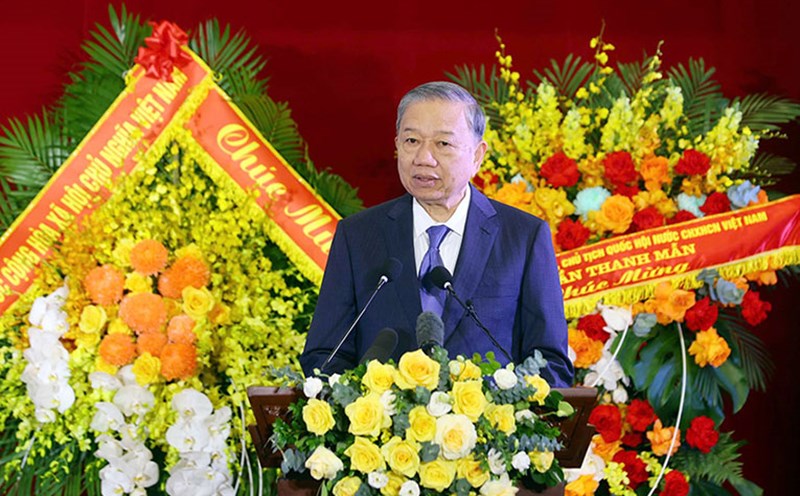
Speaking at the 80th Anniversary of the Traditional Day of the People's Court, General Secretary To Lam emphasized the requirement to build the People's Court into a solid political and legal "flagpole", with the responsibility of consolidating and spreading people's trust in justice, law and regime.
This direction is not only a reaffirmation of the Court's position in the architecture of state power, but also a strategic orientation, posing the requirement for comprehensive and profound innovation in the organization and operation of the Court sector before the new opportunities of the country.
People's Court – Pillar of judicial power in a socialist rule-of-law state
In the model of a socialist rule-of-law state of Vietnam, state power is unified, with close division, coordination and control between legislative, executive and judicial agencies. In that entity, the People's Court - the agency exercising judicial power - plays a particularly important role. This is where the law is directly, specifically and decisively enforced through judgments and decisions that take effect.
General Secretary To Lam's message that the Court must be a political-legal "fortune" reflects a profound dialectical thinking about the key position of the judicial body. A true "fortune" is not only a solid defense line against the risks of violating the rule of law, but also an institutional fulcrum to ensure stability, transparency and fairness for the entire national governance system.
The consistent viewpoint of the Party on judicial reform "building a judicial system in which the Court is the center, adjudication is the focus, and adversarial proceedings are the breakthrough" has once again been elevated in the direction of the General Secretary.
Determining the Court in the central position is not simply an organizational assignment, but a strategic choice. Because, all legal reforms, all policies to protect human rights and citizens' rights, in the end, must be tested, proven and vividly realized through trial activities at the court.
An important content in the General Secretary's direction is the request for the Court to continue to promote its pioneering role in preventing and combating corruption, wastefulness, and negativity - a task identified as "living" of the entire political system.
Practice in the past time has proven that, through strictly adjudicating major economic and corruption cases, the Court has realized the political determination of "no forbidden zones, no exceptions" of the Party and State.
Strict sentences, for the right person, for the right crime, and in accordance with the law for those who used to hold high positions are not only of general deterrence and prevention but also directly consolidate people's trust in the strictness of the law.
In addition, the work of recovering assets in corruption cases that the Court has focused on has contributed to maximizing damage to the State, improving the actual effectiveness of this struggle.
In that context, the image of the political - legal "fortune fortress" is the symbol of a Courageous, Steadfast Court, not fluctuating in the face of any temptation or pressure, bravely protecting the law, protecting the supreme interests of the Nation and the Nation.
Court building and "fortification" of people's trust
The role of the Court does not only stop at passively applying the law, but increasingly affirms its proactiveness in the process of building and perfecting institutions.

Precisely from the rich practice of adjudication, the Court is the place that most accurately detects inadequacies, "loopholes" or overlaps of legal regulations, thereby making proposals for amendments that are close to reality.
The work of developing case law, summarizing trial practice and explaining and guiding the application of the law has made an important contribution to ensuring the unity, stability and predictability of the judiciary.
In particular, the Court presiding over the development of the Specialized Court Law at the International Financial Center is a breakthrough milestone. This shows the vision and proactiveness of the Court sector in international integration, not only as a legislative step but also directly participating in creating a safe and transparent legal environment, effectively serving economic development and improving national competitiveness.
The ultimate goal of building the Court into a political-legal "fortress", in the end, is to consolidate and nurture the people's belief in justice. That belief cannot be built on slogans, but must be drawn from impartiality, objectivity and integrity in each judgment of each Judge.
Each Court official must be a role model of political bravery, wisdom and professional ethics, ensuring that all adjudication decisions are "sentimental and reasonable". Strengthening discipline, order, and strict handling of violations are mandatory requirements to maintain the integrity, prestige and sacred position of the Court.
Moreover, the Court needs to be closer to the people, understand the people, resolve disputes promptly, humanely, and respect the reality of life and national morality. Only when people truly consider the Court as the last reliable support to protect justice, will the image of the "justice fortress" emphasized by General Secretary To Lam be truly solid and lasting.
With a 80-year tradition, under the comprehensive leadership of the Party, the People's Court system will continue to promote its pillar role, contributing to building a modern and humane socialist rule-of-law state of Vietnam, worthy of being a solid political and legal "fortune" in the hearts of the People.
The upcoming 14th National Party Congress is expected to open up strong and synchronous policies and strategies, creating new impetus for the cause of building and perfecting a socialist rule-of-law state.
In which, continuing to affirm and concretize the central role of the Court in judicial reform, along with policies on institutions, human resources, facilities and technology application, will create a solid foundation for the People's Court to develop comprehensively in the new era. This is the basis for the Court to fully implement its mission of protecting justice, serving the Fatherland, and serving the People.
It's a bit of a bit of a bit of a bit of a bit of a bit.