
Prioritize resources for projects with full legal status and high socio-economic efficiency
At the Workshop "Unlocking capital sources for a sustainable real estate market", experts said that in the context that medium and long-term capital mobilization channels have not developed commensurately, bank credit still plays a particularly important role for the real estate market.
From a management perspective, Mr. Dao Van Ha, Deputy Director of the Forecasting and Statistics Department, State Bank of Vietnam, said that credit management is not only aimed at meeting capital needs but also to ensure that resources are allocated in the right places, creating real value and contributing to improving the capacity of enterprises.
Capital flows into legal projects fully and the actual needs are the safest credits. Conversely, capital flows into speculation where projects are not complete, not fully legal, then that is the source of systemic risk," Mr. Ha emphasized.
This message shows that credit has not withdrawn from real estate, but the funding criteria have changed. Instead of spreading out, credit institutions are increasingly valuing legal transparency, asset quality and project cash flow capacity.
According to experts, legality is the foundation for banks to determine property rights, assess progress, value collateral and develop debt recovery plans. Conversely, projects that have not completed legal procedures pose a risk of delayed progress, increased capital costs and increased bad debt risk.
Analyzing in more depth, economic expert Nguyen Quang Huy, CEO of the Faculty of Finance - Banking, Nguyen Trai University, said that real estate is still one of the important drivers of the economy when it directly contributes to GDP growth and creates spillover effects to more than 40 industries and fields such as construction, materials, finance - banking, trade, services and labor.
According to Mr. Huy, in the context of Vietnam aiming for double-digit growth, what the market needs is not more capital at all costs, but capital flows led in the right direction to strengthen confidence and transform into a quality housing supply.
When capital is prioritized for projects with full legal status, high socio-economic efficiency, developing diverse supply sources and meeting real needs, the market will form a more balanced structure, limit speculation and improve people's access to housing," Mr. Huy analyzed.

Diversifying capital sources for sustainable real estate market development
Experts also believe that in the long term, relying solely on bank credit will be difficult to meet the capital needs of the real estate market.
The characteristic of this field is a long investment cycle, from project preparation, construction to capital recovery, which usually lasts from 3-7 years, even longer for large-scale projects. Meanwhile, the capital source of banks mainly comes from short-term deposits of people and businesses.
From that reality, Mr. Nguyen Son, Chairman of the Member Council of VSDC, said that to unlock resources for the economy, it is necessary to simultaneously promote 4 channels, including public investment, capital market, bank credit and FDI. In which, the capital market needs to take on a clearer role in providing medium and long-term capital.
We need to access long-term capital mobilization channels, debt instruments that can be deployed such as bond issuance, bank products, which may include level 2 capital raising bonds," Mr. Son proposed.
According to the expert, public investment creates an infrastructure platform; stock market, FDI and investment capital flows supplement resources for businesses; bonds provide medium and long-term capital; while bank credit needs to focus on projects with good asset quality, clear cash flow and appropriate risk levels.
Citing international experience, expert Nguyen Quang Huy said that in many countries, real estate is financed by a diverse capital structure including bank credit, corporate bond markets, stock markets, real estate investment funds (REIT), insurance funds and long-term institutional investors.
This is also a direction Vietnam needs to gradually promote to reduce pressure on the banking system and create long-term capital sources suitable to the specific characteristics of the market," Mr. Huy assessed.
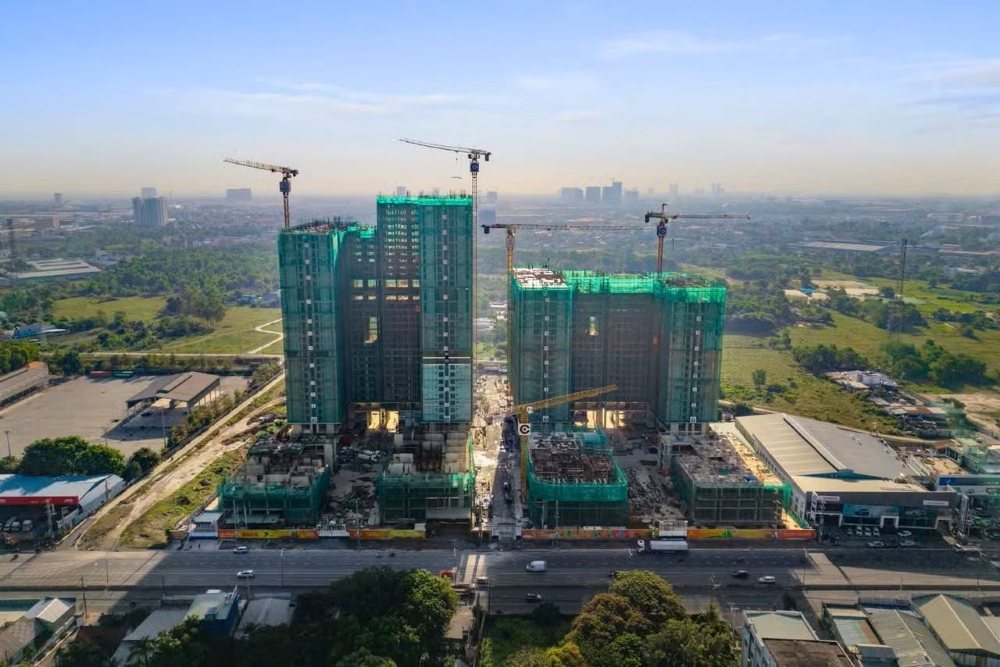
The synchronous development of the capital market along with bank credit will help form a more balanced capital structure, creating a foundation for the real estate market to recover in depth.
In the new development cycle, the "rules of the game" of capital flows have changed. Instead of dispersing, credit is heading towards legally transparent projects, meeting real needs and capable of creating sustainable cash flow. This is considered an important foundation for the real estate market to enter a more stable and sustainable growth phase.


