
At the workshop, delegates discussed the overall trend of green methanol and Vietnam's opportunities in the global value chain. The workshop marked an important step forward in efforts to promote the development of low-carbon fuels in Vietnam.
Green methanol trend in the world
In the context of more than 150 countries committing to Net Zero by 2050-2060, the demand for low-carbon fuels has increased sharply on a global scale. The maritime industry is particularly notable as the International Maritime Organization (IMO) aims to reduce emissions by 70% by 2040, leading to an explosion of methanol-powered fleets - expected to double by 2026. Methanol fuel infrastructure at major ports in Asia is developing rapidly. Vietnam is located on a key China - Southeast Asia shipping route, opening up great opportunities to join the green methanol supply chain.
As a pillar energy group of the country, Petrovietnam has identified the energy transition strategy as the central priority. The Group is implementing low-carbon energy development models: green hydrogen, green ammonia, biofuel, sustainable aviation fuel (SAF), biomethanol and carbon recovery, use and storage solutions (CCUS); while expanding the clean energy ecosystem and value chain of biomass, agricultural byproducts to meet the requirements of emission reduction. This is a key orientation to contribute to the realization of Vietnam's Net Zero 2050 goal.
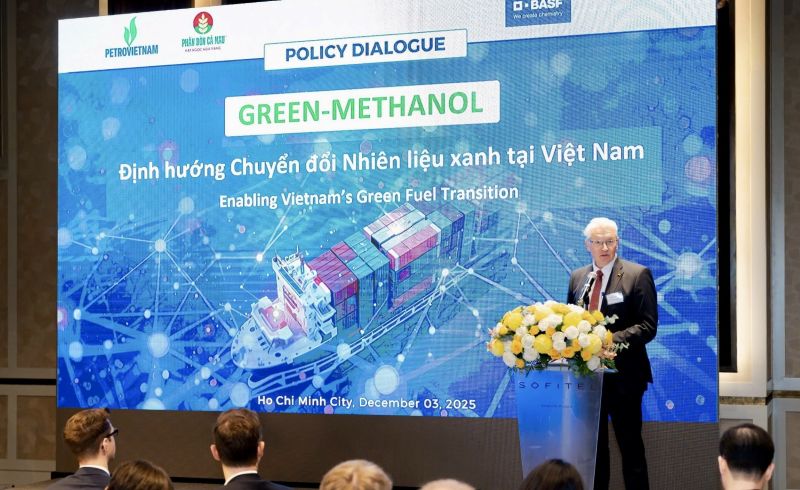
Petrovietnam - BASF Cooperation: Creating a foundation for the green methanol industry in Vietnam
At the program, Petrovietnam and BASF shared the orientation of cooperation in researching and developing green methanol on the basis of taking advantage of the abundant biomass resources, especially in the Mekong Delta, along with Petrovietnam's complete oil and gas - chemical infrastructure. BASF brings leading technology expertise, global experience in the methanol value chain and in-depth understanding of international carbon policies and standards.
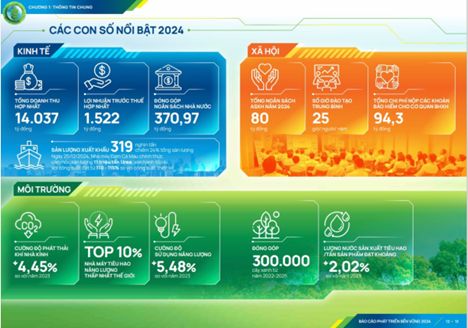
The sustainable development strategy of Ca Mau Fertilizer (PVCFC) focuses on integrating ESG (Environment, Society and Governance) factors, focusing on farmers, building a digital agricultural ecosystem and optimizing resources (air), towards the goal of green growth, improving competitiveness, and bringing benefits to the community.
In 2024, the enterprise reduced greenhouse gas emissions by 4.45%, energy consumption intensity by 5.48%, and water use by 2.02% compared to 2023, and in the 2023-2025 period, the unit planted more than 300,000 trees to restore ecology. In particular, the initiative to reuse CO2 to produce food CO2 has made Ca Mau Fertilizer one of the first enterprises in the industry to orient the development of a circular economic model, reduce emissions, optimize resources and increase product value. At the same time, the company develops Urea bio, microbiotics, organic and mineral products, aiming to balance inorganic and organic, improve soil, protect water resources, and contribute to building a green agricultural sector.
The proactive participation of PVCFC in this dialogue demonstrates the role of domestic enterprises ready to contribute practical expertise, operational data, market understanding and ESG vision - all towards the common goal of sustainable development and Net Zero 2050.
Policy gaps and the need to improve the legal framework
Experts from the Institute of Energy (Ministry of Industry and Trade), universities and businesses point out that Vietnam currently lacks a clear legal framework for low-carbon fuels such as methanol, ammonia, green hydrogen; especially fuel quality standards, product life cycle assessments (LCA), price mechanisms, financial incentives and carbon markets.
The completion of these policies will facilitate Vietnam's participation in the regional green methanol value chain, while reducing trade risks in the context of international mechanisms such as the European Southern Carbon Border Adjustment Mechanism (CBAM EU) gradually being widely applied.
Green methanol is not only a new product, but a strategic foundation for Vietnam's energy and low-carbon chemicals industry. With rich Biomass resources, favorable geographical location, available industrial infrastructure and a strong determination to shift energy, Vietnam is fully qualified to become a new green methanol center of Asia.
The cooperation between Petrovietnam and BASF is a pioneering step, contributing to paving the way for the formation of a green methanol ecosystem and promoting the country's sustainable development goals.


