
SJC gold bar price
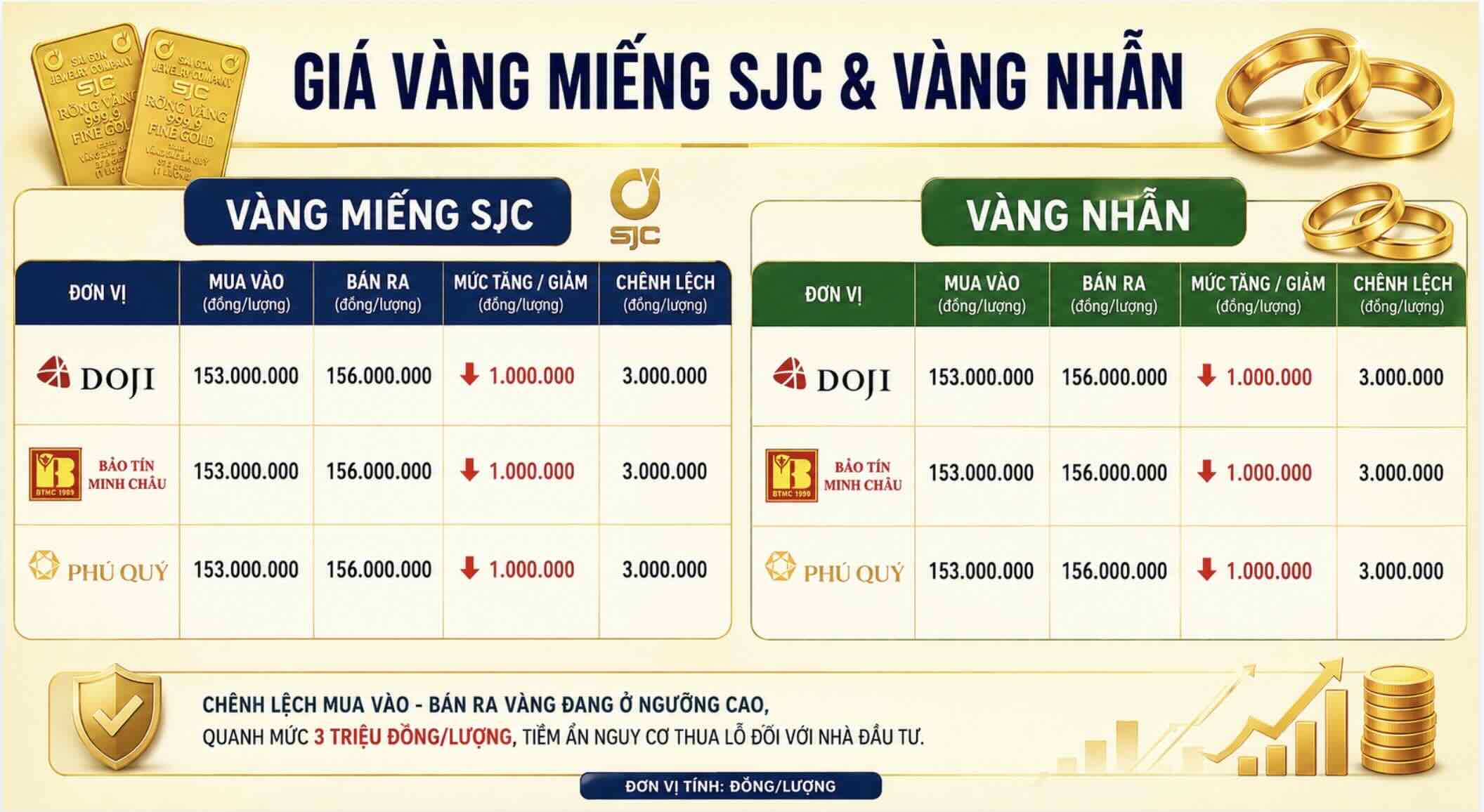
As of 5:40 PM, SJC gold bar prices were listed by DOJI at 153-156 million VND/tael (buying - selling), down 1 million VND/tael in both buying and selling directions. The difference between buying and selling prices is at 3 million VND/tael.
SJC gold bar price was listed by Bao Tin Minh Chau at the threshold of 153-156 million VND/tael (buying - selling), down 1 million VND/tael in both buying and selling directions. The difference between buying and selling prices is at the threshold of 3 million VND/tael.
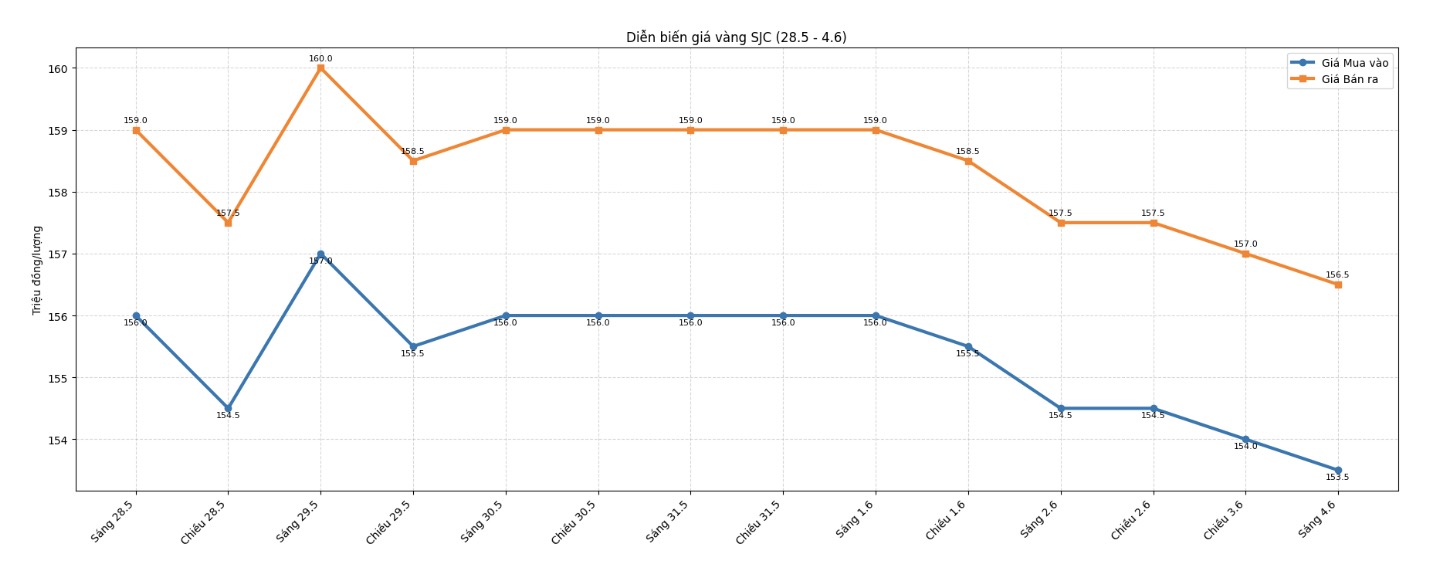
Phu Quy Jewelry Group listed SJC gold bar prices at 153-156 million VND/tael (buying - selling), down 1 million VND/tael in both buying and selling directions. The difference between buying and selling prices is at 3 million VND/tael.
9999 gold ring price
As of 5:40 PM, DOJI listed gold ring prices at 153-156 million VND/tael (buying - selling), down 1 million VND/tael in both buying and selling directions. The difference between buying and selling prices is at 3 million VND/tael.
Bao Tin Minh Chau listed gold ring prices at 153-156 million VND/tael (buying - selling), down 1 million VND/tael in both buying and selling directions. The difference between buying and selling prices is at 3 million VND/tael.
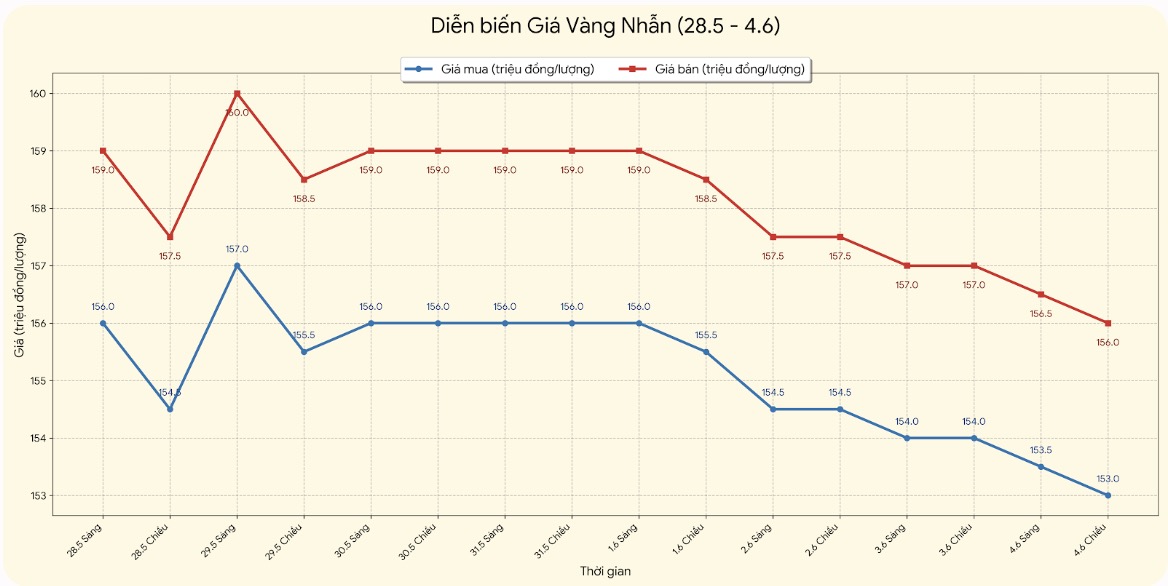
Phu Quy Gold and Gems Group listed the price of gold rings at 153-156 million VND/tael (buying - selling), down 1 million VND/tael in both buying and selling directions. The difference between buying and selling prices is at 3 million VND/tael.
The buying - selling price difference of gold is at a very high level, around 3 million VND/tael, posing a risk of losses for investors.
World gold price
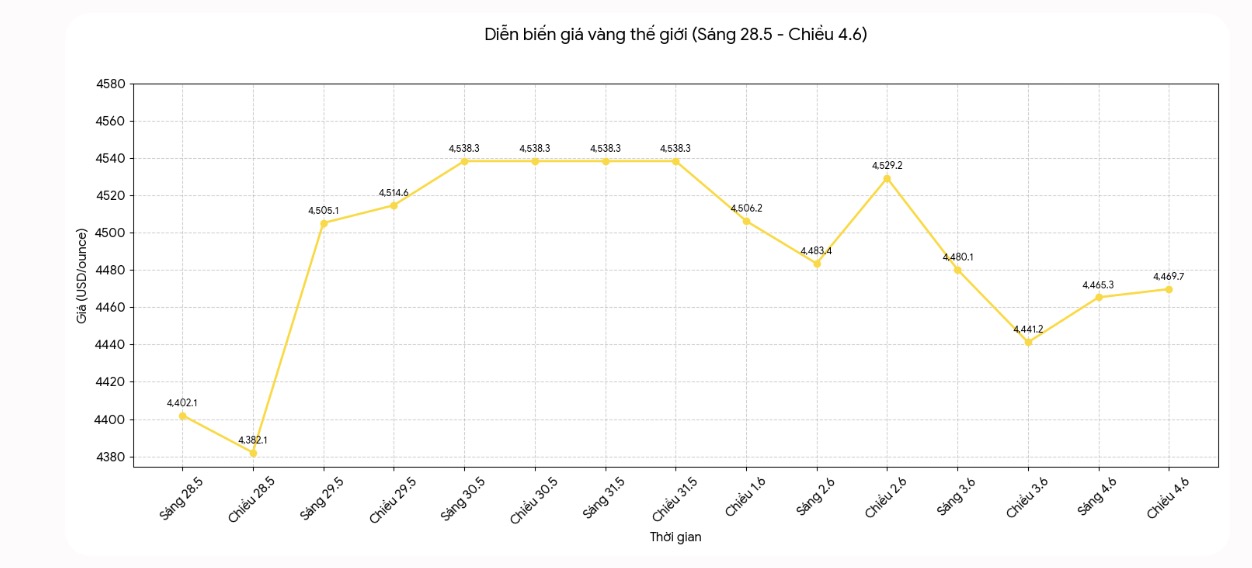
At 5:40 PM, world gold prices were listed around the threshold of 4,469.7 USD/ounce, up 28.5 USD compared to the previous day.
Gold price forecast
World gold prices are being interspersedly affected by geopolitical developments in the Middle East, fluctuations in oil prices, the USD and monetary policy expectations of the US Federal Reserve (Fed).
After a period of strong pressure due to US-Iran tensions causing oil prices to escalate and the USD to strengthen, the precious metal has shown a recovery as the market expects the possibility of cooling down the conflict.
According to analysts, Israel and Lebanon reaching a ceasefire agreement has contributed to improving investor sentiment, reducing concerns about the risk of energy supply disruption.
Cooling oil prices also partly reduced inflationary pressure, thereby weakening the USD. This is a supporting factor for gold, because the precious metal valued in USD becomes more attractive to investors holding other currencies.
Mr. Nikos Tzabouras - senior market analyst at Tradu. com of Jefferies - said that a positive diplomatic outcome could help restore crude oil flows, while easing inflation concerns. In that scenario, lower oil prices and weaker USD could support gold to extend its recovery momentum.
However, the short-term outlook for gold is still not really favorable. Geopolitical tensions, although showing signs of cooling down, have not completely ended.
Meanwhile, the general level of interest rates in the US remains high, the yield of 10-year US Treasury bonds fluctuating around 4.5%, continuing to put pressure on non-performing assets such as gold.
Mr. Tzabouras also warned that the near future outlook for gold is still challenging and the precious metal may continue to be under pressure if geopolitical risks persist, while expectations of longer-term high interest rates continue to support the USD. This is a major obstacle to gold's recovery momentum in the short term.
From a technical perspective, the 4,460 - 4,500 USD/ounce zone is considered a near resistance level for gold prices. If it crosses this zone, the price may head towards higher levels around 4,526 USD/ounce and 4,576 USD/ounce. Conversely, if it loses the support zone around 4,438 USD/ounce, gold prices are at risk of falling further into the 4,400 USD/ounce zone.
Investors are currently awaiting the US May jobs report to have more signals about the Fed's monetary policy roadmap. Stronger-than-expected labor data may strengthen the view of maintaining high interest rates, thereby adversely affecting gold. Conversely, weakening data may support policy easing expectations, creating momentum for the precious metal to recover.
Gold price data is compared to the previous day.
See more news related to gold prices HERE...


