
On the morning of February 25, at the Conference to thoroughly grasp and implement Resolutions 79, 80 of the Politburo, informing about the action program to implement Resolution 80-NQ/TW of the Politburo on developing Vietnamese culture, Standing Deputy Prime Minister Nguyen Hoa Binh emphasized the group of tasks on resources, infrastructure and cultural human resources as key pillars.
Investing in artists with state budget, valuing young talents
Accordingly, the Government will issue a National Strategy for developing cultural and artistic human resources; implement a project to innovate art education throughout the system of educational institutions associated with digital transformation.
Each year, 80 experts and artists will be sent to study and train abroad with state budget funds. This is considered a strategic step to improve the quality of creative human resources, helping Vietnamese artists access the quintessence of international art and gradually form a class of artists with sufficient integration capacity.
Along with that, implement the Vietnamese Talent Program in the field of culture and arts in the period 2026-2035; organize in-depth training for 5,000 human resources to develop electronic games to serve Vietnamese historical education, linking culture with technology and digital space.
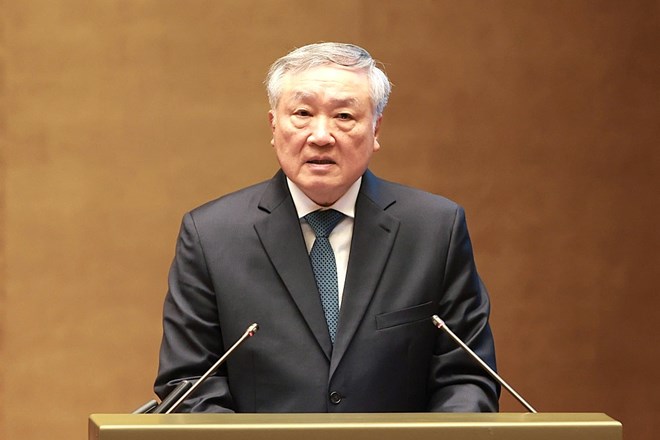
The Standing Deputy Prime Minister also clearly stated the completion of the mechanism for recognizing, ranking and commending individuals with outstanding contributions in the field of culture and art. The policy is designed in an expanded direction, creating motivation for both young artists with outstanding achievements and artists with many years of dedication.
In addition, the program aims to allocate at least 2% of the total state budget expenditure annually for the cultural sector, allocated in the direction of key investment associated with output efficiency, creating stable and long-term resources for development.
Proactively integrate and expand the Vietnamese Cultural Center abroad
Another important content is international integration in culture, with the orientation of making culture a strategic component in foreign affairs and developing national soft power.
The Government will issue the Foreign Culture Strategy to 2030, vision 2045; incorporate cultural content into bilateral and multilateral economic and trade cooperation agreements and in high-level visits.
Deploying the annual multilingual communication campaign "Impressive Vietnam"; developing a network of cultural ambassadors; supporting translation and publishing 200 Vietnamese literary and artistic works to the world each year. At the same time, cooperating in preparing dossiers to register 5 more typical world cultural and natural heritages, strengthening the promotion of the country's image.
The program also identifies the establishment of 1-3 new Vietnam Cultural Centers in strategic partner countries such as Russia, the United States, China, South Korea, and Japan; and at the same time improve the operational efficiency of existing centers in France and Laos.
These centers will be the focal points for organizing art exchanges, exhibitions, heritage promotion, cuisine and creative industry; connecting the Vietnamese community abroad and introducing Vietnamese images to international friends.
In parallel with that, it is building a project to develop a chain of Vietnamese culinary restaurants abroad; replicating the model of Vietnamese neighborhoods, Vietnamese villages and cultural and martial arts clubs in countries with large overseas Vietnamese communities.
The Standing Deputy Prime Minister emphasized that cultural development in the new period must be associated with deep integration, enhancing the national position, while ensuring the preservation of identity and spreading Vietnamese cultural values to the world.


