
On the afternoon of September 16, information from the Department of Culture, Sports and Tourism of Nghe An province said that during the emergency excavation of brick tomb traces in the Ru But area, Kim Lien commune, 2 ancient tombs and many valuable artifacts were discovered.
The two voored brick tombs are designated M1 and M2, still quite intact. Among them, the M1 tomb has a rectangular basement structure; the M2 tomb has a more complex scale and structure, including the vestibule, the main vestibule and the acupuncture point.
The arches of the tombs are built of grapefruit-shaped bricks. At the M1 tomb wall, archaeologists discovered many bricks decorated with checkered and floral patterns and bricks with engraved Chinese characters. Initially, some characters were identified as having the character "Dong Bich".
Notably, these are rare brick tombs in Nghe An that have not been excavated before being discovered. Thanks to that, the architectural structure and the arrangement of many burial objects in the tomb are still relatively preserved in their original state.
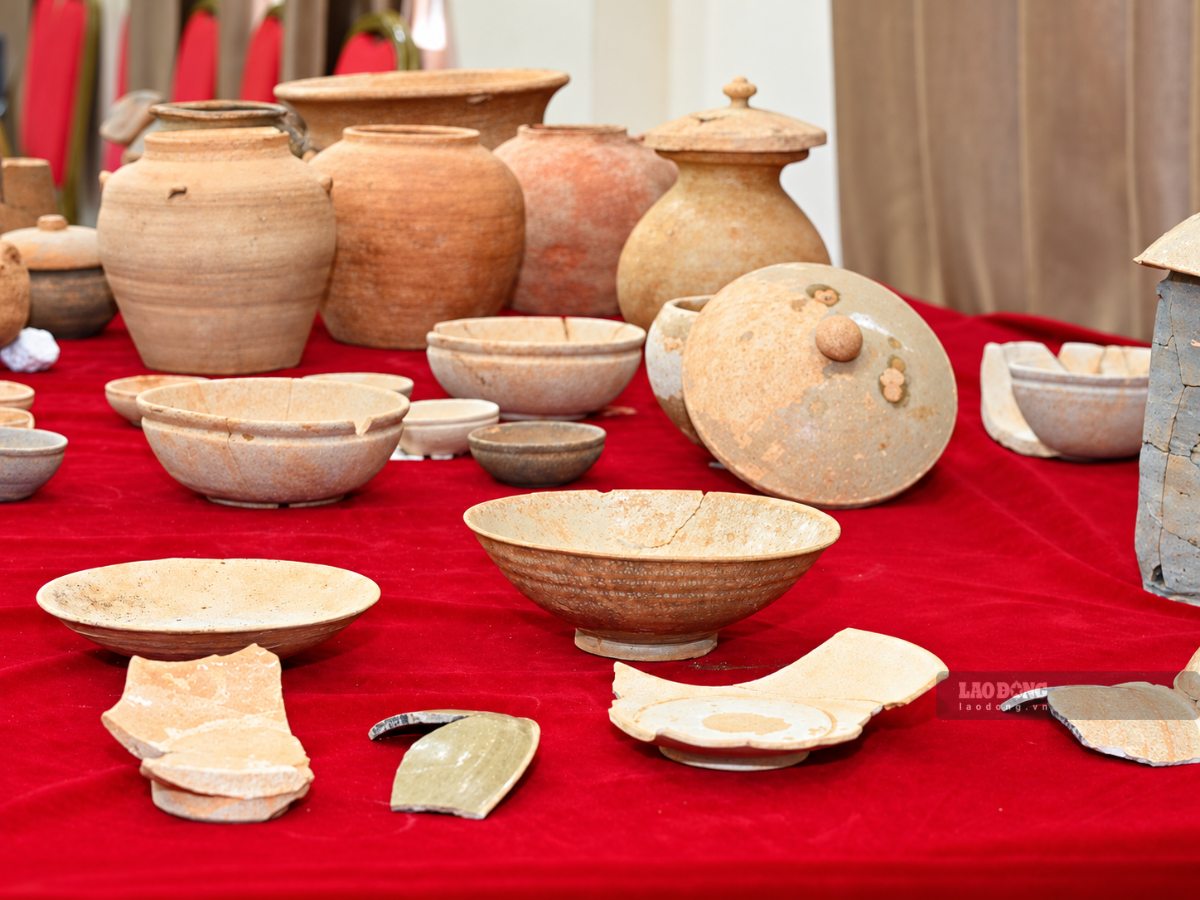
The excavation process has collected many groups of artifacts made of ceramics, earthenware, metal, gold, glass and jewelry.
At the M1 tomb, archaeologists discovered many swords and iron swords. Some swords and swords were arranged diagonally, facing the head of the tomb, showing the arrangement of burial objects according to a certain burial ritual.
Meanwhile, the M2 tomb has notable artifacts including gold chain beads, gold leaves and many polygonal glass chain beads.
Based on the architectural structure, stratigraphy and artifact system, specialized agencies initially determined that the 2 Buddha-shaped brick tombs date back to about the 3rd to 6th centuries.
Previously, in April 2026, during the process of digging soil to plant trees in the Buddha's hut area, people discovered traces of the curved arch of a brick tomb.
After receiving the information, the Nghe An - Xo Viet Nghe Tinh Museum in coordination with the University of Social Sciences and Humanities conducted a survey, and then organized an urgent excavation in August 2026.
According to specialized agencies, the fact that the 2 graves are still relatively intact along with the system of burial artifacts preserved on the spot provides additional research materials on burial customs, socio-economic life and cultural history of the Lam River basin in the ancient - medieval period.


