
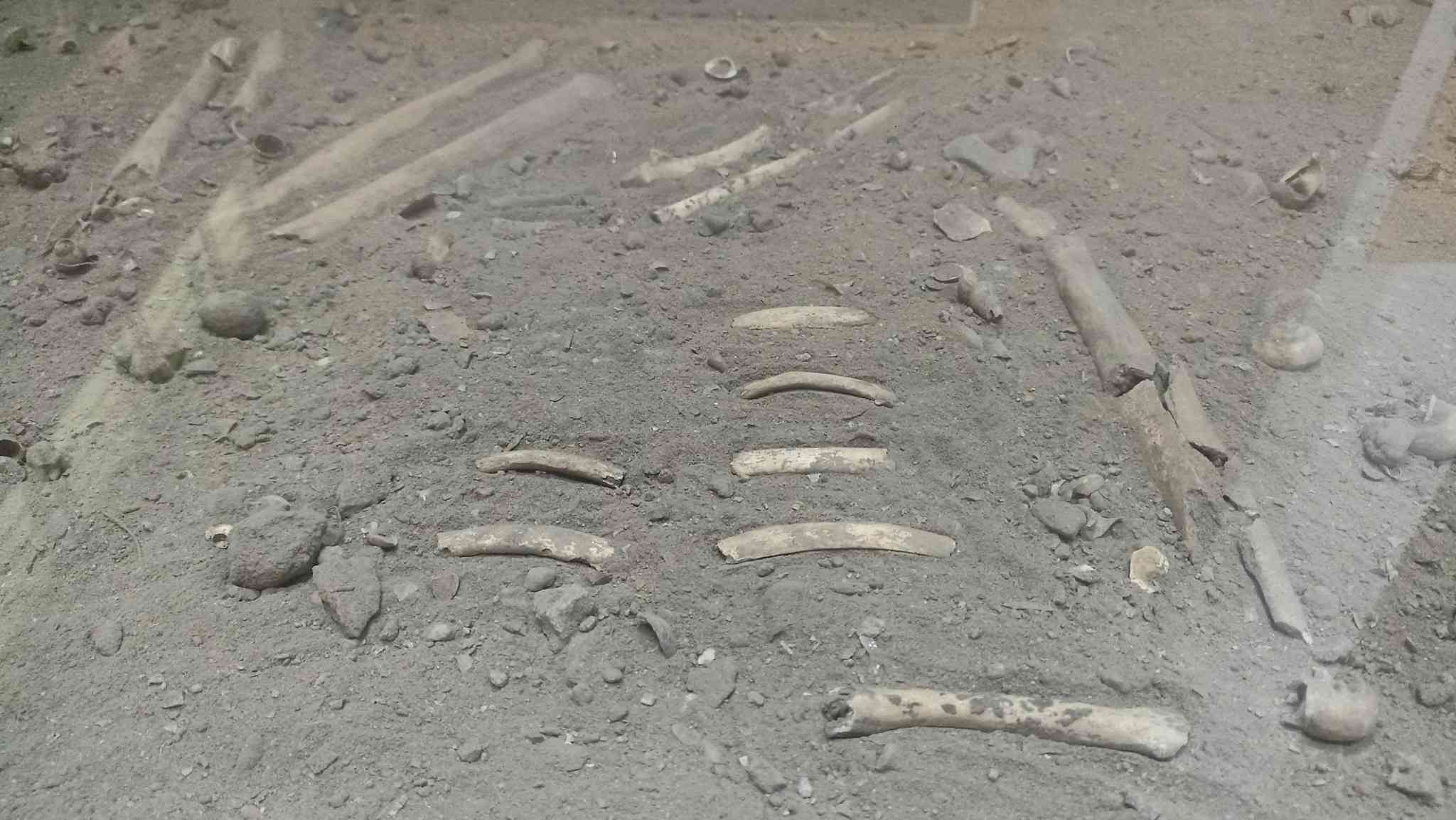
The museum in the middle of the great forest of Cuc Phuong (Ninh Binh) is a place to display and preserve tens of thousands of specimens of animals and plants... In particular, this place preserves a fossilized skeleton of prehistoric people lying on pillows dating back more than 7,500 years, along with stone tools that are important archaeological documents, contributing to clarifying the life and activities of prehistoric residents in the area.
These skeletons were discovered at Nguoi Xua cave, located halfway up a limestone mountain in the primeval forest belonging to Cuc Phuong National Park.
Nguoi Xua Cave has a gate about 10m wide and about 20m high. Inside the cave, there are many stalactites, when knocked on, sounds such as gongs and gongs of the Muong people are heard. The indigenous Muong people call the cave Dang Cave (bitter is bat), because there are many species of bats living here.
Mr. Pham Phu Cuong - management official at Cuc Phuong National Park - said: Nguoi Xua Cave was excavated by archaeologists and discovered 3 ancient tombs with 3 fossilized human skeletons, the bodies were buried in a reclining position.
The cave is about 300m long, divided into 3 compartments, the door facing southwest. In which, the outermost compartment is wide, bright and airy, so it was chosen by prehistoric people as a place to live. The middle compartment is narrow, dark, and humid, where bats live. The inner compartment is dark and humid with a very beautiful stalactite system.
According to Mr. Cuong, Nguoi Xua cave was surveyed and excavated by the Vietnam Institute of Archeology in coordination with Cuc Phuong National Park and German experts in 1966. During the excavation, many types of stone axes, stone knives, sharp bone tips, snail shells, animal bones were discovered... Archaeologists concluded that in the cave there were original people living here for a long time.
In particular, when excavating, 3 ancient tombs with fossilized human skeletons were also discovered in the cave, still quite intact, about 7,500 years ago.
The body was buried in a reclined position at a depth of 40cm to 140cm, surrounded by a rocky embankment, the bottom lined with crushed stone and sprinkled with cinnamon bark. Archaeologists also assessed that the tied body was a custom of tying the dead before burial, because they were afraid that the "ghost" would return to harm the living" - Mr. Cuong said.
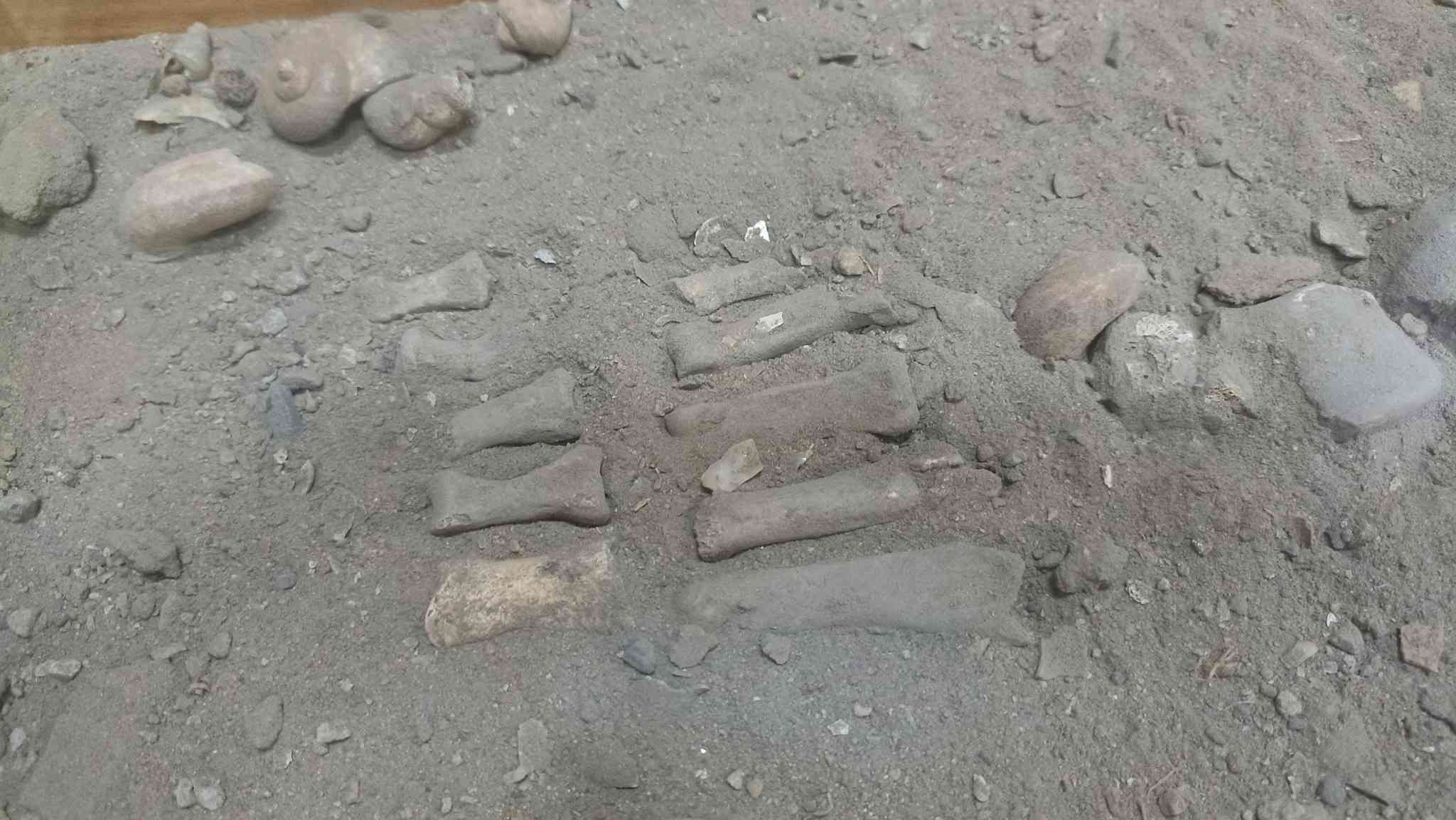
According to documents preserved at Cuc Phuong National Park, the tombs in the cave are ancient tomb structures first discovered in relics belonging to Hoa Binh culture, it helps us recall the primitive concepts of belief and primitive religion.
It is known that among the 3 sets of remains excavated at Nguoi Xua Cave, 2 sets of remains are being kept at the Vietnam Museum of Archeology, and 1 set is being preserved and displayed at the Cuc Phuong Museum.
Currently, the prehistoric human skeleton being preserved and displayed at the Cuc Phuong Museum is still intact with parts such as skull bones, ribs, armpits, shins...


