
On March 12, the seminar "Resolution 80-NQ/TW of the Politburo on the development of Vietnamese culture: From strategic goals to practical solutions" took place at the University of Social Sciences and Humanities (Vietnam National University, Hanoi), with the participation of many experts, scientists and managers in the field of culture.
Speaking at the opening of the seminar, Prof. Dr. Hoang Anh Tuan - Rector of the University of Social Sciences and Humanities said that Resolution 80 sets out the requirement to recognize culture as an important driving force for national development in the new period. According to him, recently the awareness of the role of culture has had a clear shift from the Central to the grassroots level.
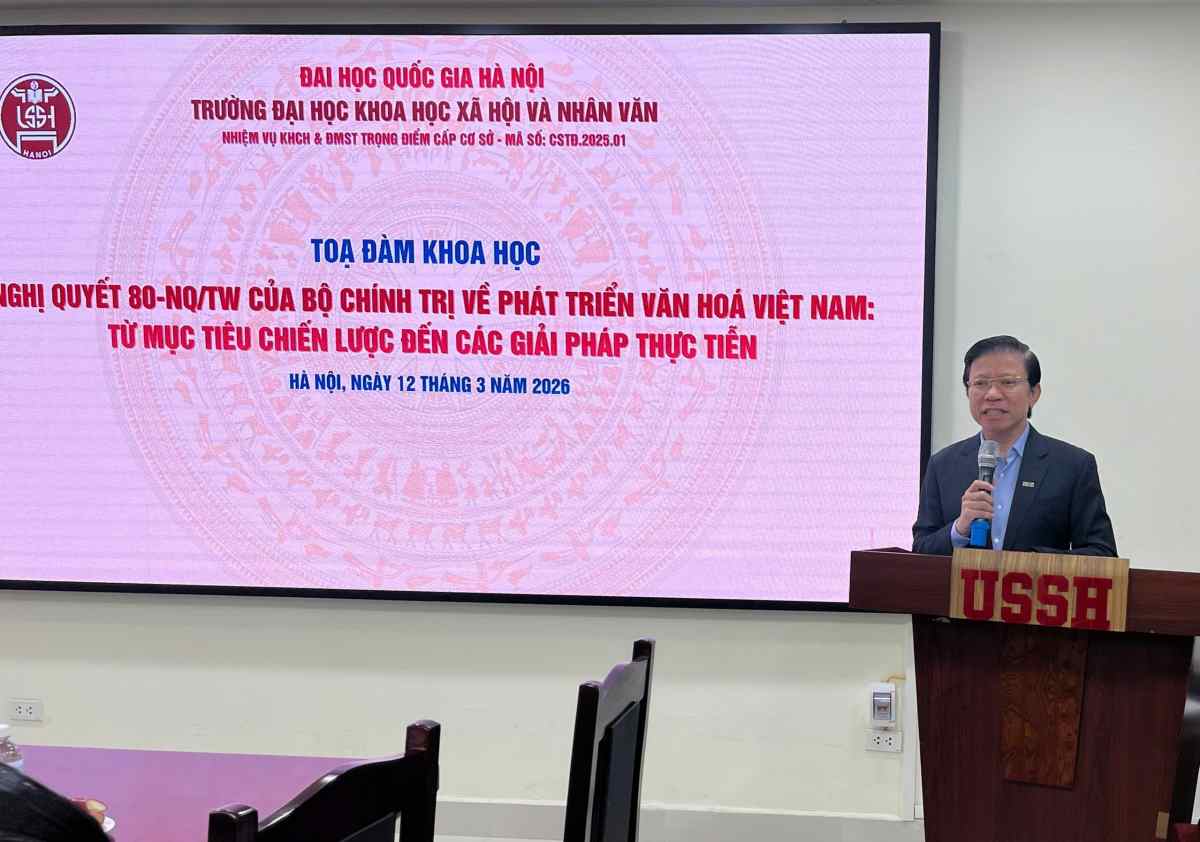
He cited the viewpoint emphasized in many speeches of Party and State leaders: "If economy determines the fast march, then culture determines the long march of the country. Therefore, for educational institutions, schools must not only teach literacy but also teach people, teach civic responsibility, teach discipline and true culture.
According to Prof. Dr. Hoang Anh Tuan, to realize the goals of Resolution 80, it is necessary to focus on bringing national value systems and cultural value systems into the education program at all levels, and at the same time recognize Vietnamese culture as an important source of learning materials in the education system.
In addition, he believes that it is necessary to build a continuous learning cultural ecosystem between family, school and society, and at the same time promote the creation of "digital objects" to support learners in improving their coping and self-protection skills in cyberspace.
According to Prof. Dr. Hoang Anh Tuan, the development of the cultural industry also needs to be prepared early through education.
The cause of cultural revitalization must begin with innovations and restructuring in the education system. Investing in cultural education is a strategic investment to unleash endogenous strength and prepare resources for the country's development," he emphasized.
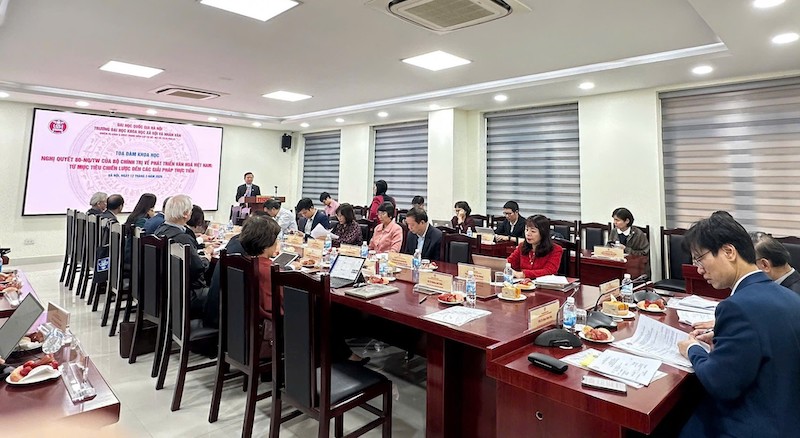
At the seminar, experts and researchers also exchanged views on many issues related to the implementation of Resolution 80, such as Unblocking institutional bottlenecks: shifting culture from "targets" to "development regulatory systems", from strategic goals to tasks and solutions for developing cultural industries, soft power and positioning Vietnamese culture in the new era...
In addition, delegates also listened to the sharing of the Director of the Hanoi Department of Culture and Sports on the implementation of Resolution 80 on developing Vietnamese culture in the city; along with the opinion of the Deputy Director of Ninh Binh Department of Tourism on the direction of developing cultural and tourism industries to become a key economic cluster of the locality.
Opinions at the seminar said that for Resolution 80 to become a reality, close coordination between management agencies, training institutions, businesses and the creative community is needed. In which, human resource development and the cultural industrial ecosystem are considered key factors to effectively exploit cultural resources and enhance national soft power.


