
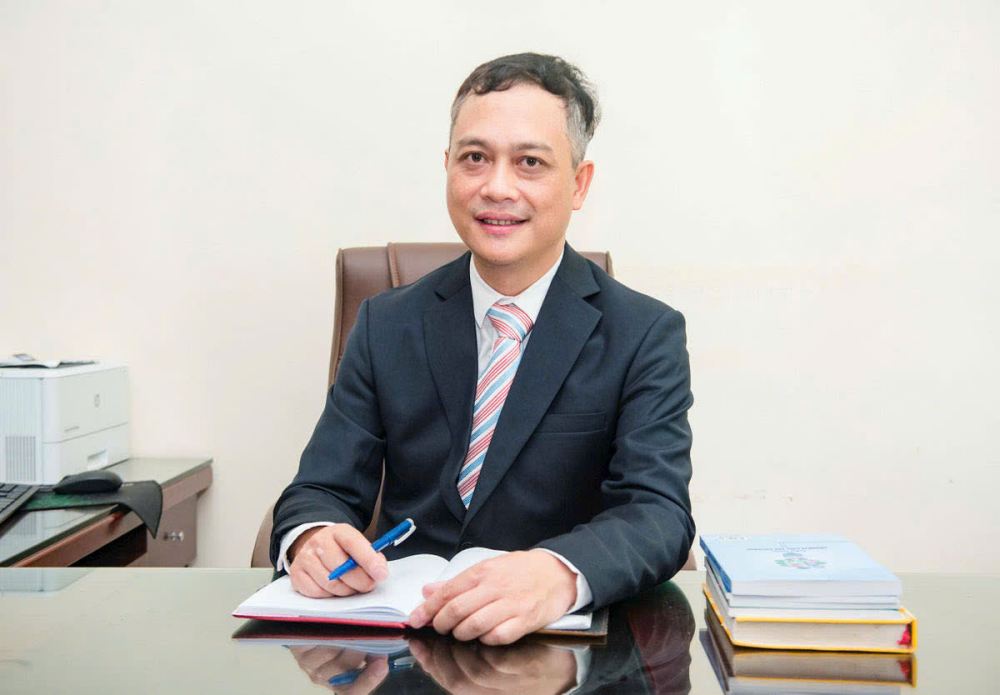
Lao Dong Newspaper had an exchange with Assoc. Prof. Dr. Nguyen Van Hieu, Rector of the School of Interdisciplinary Science and Arts, Vietnam National University, Hanoi about the role of the university system as a knowledge institution contributing to leading the city to be creative; and at the same time proposed a model connecting the State - business - community, in which universities are the nucleus to transform knowledge into cultural and economic values with Vietnamese identity.
Hanoi has joined the UNESCO Network of Creative Cities since 2019 and recently has important political bases such as Resolution 80-NQ/TW and the Capital Law 2024. According to you, what are the biggest opportunities and the most fundamental challenges for the cultural industry to truly become a driving force for restructuring the development model of the Capital?
Over the past two decades, cultural industry and creative cities have become strategic directions for many cities around the world to overcome the limitations of the growth model based on traditional industry and resource exploitation. For Vietnam and Hanoi, this is no longer an experimental choice, but is becoming an official development direction, associated with national strategies, international commitments and the requirement to restructure the urban growth model.
In recent years, Hanoi has achieved remarkable initial results in the field of culture: the proportion of cultural industry in GRDP increased from about 3.7% in 2022 to nearly 5% in 2025; tourism maintains over 20 million visitors per year; many spaces and creative activities have been formed, contributing to renewing the urban appearance.
However, that result is still not commensurate with the cultural and historical potential of the Capital. The contribution of art and creative industries is still modest compared to other fields; culture has not really become the core of values that create the attractiveness of Hanoi. The current challenge is therefore not in "what to do more", but in a more fundamental question: which philosophy, which model to develop and based on which leading force so that the cultural industry can create a real structural transformation for the city.
International experience shows that there is no universal creative city model; each city must find its own path based on its own identity and institutional conditions. Looking at Hanoi's reality, what "bottlenecks" are hindering the formation of a deep cultural industrial ecosystem?
Hanoi is entering the orbit of a creative city in a very special circumstance: the city is directly shifting from an administrative - cultural urban model to a service, knowledge and creative urban area when the classical industrialization process is not yet complete. This "jump" opens up great opportunities, but requires institutional capacity and coordination of development at a higher level.
From the reality of the Capital, I believe that there are four main bottlenecks: First, lack of a comprehensive philosophy and model for a creative city. Second, resources on heritage, craft villages, creative communities, and education have not been connected into a common structure. Third, human resources are not suitable; training is still mono-disciplinary, separating creativity from management and the market, lacking an inter-disciplinary practice environment. Fourth, mechanisms and creative space are not sustainable; many spaces are fragmented, easily overwhelmed by short-term benefits.
These bottlenecks show that Hanoi does not lack potential, but lacks a knowledge institution strong enough to jointly contribute to leading and coordinating the transformation process.
With the position of a leading multi-disciplinary university, how can Hanoi National University (VNUHN) and the Interdisciplinary School of Science and Arts contribute specifically to Hanoi in fields such as training interdisciplinary creative human resources, as well as developing new economic and cultural models?
In his directing speech at the XVIII Hanoi City Party Congress, term 2025 - 2030, General Secretary To Lam directed Hanoi National University to become a "level of knowledge" in relation to the "level of heritage" of the Capital Hanoi. This shows that the General Secretary places great expectations on Hanoi National University in contributing to the development of the Capital.
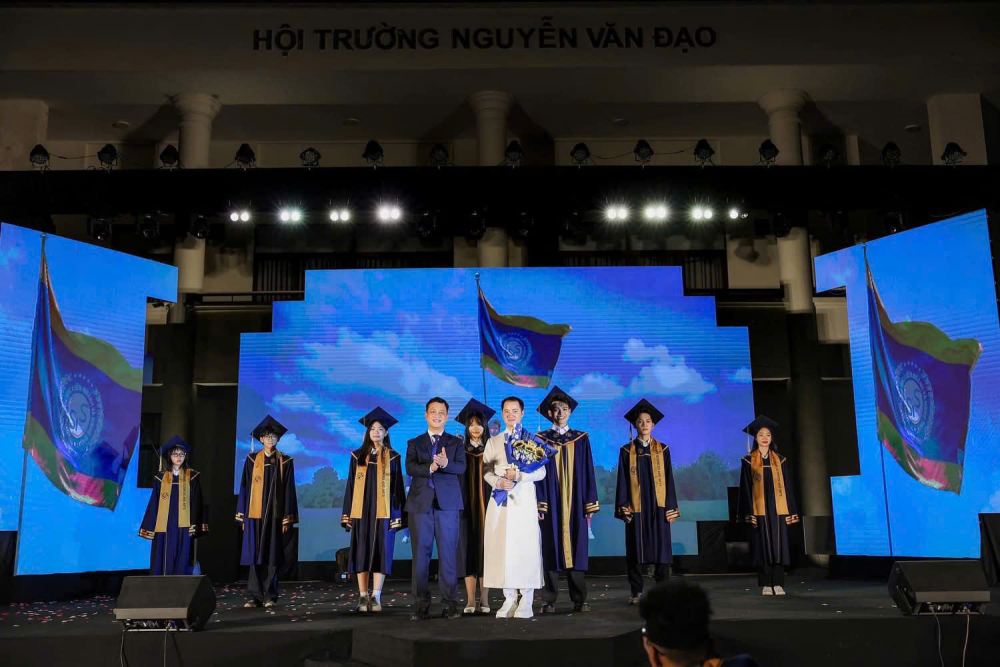
As a multi-disciplinary and multi-field educational institution, strongly shifting to the research - innovation university model, Vietnam National University, Hanoi has substantial conditions to directly contribute to Hanoi in the process of developing the cultural industry and building a creative city.
First, based on the strengths of social sciences - humanities, heritage and urbanism, VNUHN, in which the Interdisciplinary School of Science and Arts plays a core role, can participate in building philosophy and development models for the creative city of Hanoi in the direction of "culture - identity - creativity", based on living heritage, adaptive preservation and co-management.
Second, the school trains interdisciplinary creative human resources, capable of working at the intersection of art - heritage - design - society, meeting the type of "creative actor" that the creative city needs.
Third, VNU-HN can research, apply and advise on policies on heritage management, cultural industry, creative education and urban development, helping to narrow the gap between knowledge and policy decisions.
Fourth, the Interdisciplinary School of Science and Arts can become a space to incubate creative practice, connecting students - artists - businesses - the community. When Hoa Lac urban area develops into a knowledge pole, this place can completely be a "living urban laboratory" for new models of Hanoi.
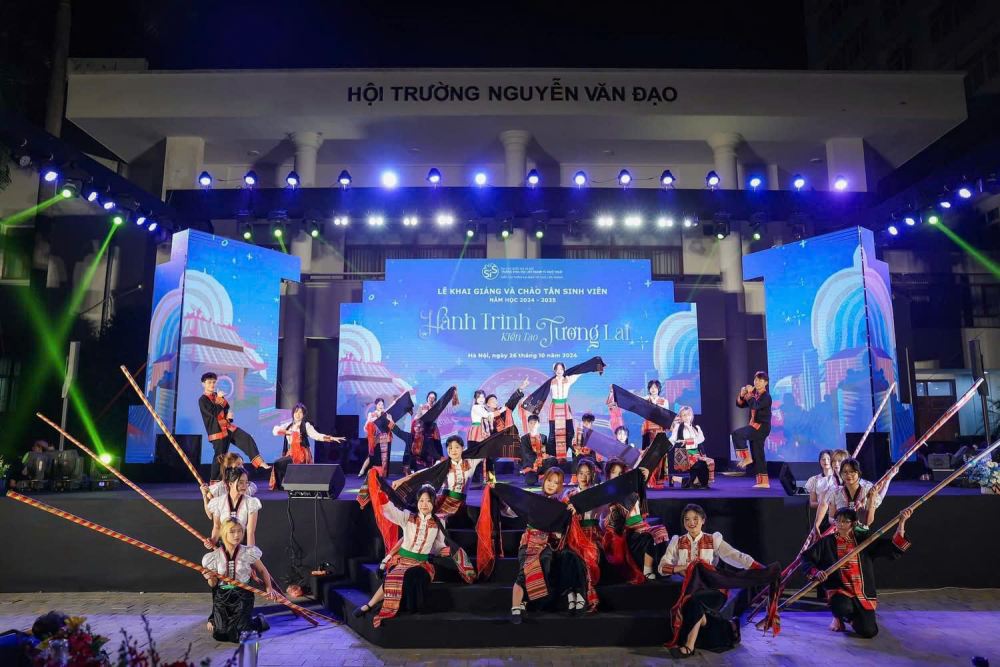
For many years, the development of the cultural industry in Vietnam has often been visualized according to the traditional "three-house" model: State - Enterprise - School, in which universities mainly take on the role of training and research. In your opinion, is there a new perspective on the structure of actors participating in the cultural industry, and what role should VNU-HN and the Interdisciplinary School of Science and Arts play in that model?
The contemporary cultural industry no longer operates according to the purely "three-house" model. Resolution 80-NQ/TW has expanded the approach to cultural development, which emphasizes the role of multi-center participation, with the community participating in both creation and cultural enjoyment. In that context, the traditional "three-house" model needs to be expanded into a more flexible structure, where the creative community becomes an indispensable pillar of the cultural industry.
Universities, with advantages in knowledge, people and connectivity, can and must play an intermediary core role in this structure. On the one hand, universities are reliable partners of the State in researching, advising and implementing cultural policies based on science and empirical data. On the other hand, universities are a test space where businesses can jointly participate in developing products, business models and human resources for the cultural industry.
A special point is that universities have the ability to reach creative communities including independent artists, young creative groups, community cultural spaces and local people themselves. Through open training programs, community-linked learning projects, resident artists or creative spaces in schools, universities create a platform for the community not only to be the beneficiaries, but also to become co-creators.
When universities play the role of "hub" connecting, distributed capital resources will be integrated into a continuous operating ecosystem. There, the state orients and creates a policy corridor; businesses participate in investment and commercialization; the community contributes creative energy; and universities provide knowledge, human resources and organizational capacity. This is the comprehensive and sustainable cultural industry development model that Resolution 80 aims for.
With that spirit, VNU-HN and the Interdisciplinary School of Science and Arts are ready to take responsibility for co-creating the Capital's cultural industry, so that knowledge and art can awaken the cultural layers of Hanoi, making the city a true creative center of the region.


