
On January 11, Ham Tan Commune People's Committee (Lam Dong province) said that a foreign-invested enterprise (FDI) in the area is in need of recruiting about 1,000 garment workers to serve the production plan after the Lunar New Year.
The enterprise with a large recruitment demand is Gear Meister Vina Co., Ltd., specializing in producing backpacks and handbags, currently located in Nghia Hoa Industrial Cluster, Ham Tan commune.
According to research, this enterprise is completing preparations to put the factory into stable operation from March 2026.
Employees working at the company can enjoy an income of up to 14 million VND per month, depending on the position and labor productivity.
In addition to salaries, businesses also commit to full insurance regimes according to regulations, holiday bonuses, Tet and many other welfare policies.
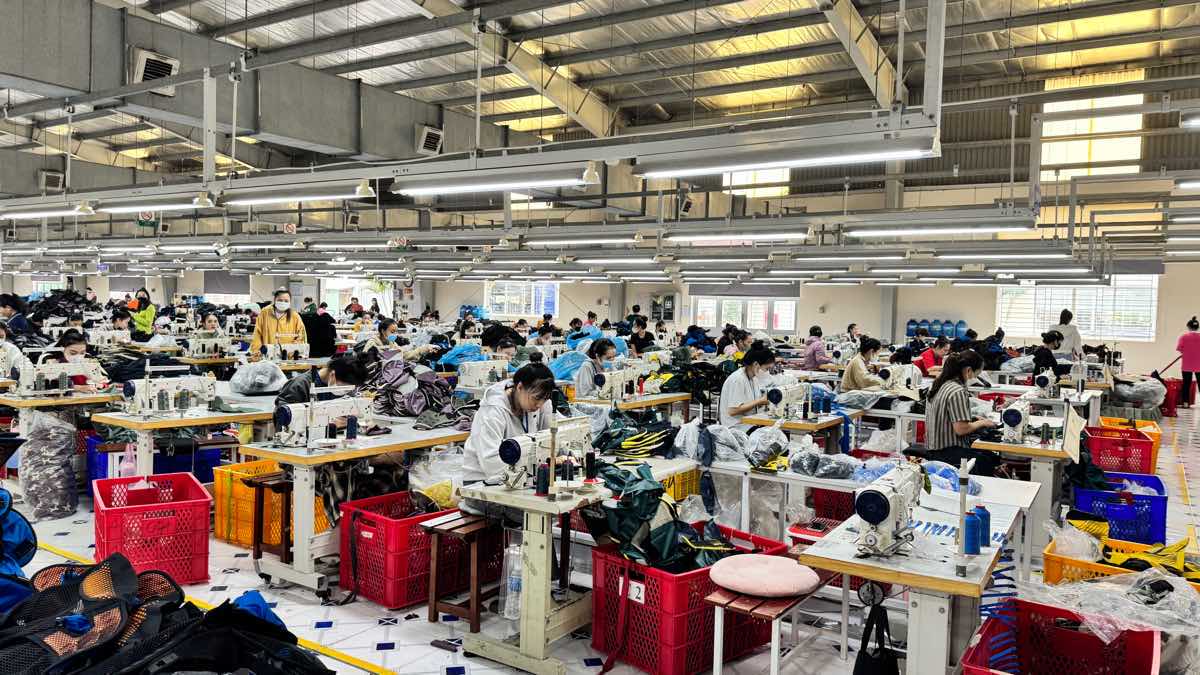
Specifically, workers are supported with lunch at the factory, housing allowance, child allowance, gasoline, professional and seniority allowance. In addition to the large number of garment workers, the enterprise also recruits positions of production managers, department heads, quality assurance personnel, quality management and many other technical and management positions.
Unskilled workers will be trained with salary allowances.
According to Ham Tan Commune People's Committee, the fact that FDI enterprises are promoting labor recruitment at this time is a positive sign for the local labor market, contributing to creating more jobs and stable incomes for people.
Not only Gear Meister Vina Co., Ltd., at the beginning of 2026, many businesses in industrial parks and clusters in the old Binh Thuan area, now the east of Lam Dong province, are also increasing labor recruitment.
The main reason is that production and export demand has increased again, and orders signed for the new year have been finalized since the end of 2025.
Notably, at Nam Ha and Dong Ha industrial clusters - the border area of Dong Nai province - many businesses continuously recruit workers in large numbers.
Salary and welfare policies are increasingly being adjusted in a more competitive direction to attract and retain workers, especially in the context of frequent labor shortages after Tet.
The fact that many businesses simultaneously increase labor recruitment not only reflects the recovery and growth of production, but also opens up more job opportunities, helping workers soon stabilize their lives and feel secure to stick with industrial parks in the province for a long time.


