On the afternoon of December 15, after a working day, the 2nd Conference of the Ho Chi Minh City Party Committee Executive Committee for the 2025 - 2030 term closed.
Speaking at the closing session of the conference, Secretary of the Ho Chi Minh City Party Committee Tran Luu Quang emphasized that in the coming time, the city must focus on implementing two major tasks: reorganizing the apparatus and arranging and restructuring the team of cadres and civil servants.
According to the Secretary of the Ho Chi Minh City Party Committee, the city will study separating a number of current party committees to establish independent party committees under the City Party Committee. In the immediate future, this model will be considered for application to the Party Committees of universities and colleges in the area.
Currently, Ho Chi Minh City has 74 universities, not including colleges and secondary schools. In which, the Party Committee of Ho Chi Minh City National University is under the City Party Committee, while the Party Committees of universities and colleges are under the Party Committee of the Ho Chi Minh City People's Committee.
This organization has caused the Party Committee of the Ho Chi Minh City People's Committee to be overloaded, while the City Party Committee has not been able to closely direct the force considered the core in developing science, technology and innovation.
In addition, the Ho Chi Minh City Party Committee will also study the establishment of party committees for health units and medical schools, and at the same time review and rearrange the organizational apparatus at public service units and state-owned enterprises in a more streamlined and efficient manner.
Mr. Tran Luu Quang also said that Ho Chi Minh City will continue to strengthen personnel work, regardless of the level, even members of the Standing Committee of the City Party Committee must rearrange appropriately if necessary.
The arrangement of cadres is carried out according to the principle of selecting people suitable for the job, ensuring democracy, listening and no conservatism.
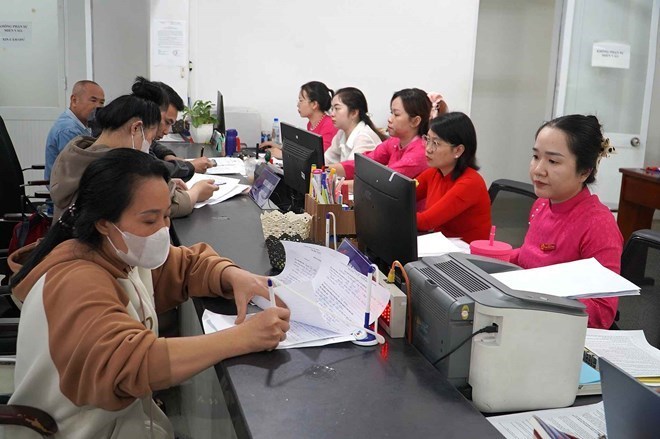
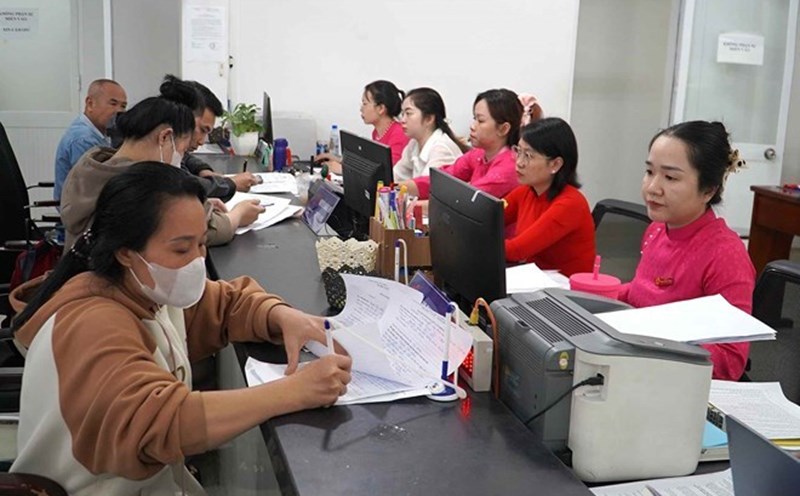
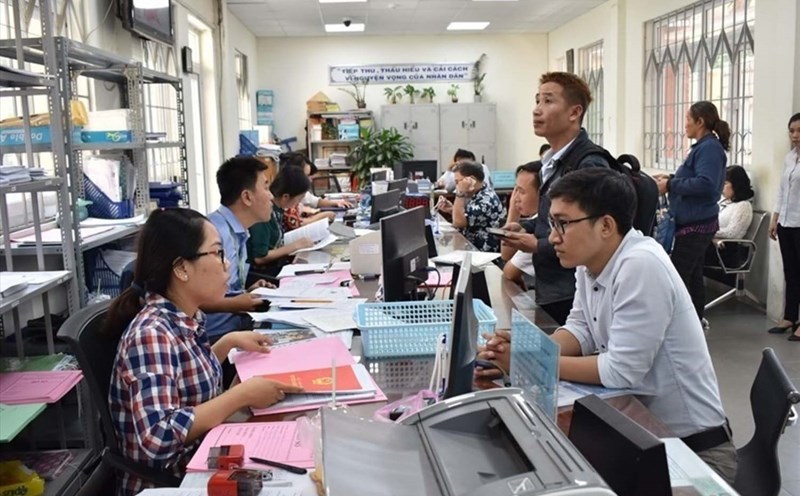
Regarding the arrangement and assignment of civil servants in wards, communes and special zones, the Secretary of the Ho Chi Minh City Party Committee said that it is impossible to follow the progress in a formal way, but must ensure a stronger and more effective place to receive officials.
To do that, Mr. Tran Luu Quang said that it is necessary to create consistency in three aspects: leadership where the staff is working, leadership where the staff is receiving and civil servants themselves are subject to mobilization.
The head of the Ho Chi Minh City Party Committee emphasized that all civil servants currently have a certain position. When transferring, if not explained and discussed thoroughly, it will easily cause frustration.
Therefore, the arrangement must have a reasonable roadmap, flexible and harmonious implementation; encourage rotation within the commune and ward levels and focus on substantial training.
The Secretary of the Ho Chi Minh City Party Committee also proposed to pilot the assignment of the total payroll to the commune level, so that the locality can proactively balance the Party, mass organizations and the government, thereby using personnel more effectively.
The Ho Chi Minh City People's Committee has recently issued a Project to review, arrange and assign cadres, civil servants and public employees in communes, wards and special zones.
After the merger, Ho Chi Minh City has a surplus of 1,052 civil servants (Ho Chi Minh City previously had a surplus of 908 people; Binh Duong previously had a surplus of 58; Ba Ria - Vung Tau previously had a surplus of 86).
At the same time, there is a shortage of 935 civil servants (HCMC previously lacked 506; Binh Duong previously lacked 304; Ba Ria - Vung Tau previously lacked 125).
To overcome the above situation, the Ho Chi Minh City People's Committee has proposed 5 key groups of solutions, including: transferring civil servants within the People's Committee at the commune level according to job positions; transferring civil servants from the Party and mass organizations to undertake professional work; transferring civil servants from departments and branches to work at the commune level; strengthening training, fostering, and standardizing the team; recruiting new employees when absolutely necessary.