
Faced with the increasingly complex developments of extreme weather, functional forces in Trung Gia commune have implemented many disaster prevention and control and search and rescue plans to ensure the safety of lives and property of people during the rainy and storm season. According to local statistics, during the rain and floods caused by storm No. 11 in 2025, the Cong River water once overflowed the top of Do Tan dyke by about 40cm, causing flooding in many residential areas.
To improve flood prevention and control capacity, the locality proposes to renovate and upgrade about 4.65 km of Do Tan dyke and build nearly 5.7 km of embankment protection combined with operating management roads, lighting systems and auxiliary items.
The project is in the investment policy proposal phase with a total estimated cost of more than 441.7 billion VND from the budget and other support sources. According to the plan, investment preparation will be implemented in the period 2026-2027, construction from 2027 to 2029.
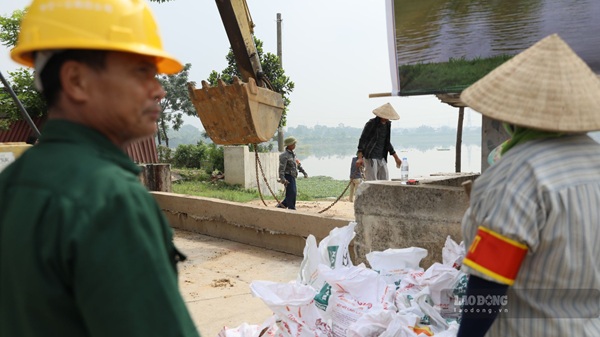
Faced with that reality, Hanoi City organized a disaster prevention and control drill with a hypothetical situation of prolonged heavy rain causing the Cong River and Cau River water to rise, threatening to overflow through the border gate on the Do Tan dyke. Functional forces deployed patrols, warnings, evacuation of people, traffic diversion and installation of water barriers.
According to the scenario, the water level of the Cau River at Luong Phuc hydrological station reached +9.98 m, exceeding alarm level III by nearly 2m; the water level of the Cong River at Cau Binh Son station exceeded alarm level III by about 1m. At Km1+200 of Do Tan dyke, water is at risk of overflowing through the border gate, leading to the risk of infiltration, dyke slope erosion and dyke base subsidence downstream.
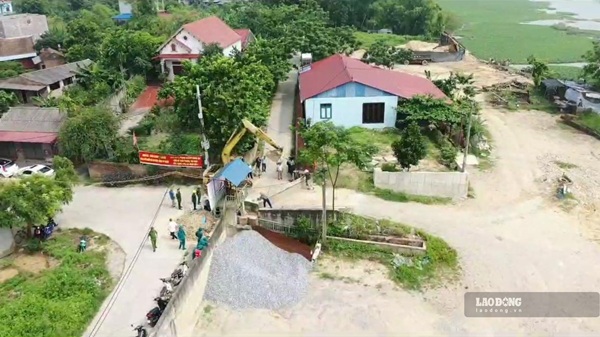
The locality has developed a plan to evacuate 3,549 people to safe places, and at the same time strengthened warnings, patrols, dike guards, traffic control and ensure necessities for people.
The dyke patrol force includes 20 people, including 18 members of the patrol and guard team at Do Tan dyke guard post and 2 officers of Dyke Management Unit No. 7. The working groups inspect the dyke surface, dyke slope, dyke protection corridor and related works within the scope from Km0+000 to Km3+000, and expand supervision at locations where incidents have occurred.
In addition, 36 members of the commune's disaster prevention and control shock force were divided into three groups to inspect bridges, roads, electrical systems, pumping stations, irrigation works, degraded houses and high-risk areas.
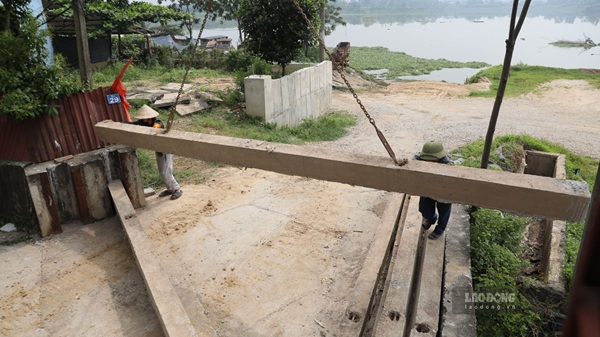
When detecting the risk of water overflowing through the border gate at Km1+200, the Commune Civil Defense Command issued an emergency handling order. The area where the incident occurred was planted with warning signs, prohibiting people and vehicles from passing through. Under the guidance of technical staff, functional forces used self-propelled cranes to install clearing sheets in the border gate gap to prevent water from overflowing the dyke.
In parallel with incident handling, the Commune Police organized the evacuation of people, traffic diversion and ensured security and order in the flooded area as well as temporary residences. The Commune Military Command mobilized militia and shock forces to participate in handling key points and supporting people to relocate property.
The commune health station also prepared a mobile emergency team, medicines, chemicals and vehicles for first aid, environmental treatment, and limiting the risk of disease outbreaks after flooding.
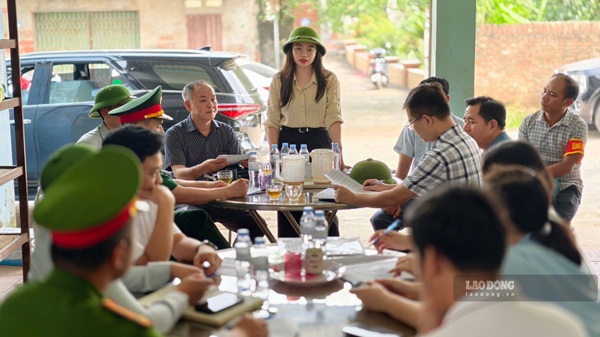
According to Ms. Nguyen Thi Thanh Huyen - Vice Chairwoman of Trung Gia Commune People's Committee, the drill was organized right when the locality entered the peak of the rainy and storm season to improve the operating capacity of the Civil Defense Command and minimize damage when natural disasters occur.
Lieutenant Colonel Hoang Cong Ha - Deputy Commander of the Military Command of Trung Gia commune - said that the drill scenario was built on the basis of actual situations arising during storms No. 10 and No. 11 in 2025. The drill not only helps the locality review and complete disaster prevention and control plans but also enhances the coordination between the government, functional forces and people, ensuring timely handling of situations and minimizing damage caused by floods.


