
According to the Ministry of Agriculture and Environment (MONRE), by the end of November 2025, ministries, branches and localities across the country had completed 101 tasks to combat illegal, unreported and unregulated (IUU) fishing. The whole country has fully updated information on 79,243/79,243 fishing vessels to the national fisheries database system Vnfishbase, reaching 100%.
In Gia Lai province, up to now, the locality has completed 19/19 tasks to combat IUU fishing during the peak month (November 2025), maintaining the results of controlling fishing vessels operating at sea and preventing serious violations. Gia Lai has also maintained that no fishing vessels have been detained by foreign countries since June 2024.

All fishing vessels in the province have been registered, digitized and fully updated in the database; 100% of vessels are licensed and have installed voyage monitoring equipment. The remaining violations related to loss of connection to the journey monitoring device or crossing the permitted boundary at sea have been completely handled, with a total fine of more than 4.3 billion VND.
Along with tightening control of fishing vessel activities, Gia Lai province has implemented a livelihood support policy for vessels that are not qualified to operate, contributing to stabilizing fishermen's lives. From September to December 2025, each household with a fishing boat under the support will receive a subsidy of 3 million VND/household/ship/month and 30kg of rice/crab/month.
As of December 8, the whole province has 5,743 registered fishing vessels, 100% of which have been updated to the Vnfishbase system. The number of fishing vessels participating in licensed fishing activities reached 100% (5,391 vessels); 100% of fishing vessels with a length of 15m or more have installed VMS journey monitoring equipment (vessels 3,160).
Tightly control fishing fleets
In recent times, Gia Lai province has always put the task of combating IUU fishing first, strictly implementing the instructions of the Secretariat, the Government, the Prime Minister, the Head of the National Steering Committee on IUU and central ministries and branches.

The locality focuses on tightening management of the fishing fleet of nearly 6,000. Every week, the authorities review the list of fishing vessels that are not qualified to operate and are determined not to allow them to depart. The monitoring of fishing vessels operating at sea is strictly implemented through the journey monitoring system; The Information and Communications Wharf Station maintains duty 24/24 hours.
In 2025, the authorities discovered and requested 37 fishing vessels crossing the permitted boundary at sea to return safely; discovered and warned 447 fishing vessels that had lost connection to the journey monitoring device.
The locality also strictly implements the work of tracing the origin of exploited aquatic products. The Fishing Port Management Boards and the Department of Fisheries will closely monitor the unloading of aquatic products through fishing ports; organize confirmation and certification of aquatic product origin to ensure compliance with the correct procedures. In 2025, no shipment of seafood from Gia Lai is certified to be returned by the EC.
The province also promotes propaganda and raising awareness of fishermen about combating IUU fishing. In particular, many training sessions and communication sessions have been organized to each fishing household in many different forms such as direct propaganda, broadcasting on mass media, organizing seminars...
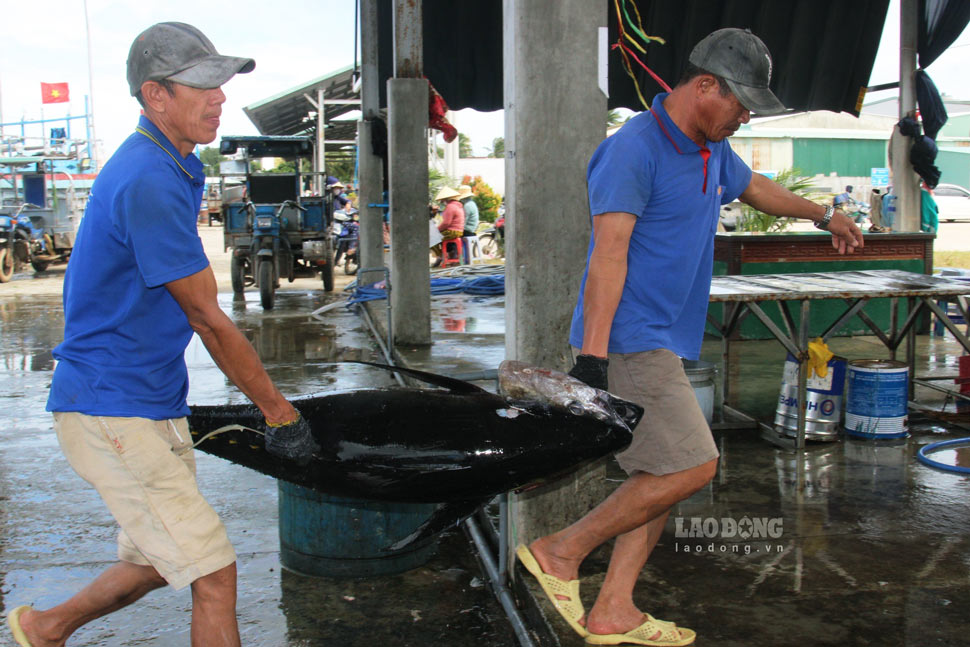
From 2024 to present, Gia Lai has established many working groups with the southern provinces, directly meeting and mobilizing fishermen not to violate foreign waters. Of which, 193/209 fishing vessels with a length of 12m to less than 15m fishing for squid have installed voyage monitoring equipment.
According to the leader of the Department of Agriculture and Environment of Gia Lai province, the awareness of a part of fishermen is still limited, because the immediate economic benefits are still deliberately encroaching on foreign waters, making it difficult for the EC to remove the "yellow card".
More than 30% of fishing vessels in Gia Lai province operate fishing grounds across the country, including more than 500 fishing vessels operating in the southern provinces every year, not returning to their localities, causing difficulties in management.
"The situation of losing connection to the fishing vessel monitoring device still occurs, it is very difficult to determine whether the error is caused by the network operator or by the fishermen. In addition, many ships have lost connection to monitoring their journeys but have returned to ports outside the province, making it difficult to handle violations," said the leader of the Department of Agriculture and Environment of Gia Lai province.
Fishermen comply but are still concerned
With 30 years of being at sea, fisherman Tran Ngoc Hoan (54 years old, residing in Hoai Nhon Dong ward) has built a fleet of 9 ships, creating regular jobs for 60 crew members.
"We are in compliance with regulations on fishing and combating IUU fishing. Each of our trips lasts from 1 to 2 months and always determined to fish in the waters of our country," Mr. Hoan shared.
Fisherman Le Hung Cuong (residing in Hoai Nhon Dong ward), owner of fishing boat BD98860TS, said that to avoid violations, his boat often catches at the correct coordinates, avoiding prohibited sea areas.
According to Mr. Cuong, the biggest difficulty that fishermen are facing at present is that the positioning device lost signal, forced to notify the authorities and return the boat to the mainland within 10 days.
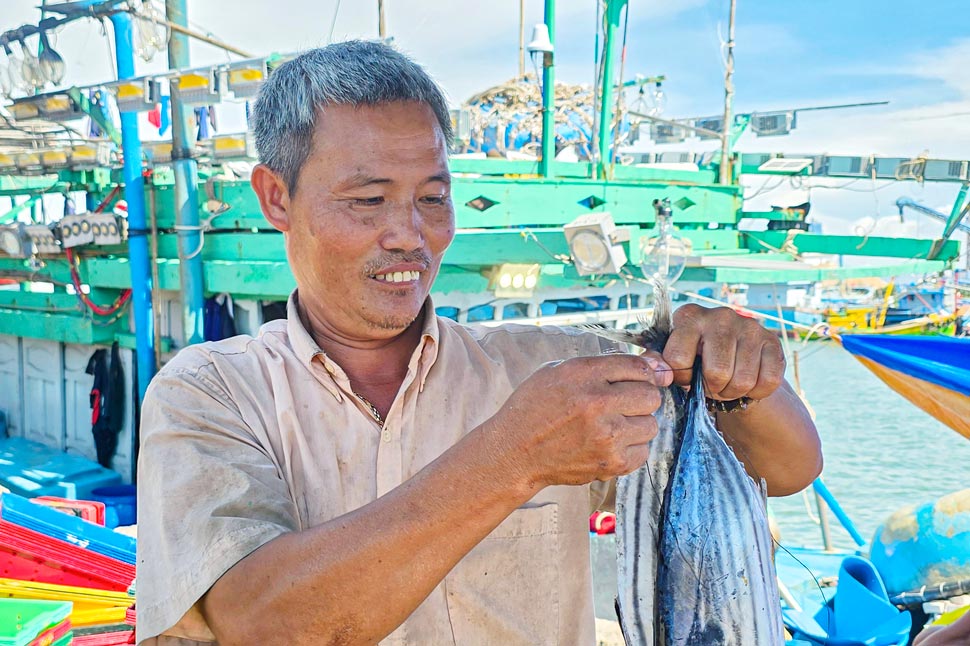
"While at sea, the positioning device was unfortunately broken and lost signal and had to return, while the cost for each trip was about 350 million VND. This is not the fishermen's fault, but if they do not comply and continue to fish, they will be severely punished," Mr. Cuong worried.
In the context of increasing fishing costs, while output decreases and selling prices are low, fishermen all hope that the EC "yellow card" will soon be removed so that the export market can expand, contributing to increasing income.
Regarding the concerns of fishermen, Mr. Duong Mah Tiep - Vice Chairman of Gia Lai Provincial People's Committee - said that the locality has received many reports about fishing vessels losing their signal for 6 hours, 10 hours or completely disabling.
The province has directed competent authorities to fully and specifically verify the situation of fishing vessels losing signal; consider all subjective and objective factors before making a record, deciding to sanction administrative violations, criminal proceedings or consider exemption according to regulations.
Changing careers for sustainable development
Gia Lai province has 134km of coastline with diverse fishing grounds, the locality with the most powerful fishing fleet in the country, with more than 5,700 boats and about 40,000 fishermen. However, this is also a province with many fishing vessels that have violated IUU fishing.
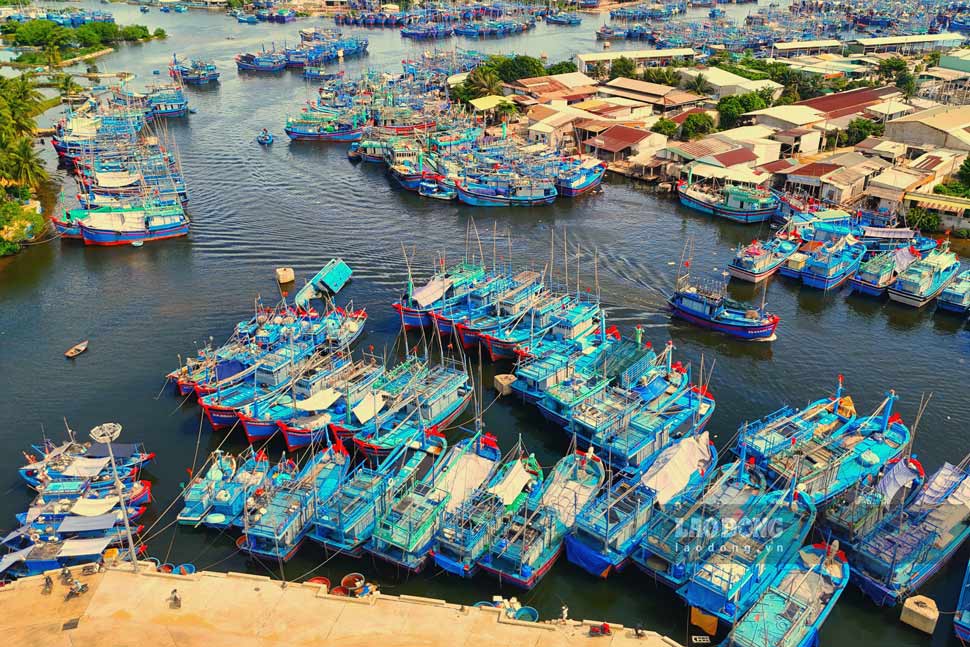
According to Mr. Duong Mah Tiep, in recent times, the province has been greatly affected by the EC's "yellow card" for Vietnamese seafood, making it difficult to export to the European market. Together with the Government, central ministries, branches and localities across the country, Gia Lai has implemented many drastic measures to remove the EC "yellow card".
To effectively implement the solutions, Gia Lai province has implemented policies to support fishermen in installing journey monitoring equipment; support the construction of new fishing vessels, and at the same time develop policies to eliminate ineffective fishing vessels, creating conditions for fishermen to change their careers.
In addition, the province focuses on developing aquaculture and aquaculture in a sustainable manner; calling for investment in the seafood processing sector to increase added value.
Currently, the output of seafood exploitation in Gia Lai in particular and the whole country in general has exceeded the ability to regenerate the benefits. Therefore, there is no need to maintain a fleet that is too large and need to gradually convert appropriately.
Many localities such as Khanh Hoa and Quang Ninh have effectively implemented the conversion of occupations from exploitation to aquaculture. On that basis, Gia Lai province is developing policies to attract investment in this field.


