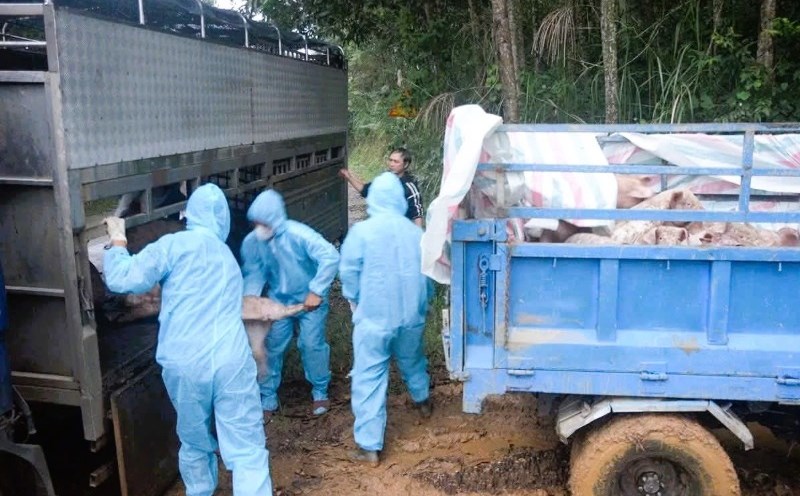
On December 16, the Department of Agriculture and Environment of Gia Lai province said that from the end of June 2025 to now, African swine fever has occurred in the province in 63 households in 48 villages, hamlets and 25 communes and wards.
The total number of sick pigs that had to be destroyed was 1,601, with a destruction weight of 99,675 kg.
However, Gia Lai is one of the few provinces and cities that have controlled the epidemic situation well, the number of destroyed pigs is low compared to neighboring provinces and compared to the whole country such as: Dak Lak 20,857 pigs; Quang Ngai 91,651 pigs; Da Nang 51,250 pigs.
Currently, the epidemic situation in provinces and cities is still very complicated. The growth rate of the pig farming industry in Gia Lai province in 2025 will reach over 22%. The total pig herd will increase from 1.4 million pigs in 2024, estimated to reach more than 1.7 million pigs by the end of 2025.
The Department of Agriculture and Environment has coordinated with communes and wards to promptly deploy epidemic control measures within a narrow range, minimizing damage caused by the epidemic, following the motto "wherever an epidemic occurs, it will be handled there", combining disinfection and disinfection to isolate the area, not allowing it to spread widely.
The functional sector also promotes information, propaganda, and guidance for people to raise animals for biosafety and disease safety to prevent and control animal diseases.
During the outbreak of African swine fever in neighboring provinces, the Department advised the Provincial People's Committee to set up checkpoints at gateways to and from the province to prevent disease from entering the province from the outside.
According to the Department of Agriculture and Environment of Gia Lai province, some causes of African swine fever are due to the rapid and complex spread of the disease; the epidemic has occurred in 34/34 provinces and cities and there are still 28/34 localities with the epidemic.
Meanwhile, the vaccine against African swine fever is not yet very effective, especially for domestic sows and male sows.
The rate of small-scale household livestock farming is still common, making it difficult to apply biosafety measures, while controlling the transmission line of the epidemic is very complicated.
Currently, the most effective measure is still livestock farming in the direction of disease safety and biosafety.
For localities that have experienced epidemics and were affected by floods in the past, the relevant agencies will step up guidance and support people in cleaning, disinfecting, and disinfecting to control pathogens and soon re-herded.
At the same time, launch and focus on implementing a cleanup, disinfection, and disinfection campaign across the province to destroy pathogens, ensuring stable livestock production. Currently, the Department is supplying 15,840 liters of chemicals to 135 communes and wards for synchronous and effective implementation.
The Department of Agriculture and Environment also builds disease-free areas and livestock facilities; controls the use of antibiotics...