
I have not been attached to agriculture for long, that is not a long enough time to say that I have fully understood about fields, barns, ponds or the fluctuations of the agricultural product market. But that time is enough for me to realize that writing about agriculture is not just about recording prices, crops, output or export figures.
That is the journey accompanied by the very real worries of farmers. It is when an epidemic in animal husbandry can make the whole family restless. It is when false information spreading on social networks can disrupt the output of an entire industry. It is when an event shakes the trust of consumers, journalists must remind themselves to keep their pens firmer, more cautious and more responsible.
In mid-2025, African swine fever broke out in many localities. For many people, it may just be a news item about an epidemic in livestock breeding. But for farmers, it is capital, effort, and hope for a whole crop. There are livestock households facing the risk of losing everything, both worried about the epidemic spreading, worried about price fluctuations, and worried about not knowing how to restore the herd after the epidemic.
When I go into those stories, I realize that agriculture is not a field far from life. Even a small fluctuation can affect the meals of each family. An epidemic can affect food supply, market prices and livelihoods of many workers.
Then there are times when farmers are not miserable because of epidemics, but only because of rumors. False information such as "fake chicken eggs" once caused many farming households to struggle. Just one phrase causing panic that spread quickly is enough to make consumers hesitant, while producers are worried.
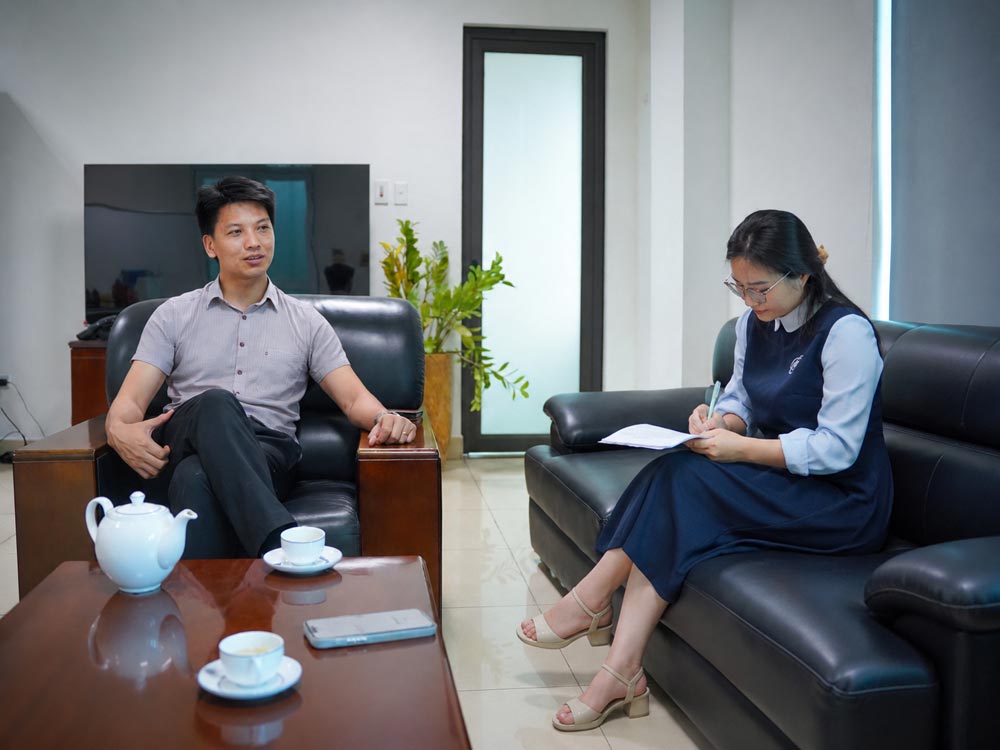
I still remember when I came to record at the chicken farm of Mr. Can Van Cuong's family (Quoc Oai, Hanoi), he hurriedly welcomed and explained in detail to me about the rumor of "fake chicken eggs". The man over 50 years old was helpless and sighed because when the rumor of fake chicken eggs appeared, farmers were clearly affected. Buyers were hesitant, consumption slowed down, prices fell to a record low, while eggs still came out regularly every day, feed costs, labor costs, and chicken care still had to be maintained. What Mr. Cuong and many farmers most longed for at that time was accurate and timely information so that consumers could understand correctly and not turn their backs on farmers' real products.
We are very grateful to the press for getting involved, reflecting to help people understand better. Farmers only hope that the correct information will be spread, so that their efforts will not be affected by false rumors" - Mr. Cuong confided to me after the newspaper articles were published and the rumor of "fake chicken eggs" was also clarified by functional agencies.
From such stories, I understand more about the responsibility of journalists when writing about agriculture and food. Journalism must be fast, but not hasty. It is necessary to warn when there is a problem, but not to make public opinion confused. It is necessary to protect consumer rights, but also to see behind each product is the effort of genuine producers.
But agriculture is not just about worries.
In the recent journey, I was also happy to witness Vietnamese agriculture increasingly developing. Record export figures, batches of veterinary vaccines researched by Vietnamese people have been exported to foreign markets. It is not simply an economic achievement, but also the result of a long journey from farmers, cooperatives, businesses to management agencies. From rice grains, fruits, seafood to livestock products, Vietnamese agricultural products are going further, into more demanding markets.
In particular, the first batches of low-emission rice exported have opened up a promising direction. Agriculture not only produces more, but must also be greener, more responsible to the environment and the future. That is a signal for journalists like me to further believe in the positive stories ahead.
In a year of following the agricultural sector, I also had many good impressions with managers in the industry. At press conferences, conferences or information exchanges, leaders of the Ministry of Agriculture and Environment gave me a feeling of openness, receptiveness and willingness to share with the press. There are specialized issues that are not easy to access, but when explained clearly, I have more material to convey to readers in a more understandable way.
I remember that in all the meetings, Mr. Phung Duc Tien - former Deputy Minister of Agriculture and Environment - never forgot to thank the press agencies for always monitoring, accompanying, and promptly informing about the industry's activities. For a new reporter in the field, that thank you is not only recognition, but also makes me see more clearly the bridge role of the press: Bringing policies closer to the people, and at the same time reflecting issues from production practice back to management agencies.
I know I am still a new reporter on the journey to follow agriculture, there are still many concepts to learn, many production areas need to come to, many stories of farmers need to be heard. But it is this novelty that makes each trip, each meeting, each article become a memorable experience.
Crops continue to follow each other. Some seasons are happy because of good prices, some seasons are heavy because of epidemics, natural disasters or false rumors. And journalists, if they have enough patience to go along with those seasons, will realize that behind each page of writing is not only information, but also faith, responsibility and companionship with farmers.


