
On February 27, Hanoi City People's Committee issued a plan to convert fossil fuel taxis to electricity and green energy in Hanoi City.
Accordingly, the city organizes the effective implementation of the roadmap for converting fossil fuel taxis (gasoline, oil) to using electricity and green energy in the direction of developing green and sustainable transportation; contributing to the implementation of national targets on emission reduction in the transportation sector, improving the quality of urban air environment.
The roadmap is to complete the conversion of all gasoline and oil taxis to electric and green-energy taxis in the city by 2030 at the latest.
At the same time, build mechanisms and policies to encourage and support taxi transport businesses to proactively convert vehicles, ensuring harmony of interests between the State, businesses and people; promote propaganda and publicize support policies related to the plan to convert and develop vehicles using green energy, creating unity and consensus in the process of organization and implementation.
According to the plan, the conversion needs to have a feasible and consistent roadmap, suitable to practical conditions, the financial capacity of enterprises and the infrastructure conditions of the city; ensuring synchronization between vehicles and energy supply infrastructure, limiting the impact on passenger transport business by taxi.
Clearly assign responsibilities and implementation progress to departments, agencies, branches, localities and related units in organizing the implementation of the plan to convert electric taxis in the city, ensuring practicality and efficiency.
Heads of departments, agencies, and branches of the city and heads of localities and related units enhance their responsibility in implementing assigned tasks; allocate sufficient resources, ensure progress and be responsible to the City People's Committee for the quality and effectiveness of plan implementation.
Regarding tasks and solutions, the city is completing mechanisms and policies to support the conversion of clean energy taxis associated with the deployment of low-emission zones; developing electric charging infrastructure associated with urban planning, transportation and organizing electric taxi operations; building a set of criteria for evaluating and ranking the quality of passenger transport services by taxi and applying technology in management...
Based on the current situation of units and vehicles engaged in passenger transport by taxi and the opinions of units on the roadmap for conversion, goals, and roadmap plans for taxis from using gasoline and oil to using electricity and green energy as follows:
- Phase 2026-2030: Improve mechanisms and policies to support units to convert taxis using gasoline and oil to using electricity and green energy; strengthen communication and propaganda to help people understand and agree; deploy the construction of charging stations at taxi parking spots.
Deploying the conversion work according to the set roadmap, by 2030 at the latest, complete the conversion of 100% of taxis using gasoline and oil to taxis using electricity and green energy with the conversion rate to electricity and green energy taxis: in 2026 reaching 63-64%; in 2027 reaching 68-70%; in 2028 reaching 74-77%; in 2029 reaching 88-96%; in 2030 reaching 100%.
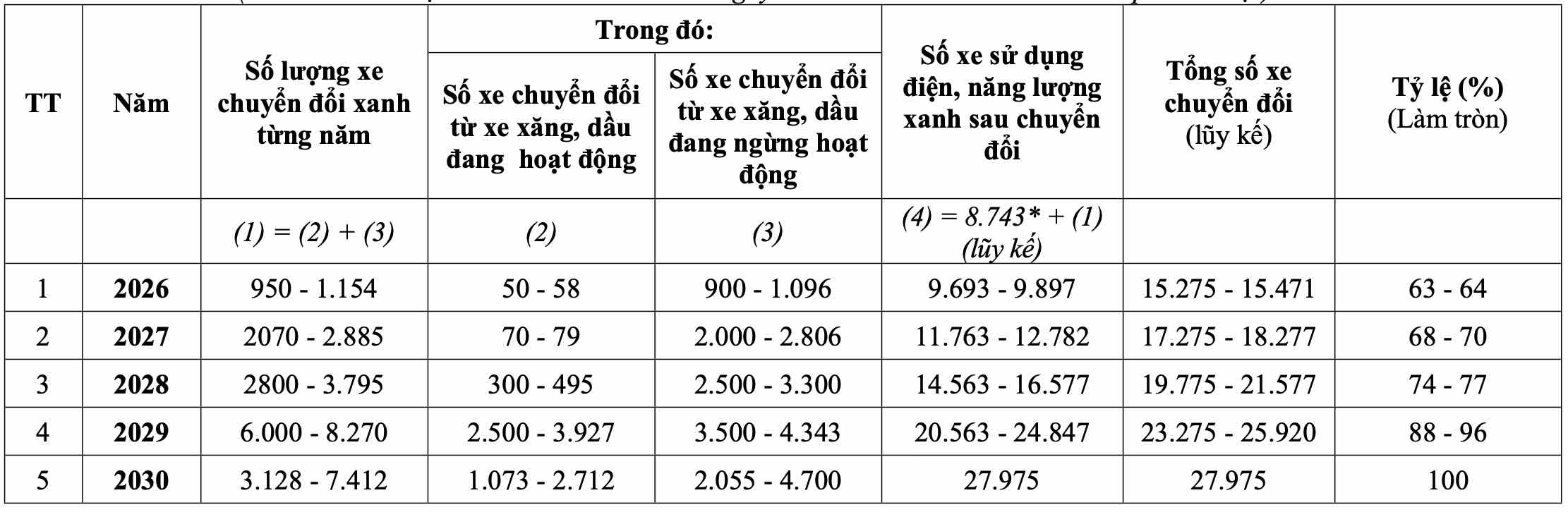
- Phase after 2030: The city focuses on completing and maintaining stable operating conditions for electric and green-energy taxis, in which priority is given to improving access to charging infrastructure, stops, and traffic organization suitable to the operating characteristics of electric and green-energy vehicles.
Based on technology development and practical needs, relevant departments and sectors review and adjust regulations on arranging charging stations, connecting to the power grid, organizing stops and parking and applying management technology to optimize the efficiency of using electric taxis, ensuring continuous, safe and convenient operation and synchronization with the orientation of sustainable urban transport development.


