
More than half a century has passed, Mr. Dao Van Mui (resident of Yen Bai ward, Lao Cai province) still yearns for one wish: Know where his older brother is lying.
His brother sacrificed himself for the Fatherland. Years have passed, memories may fade, but the longing for the day to find his loved ones has never faded.
Although the pain has gradually subsided, the longing in my heart is still present. I just hope to soon know where he is lying to ask the authorities for help to bring him back to his family" - Mr. Mui said emotionally.
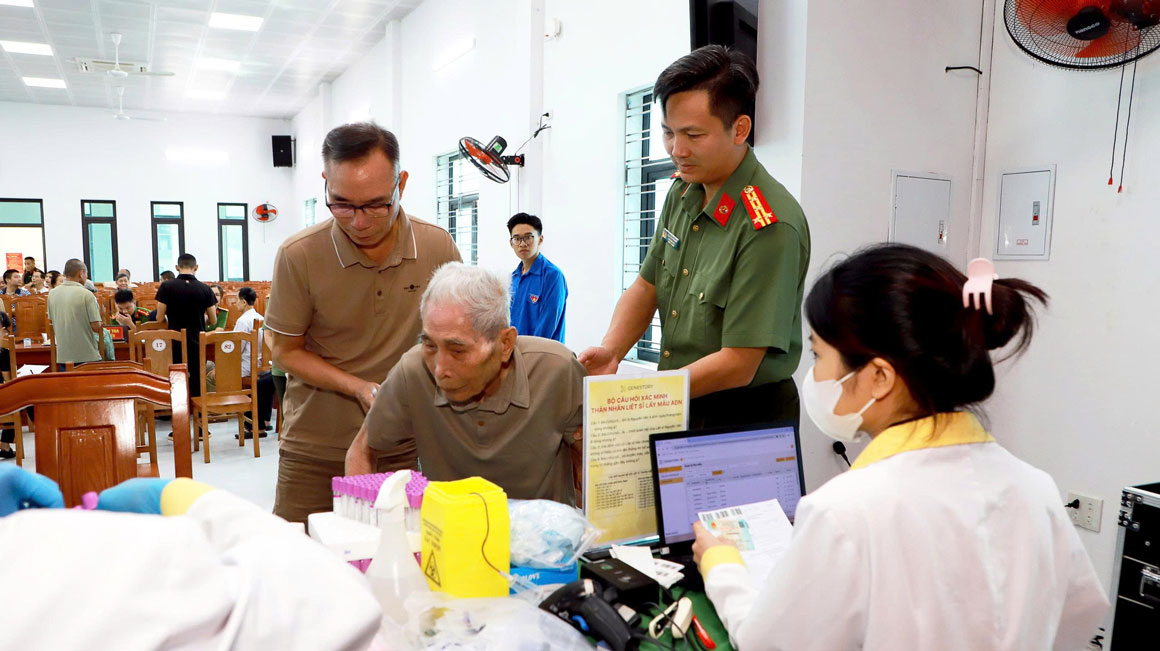
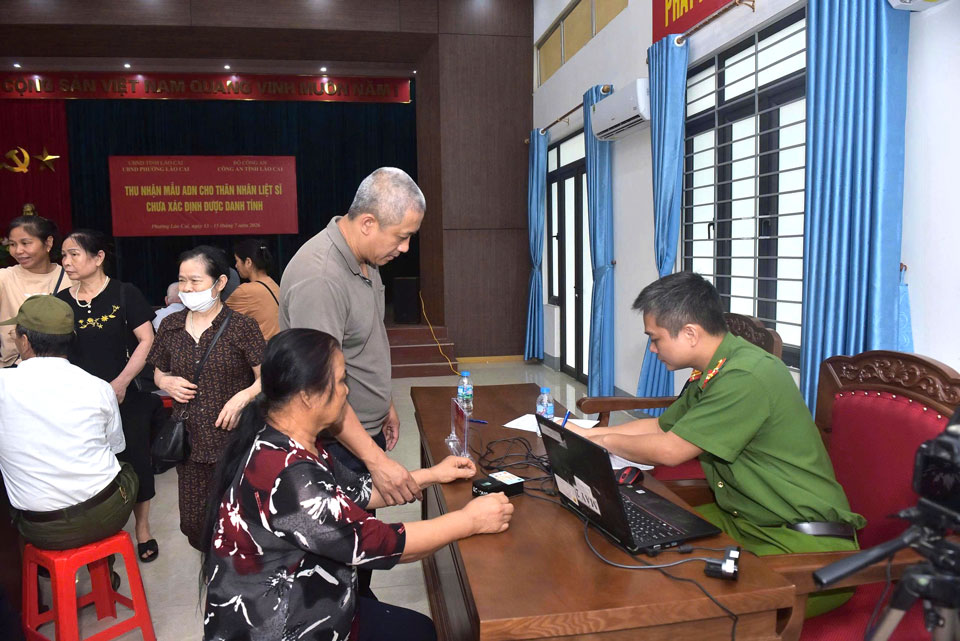
In mid-July, Mr. Mui and thousands of relatives of martyrs in Lao Cai embarked on a special journey - collecting DNA biological samples to serve the identification of missing martyrs.
For many families, a small biological sample is carrying hope that has been waiting for decades.
The peak period of collecting DNA biological samples of relatives of unidentified martyrs is being implemented in many localities in Lao Cai province.
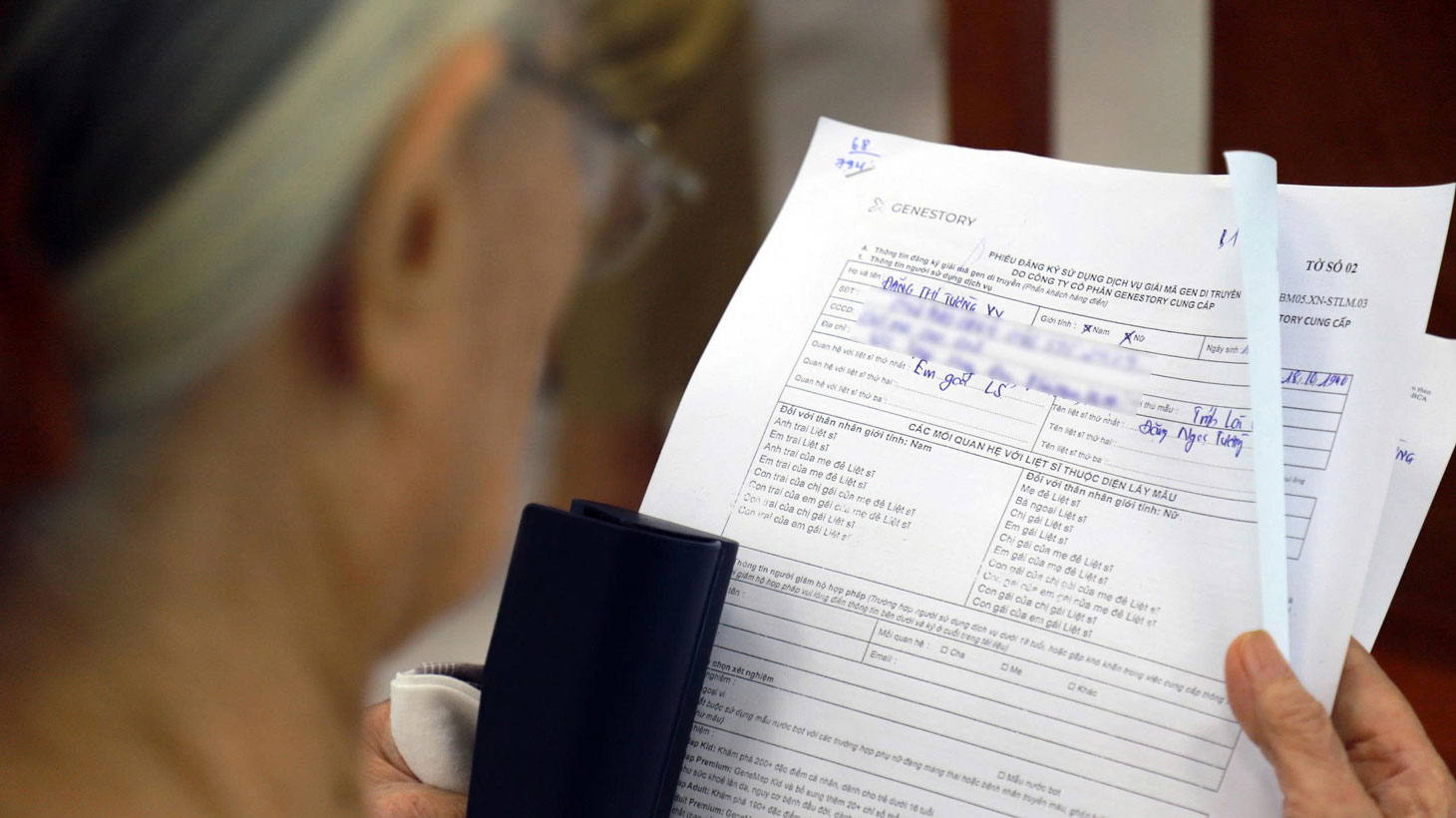
This is one of the activities under the campaign "500 days and nights to promote the search, repatriation and identification of martyrs", aimed at building and integrating DNA data with the ID system, serving the work of comparing and identifying martyr information.
In this phase, Lao Cai is expected to collect biological samples from more than 3,400 relatives of martyrs at 7 locations in the province.
From July 13-17, the collection of samples was implemented in Yen Bai, Nghia Lo, Lao Cai wards and Van Ban commune. On July 16-17, the program continued to be organized in Dong Cuong, Bao Yen and Khanh Hoa communes.
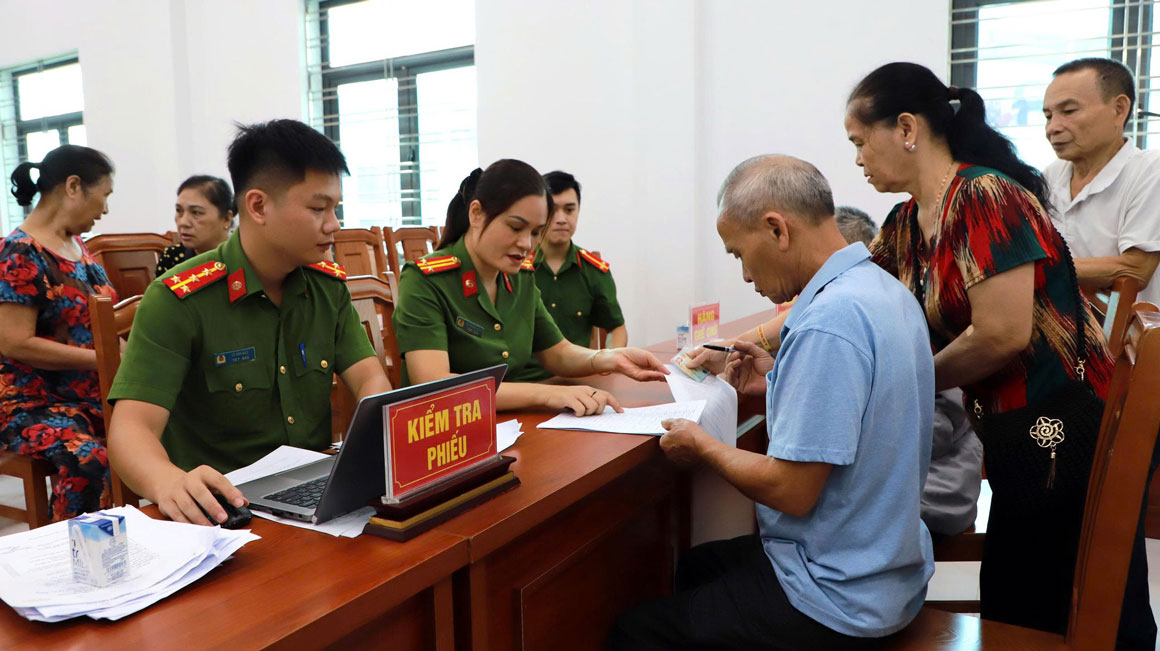
At the receiving points, many people are in their twilight years. Gray hair, faces marked by time, but they still carry the hope that the development of science and technology will help reconnect information interrupted by war and time.
Ms. Nguyen Thi Tiep (resident of Lao Cai ward) could not hide her emotion when completing the sampling.
I just hope to find my brother's grave, bring it back for the family to worship, burn incense, so that my children and grandchildren can be at peace" - Mrs. Tiep choked up.
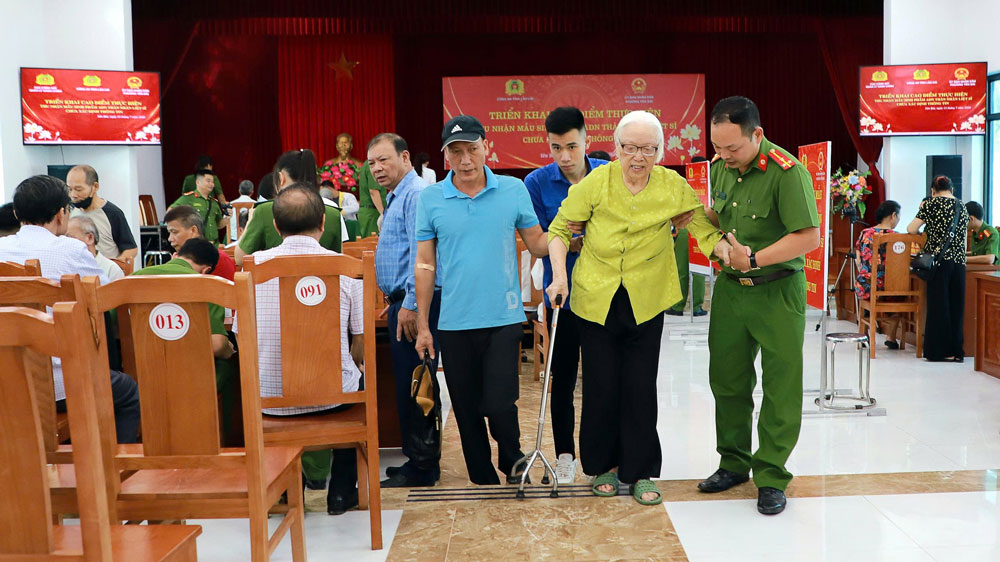
To facilitate the collection of samples, Lao Cai Provincial Police coordinated with local authorities to review the list and arrange specific schedules for each group of relatives.
The stages of receiving, comparing information, taking biological samples and integrating DNA data on the ID system are implemented sequentially and scientifically.
Lieutenant Colonel Le Tien Manh - Deputy Head of the Department of Administrative Management of Social Order, Lao Cai Provincial Police - said: "The specific arrangement helps the process to be implemented sequentially, reducing waiting time for people.
For relatives who have difficulty moving, we coordinate with local authorities and commune and ward police to arrange forces and support vehicles" - Senior Lieutenant Colonel Le Tien Manh said.


