
Active adaptation
As scheduled, at this time, people in many coastal areas in the Mekong Delta have proactively adapted to saltwater intrusion. Many households have reinforced embankments, dredged canals and ditches, and stored fresh water.
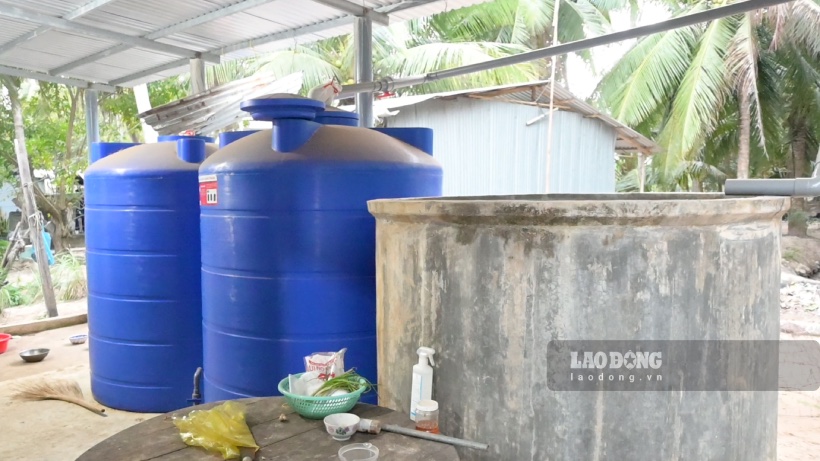
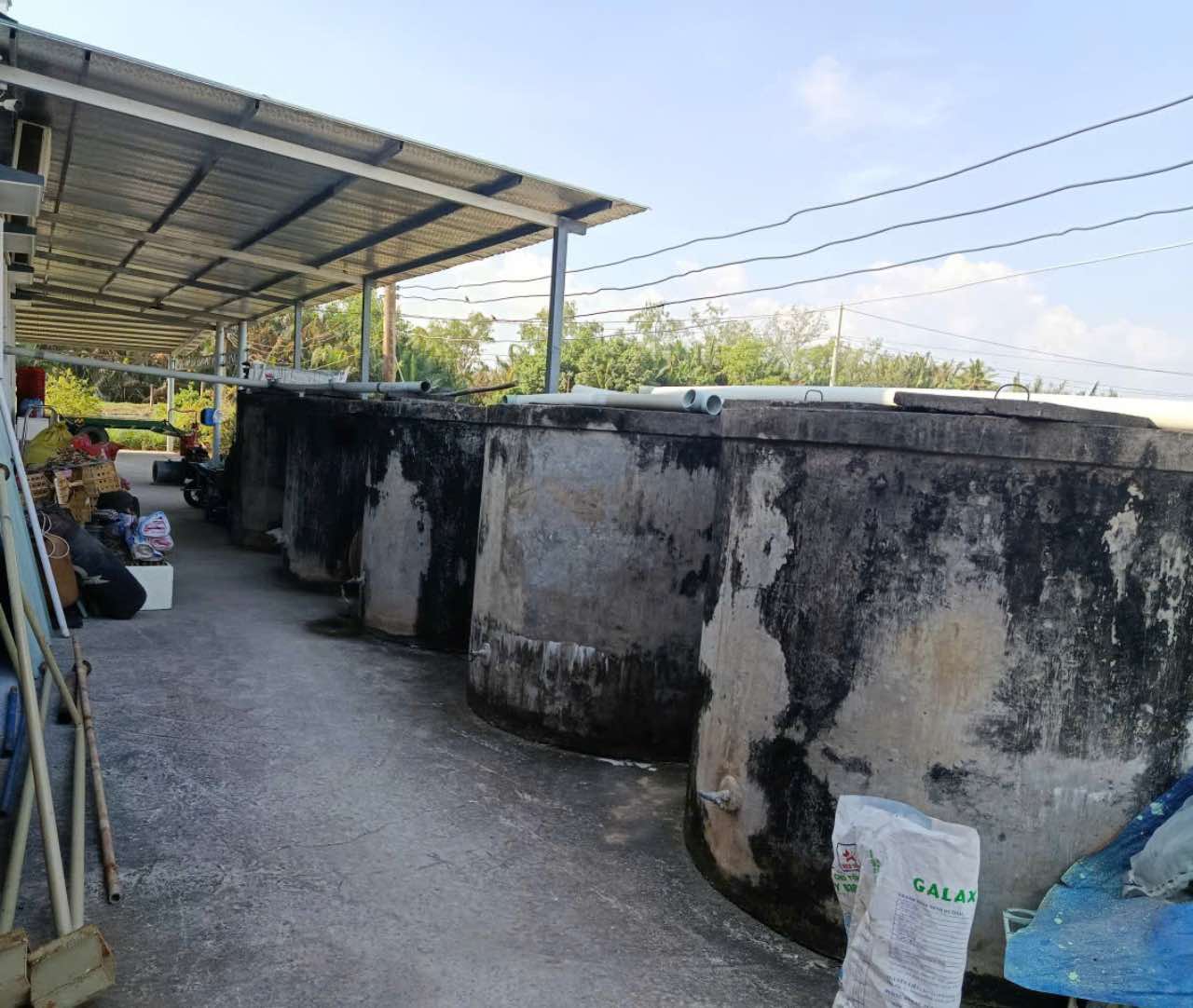
Mr. Nguyen Dinh Khanh (resident of Tan Phu Dong commune, Dong Thap province) said that living for many years in Tan Phu Dong islet - where saltwater intrusion often occurs annually - his family has built many cement tanks to store fresh water.
According to Mr. Khanh, saltwater intrusion usually occurs after the Lunar New Year, when the Tien River water is salinized. Therefore, during the rainy season, whenever there are heavy rains, his family proactively stores water for use in the next dry season. This water source is prioritized for daily use.
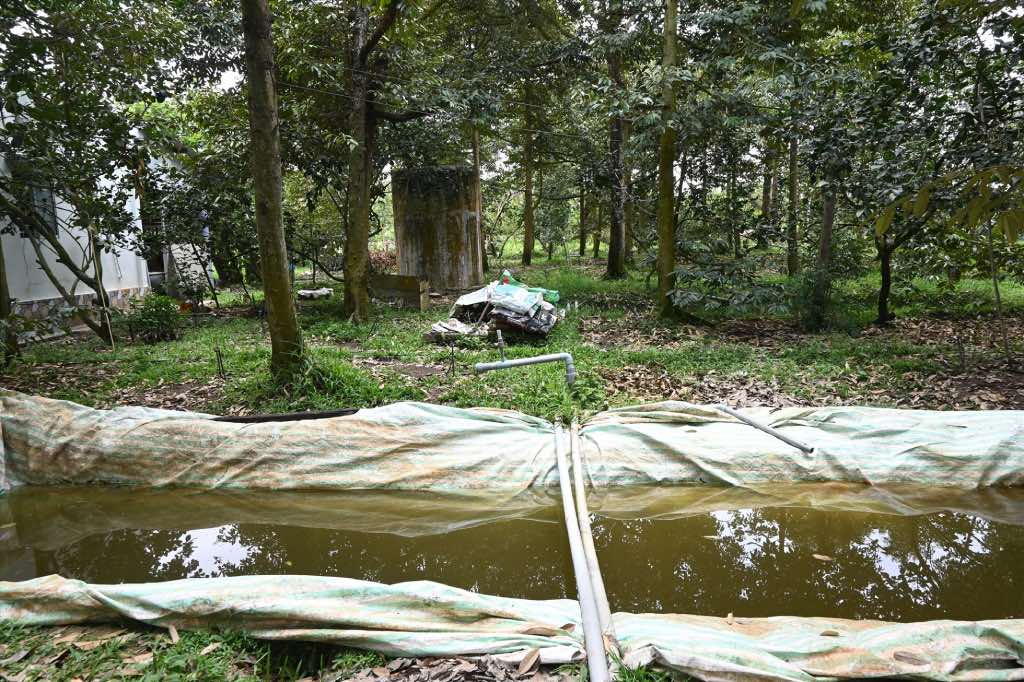
Mr. Huynh Van Thiet (resident of Tan Phu commune, Vinh Long province) said that he had previously heard forecasts that saltwater intrusion may appear after the 2026 Lunar New Year, so he proactively reserved fresh water in the field ditches to serve irrigation.
Recommend water-saving use
Assoc. Prof. Dr. Le Anh Tuan - senior lecturer of the Faculty of Environment and Natural Resources (Can Tho University) - said that in the context of climate change and saltwater intrusion, saving and storing fresh water is no longer an option but has become a mandatory requirement.
Not proactively storing water from the rainy season and using water economically, people will face many difficulties in daily life and agricultural production when saline intrusion occurs," Assoc. Prof. Dr. Le Anh Tuan assessed.
According to Assoc. Prof. Dr. Le Anh Tuan, for domestic water, people need to proactively store rainwater in tanks, tanks, and ponds; use circulating water, reuse water for appropriate purposes and limit waste in daily life.
Regarding agricultural production, Assoc. Prof. Dr. Le Anh Tuan emphasized the role of measures to reduce water evaporation on the soil surface. "The exploitation of straw and agricultural by-products to cover tree roots is a very effective solution, low cost but brings great benefits. This mulch helps reduce soil temperature, limit water evaporation, and improve soil in the long term," Mr. Tuan said.
Assoc. Prof. Dr. Le Anh Tuan also recommended that farmers should apply water-saving irrigation methods such as drip irrigation, localized sprinkler irrigation; adjust irrigation schedules appropriately, avoid irrigation during hot sunny weather, and combine digging ponds and inland ditches to store fresh water, proactively responding to saltwater intrusion in the coming time.
The Southern Institute of Water Resources Science recommends that the highest salinity period be in the period from late February to April 2026, with a salinity limit of 4 g/l entering 40 - 55 km deep from the estuary. Unusual water accumulation can cause salinity to penetrate 50 - 60 km deep, localities should proactively take measures to adapt to drought and saltwater intrusion in the year under forecast conditions.


