At the seminar "New points of the Press Law and legal sanctions, risk identification, protection of journalistic ethics", MSc Pham Thi Kim Oanh - Deputy Director of the Copyright Office - said that a journalistic work is the crystallization of the process of labor, intelligence, bravery and professional ethics of journalists, is a valuable intellectual property, worthy of being protected.
However, in reality today, in the digital environment, an article can be copied almost verbatim, "cooked" news articles, clipped videos, livestreamed on social networks to attract views, interact, and attract advertising without having to invest in content production costs. This situation not only causes direct economic damage to press agencies but also reduces creative motivation, affecting public trust.
Notably, automatic data scramming technology, collecting and exploiting data from journalistic products can erode the exclusive value of journalism while official press agencies must strictly comply with legal regulations and bear the cost of producing information.
The Deputy Director of the Copyright Office also emphasized the reverse copyright infringement when reporters abused AI to synthesize and write articles without verification, thereby unintentionally using or copying third-party works. As a result, the editorial office faces accusations of copyright infringement and damage to reputation.
To protect intellectual property, press agencies need to build strict censorship procedures from the stage of assigning topics to publishing; apply technology integrating copyright marks, identification codes; proactively make written records when detecting infringing acts.
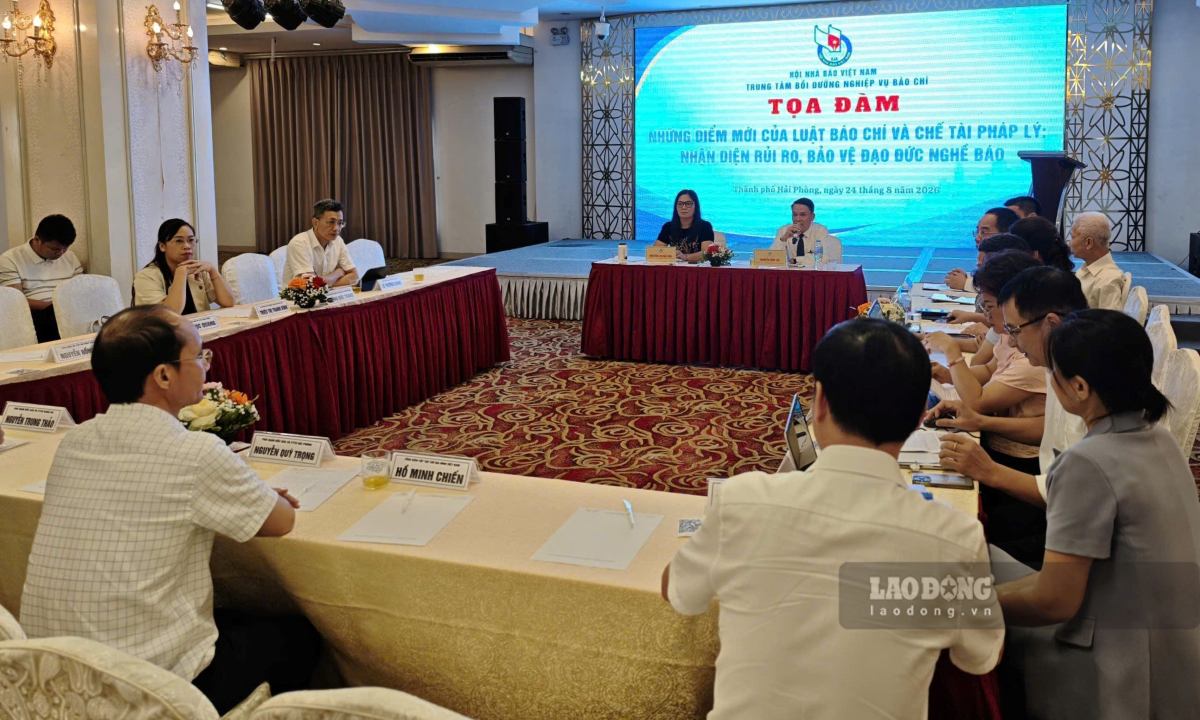
For journalists, an important requirement is to firmly grasp personal rights, property rights, protection periods as well as the limitations and exceptions of copyright. When using AI, journalists need to cross-verify, considering AI as a supporting tool rather than replacing creative thinking. Maintaining professional ethics is an important factor for each journalist to protect personal and editorial reputation.
At the seminar, delegates discussed the topic of the relationship between law compliance and preserving professional ethics of journalists. The correct implementation of legal regulations needs to be placed in relation to the 10 Regulations on professional ethics of Vietnamese journalists and the Rules for using social networks of Vietnamese journalists. Through exchanging practical situations, the seminar contributes to consolidating professional responsibility awareness, helping journalists to better identify the boundaries between the right to information, freedom of the press and responsibility to society, and at the same time protect the legitimate rights and interests of journalists in the process of working.