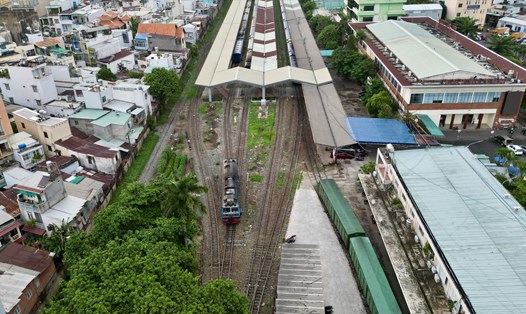
Each line a technology
On February 25, at the National Conference to thoroughly grasp and implement Resolution 79 on state economic development and Resolution 80 on Vietnamese cultural development, General Secretary To Lam pointed out that one of the major limitations of the state economy is that efficiency is not high, and position is still limited.
Notably, the General Secretary cited the example that Hanoi's elevated railway lines cannot connect with each other because each line has a different standard.
This assessment accurately touches the bottleneck that has existed for many years of the Capital's urban railway system.
According to the General Plan for Construction of Hanoi Capital to 2030, vision to 2050 (Decision No. 1259/QD-TTg dated July 26, 2011), Hanoi's urban railway network includes 8 lines, with a total length of about 318km. However, after more than a decade of implementation, only two lines have been put into operation, while the problem of system connection has not yet been solved.
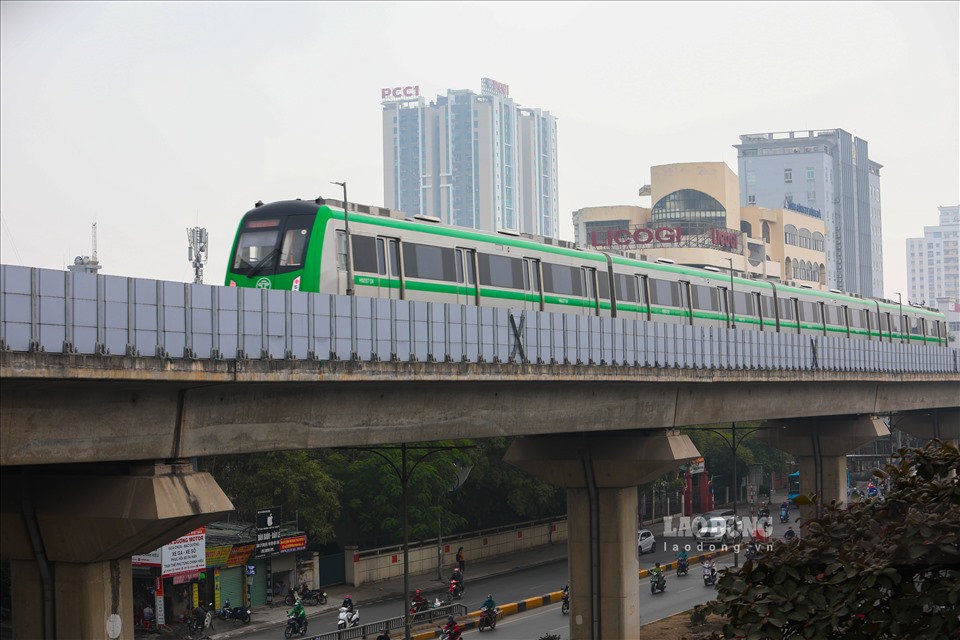
Currently, the Cat Linh - Ha Dong line (metro No. 2A) uses all technology, technical standards and equipment of China, implemented by the Chinese EPC General Contractor using ODA loans. The line was put into operation from November 2021 and is currently managed and operated by Hanoi City.
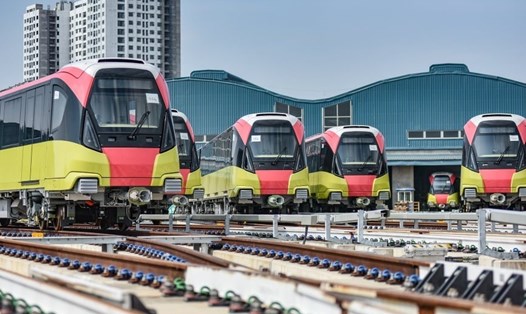
Meanwhile, the Nhon - Hanoi station line (metro No. 3) applies European/French standard technology, with trains manufactured by Alstom, CBTC signal system and continuous welding technology to reduce noise and vibration. In August 2024, the 8.5km elevated section of this line was put into commercial operation; the remaining underground section is expected to be completed in 2027.
In the near future, route No. 2, Nam Thang Long - Tran Hung Dao section, will continue to use Japanese ODA loans, with a total investment of more than 35,500 billion VND, with implementation time extended to 2031.
Thus, Hanoi alone has routes using Chinese, European and Japanese technology. This diversity makes bridge gauge, carriage size, signal systems, control, electricity, maintenance... not synchronized.
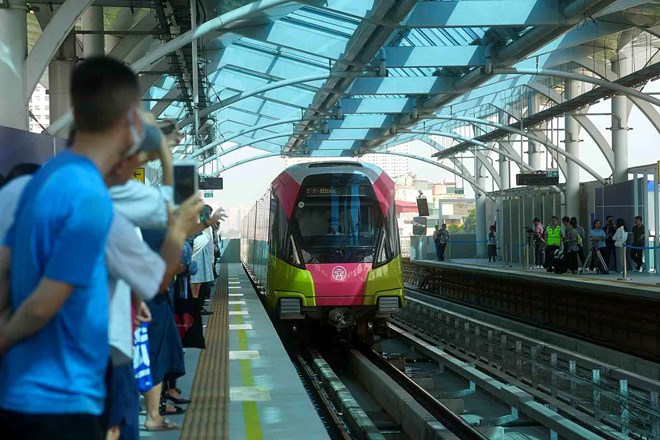
Not only deviating from technical standards
The consequences are clearly shown right in operation. Line 2A and line 3 do not have a convenient connection plan between Cat Linh station and underground station S10, even though they are only about 200–300 m apart. Passengers who want to switch routes must walk around residential areas, lacking specialized walkways.
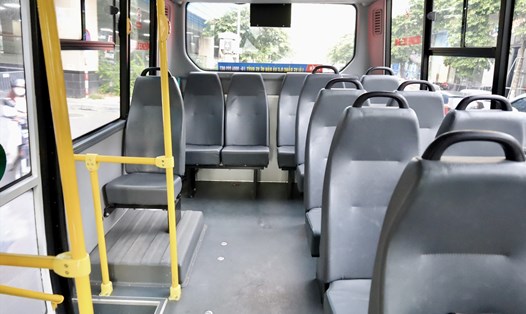
Not stopping at infrastructure, the lack of synchronization also lies in the ticket system. Currently, only route 2A uses electronic ticket cards; many bus routes still use paper tickets or stamped cards. A modern public transport system but lacks a common type of card for the entire network.
The Hanoi Urban Railway Project Management Board once pointed out that each project is bound by different sponsors, causing technology to be "framed" according to loan conditions. Hanoi and Ho Chi Minh City are investing in 5 lines, of which there are 3 technology sources from different regions.
According to experts, the deviation from standards is not only a technical issue, the core issue lies in planning and investment organization. There is overall planning, but the re-implementation according to each individual project depends on capital and funding conditions. Each route therefore becomes a technology "oasis".
According to the orientation to 2035, Hanoi must complete about 400 km of urban railway. If investment continues in the old way, the risk of "one standard for each line" will multiply exponentially.
This situation poses a requirement that in the coming time there must be a comprehensive solution to connect urban railway projects with each other and with the public transport system. Only then can investment efficiency be ensured and the pillar role of public transport in sustainable urban development is properly promoted.