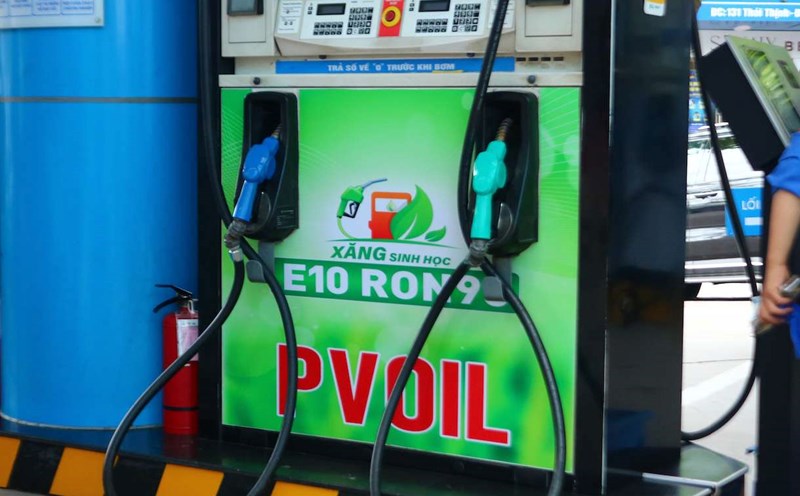
On February 26, 2026, the Prime Minister signed and issued Directive No. 07/CT-TTg on promoting the production, blending, distribution and use of biofuels in Vietnam.
Biofuel consumption is still limited
Over the past time, the implementation of Decision No. 53 of the Prime Minister on the roadmap for applying the blending ratio of biofuels with traditional fuels has been actively implemented by ministries, branches, localities and businesses. Many mechanisms and policies to support production and consumption have been promulgated; communication work has been gradually promoted, contributing to expanding the production and use of biofuels, protecting the environment, improving people's income and promoting sustainable development.
However, the current consumption level has not yet reached the set target. In some localities, consumers are still hesitant to use biofuel due to infrequent communication and lack of official information. Some key petroleum business enterprises have not implemented it decisively; inspection and supervision work is not continuous; the distribution system operates ineffectively. Tax and fee policies and financial mechanisms are not strong enough to create motivation for production and consumption.
Specific assignment of responsibilities to each ministry and sector
Directive No. 07/CT-TTg on promoting the production, mixing, distribution and use of biofuels in Vietnam requires ministries, ministerial-level agencies, and People's Committees of provinces and cities to integrate the goal of promoting the consumption of biofuels into strategies, plans, and sectoral development plans; promote communication and education to raise awareness; strengthen inter-sectoral coordination; and implement pilot programs and projects in transportation, industry and agriculture.
The Ministry of Industry and Trade is assigned to preside over the development of a detailed plan to implement the blending roadmap; ensure stable supply of biofuel to the market; manage investment in biofuel production projects; encourage businesses to develop infrastructure; inspect and supervise import, blending, mixing, distribution and business activities.
At the same time, the Ministry coordinates to develop appropriate price, tax, and fee policies; closely monitor market developments at home and abroad; develop response scenarios when there are fluctuations; promote research and upgrade E100 production technology, new generation biofuel; strengthen international cooperation and organize nationwide-scale communication. In the process of implementation, the Minister of Industry and Trade is allowed to decide to adjust the blending ratio to suit the actual situation according to his authority.
The Ministry of Finance presides over the research and completion of investment incentive mechanisms, tax, fee, and credit policies; incentives for importing equipment that is not yet produced domestically; mobilizing and allocating financial resources to develop infrastructure; monitoring the effectiveness of resource use associated with emission reduction goals.
The Ministry of Science and Technology reviews and completes the system of national standards and technical regulations related to the production, storage, blending, distribution and quality of biofuels; administrative procedure reform; promotion of research and innovation; strict inspection of measuring equipment and ensuring the ratio of blending is in accordance with regulations.
The Ministry of Construction promotes the use of biofuels in transportation; researches, tests, and evaluates efficiency on vehicles; and proposes sustainable aviation fuel development policies.
The Ministry of Agriculture and Environment develops sustainable raw material areas; promotes the production of raw materials from non-food crops, agricultural by-products and organic waste; integrates emission reduction goals into climate and circular economy strategies; strengthens environmental monitoring in the process of production, distribution and consumption...
People's Committees of provinces and cities issue plans to implement the mixing roadmap; support businesses to invest in infrastructure; inspect and supervise implementation in the area; organize communication synchronously with national orientations.
Press agencies promote propaganda and change consumption habits. The business community and industry associations proactively invest in production, blending, and distribution; ensure product quality; maintain infrastructure; prioritize consumption of E100 and domestically produced unleaded gasoline; provide information to serve management work. Research institutes and universities strengthen research, technology transfer and high-quality human resource training.
Deputy Prime Minister Bui Thanh Son was assigned to directly direct the implementation of the Directive.