
This spring is happier
Early in the morning in Ta Leng (Dien Bien), clouds still covered the foot of the hill, Ms. Sung Thi Ho pushed her motorbike to the beginning of the alley amidst the chirping of children preparing to go to class. Since the inter-communal road was completed, she jokingly said: "My village has a spring road.
She recounted that before, when going down to the district, she had to cross a few slopes, sunny days with dust, slippery rainy days, adults even fell, children going to school were even harder. “Every time I sold a bunch of vegetables, a few sacks of rice, carrying them onto the main road took a whole morning. Now the road is open, traders come to the place to buy. My daughter goes to school less worried about the sea of people, mud. Very happy” - Ms. Ho smiled, her sun-kissed hands still smelled of field soil.
Like Ms. Sung Thi Ho, many people in the highlands of Lao Cai, Lai Chau, Son La - where a series of trillion-VND inter-regional and border transport projects are forming, expressed joy as roads are gradually forming. In many construction sites, welding lights shine all night, the sound of construction machines is non-stop like the hurried breath of the mountains in a new construction season.
Mr. Hoang A Pao (in Nam Tha commune, Lao Cai province), who has been engaged in cardamom growing for more than 20 years, affirmed that the new road has truly opened up the future:
In the past, when cardamom was harvested, I was worried and didn't know if I could carry it down in time for the market. Now pickup trucks go all the way to the village, and the selling price is also better. People grow more cinnamon, sa nhan, and raise bees... Good roads, everyone wants to do bigger business. This spring is happier," Mr. Pao expressed.
Roads that open up the future for the highlands
The rugged terrain, strongly divided, was once the biggest barrier hindering the development of the Northwest. The steep slopes, winding mountain passes, and landslide points every rainy season, once paralyzed traffic day after day.
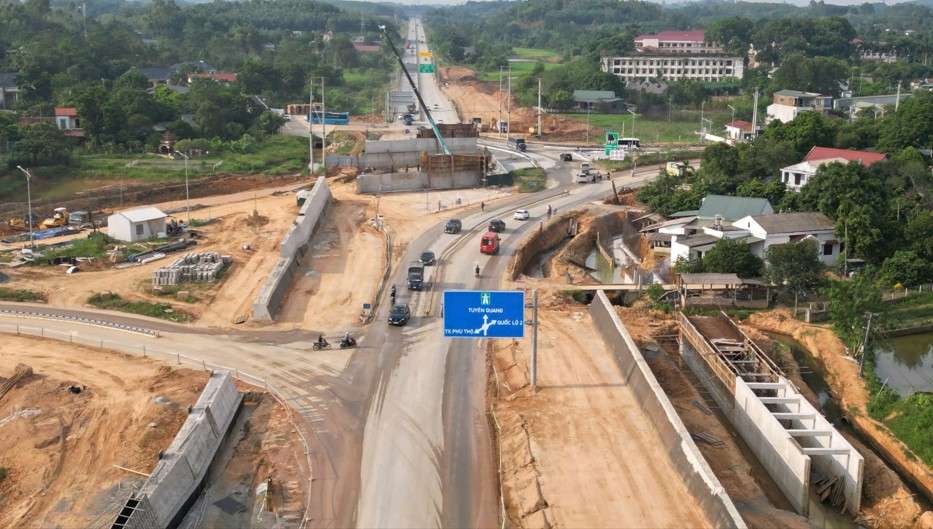
Now, a series of large projects such as the Transport Connectivity Project of Northern mountainous provinces (about 200km long); the investment project connecting transport in the Northern mountainous region with the Noi Bai - Lao Cai expressway (about 198km long). Currently, projects are being accelerated for site clearance and construction to be completed and put into use soon.
At a bridge construction site connecting two expressways, engineer Nguyen Van Kien - who has been sleeping with the project for nearly 2 years - shared: "The most difficult technique is handling weak soil foundations and constructing in erratic rainy season conditions. But every time we think about the scene where people no longer have to walk for hours through steep passes to get to the district, we have more determination. When the project is completed, the distance from the provincial center to the highland districts will be shortened by dozens of minutes, ensuring much safer conditions.
In Muong Cha (Dien Bien), the road just opened has changed people's living habits. Village teacher Lo Thi Hanh emotionally recounted: "There are days when it rains, students fall because they slip slopes, taking them down to the health station takes an hour. Now motorbikes go to class, students come to school more regularly, and parents are less worried.
Mr. Nguyen Tuan Anh - Chairman of Lao Cai Provincial People's Committee - said that transport projects are being prioritized in the direction of inter-regional connection: From highways, national highways to provincial roads and roads to poor communes and border areas. "Traffic goes first, economy follows. Newly opened roads are creating strong links for trade - tourism - agricultural products. Many businesses have surveyed investment in high-tech agriculture, ecotourism, and small logistics centers in the highlands" - Chairman of Lao Cai Provincial People's Committee said.
Not only contributing to economic development, new roads also expand social security space. With the improvement of the transportation system, it is easier to access, and many people in mountainous areas now have the opportunity to access health services, education, training, and development support. This is an important message that the project and the sponsor emphasize - connection is not just iron, but a path that opens up opportunities and equality for people, especially ethnic minorities.
Roads that open up the future for the highlands
In the border commune of Bat Xat (Lao Cai), the road along the border just formed is also a "soft shield" for national defense and security. Besides the areas where asphalt paving has been completed, many machines are being mobilized along the road to complete the construction and soon hand over the project for use.
Mr. Bui Duc Tuyen (Bat Xat commune) said: "Many sections of Provincial Road 156 have been asphalted, so we travel extremely easily and conveniently. The scenery along the Red River bank has also become neater and more airy. Therefore, people hope the project will soon complete the entire road so that traffic infrastructure is more synchronized.
Another bright spot thanks to improving transport infrastructure, community tourism also developed, helping people's lives to flourish. After infrastructure was improved, many tourist destinations such as Tua Chua, Y Ty, Mu Cang Chai, Sin Ho... recorded a sharp increase in the number of visitors. Small homestays spring up on the mountainside, young locals boldly learn tourism, open experiential services, and bring ethnic culture to friends near and far.
From Ta Leng, Nam Tha, Muong Cha villages to the valleys along the border, new roads have touched the lives of each person, each household. Wherever the road is opened, hope blossoms accordingly.
In Tuyen Quang, after the expressway passes, a series of transportation services, homestays, and agricultural startups are opened. The province said that the demand for community tourism is increasing sharply because the travel time from Hanoi is only more than 2 hours.
As Ms. Sung Thi Ho said: "With roads, everything is brighter. Poor people only need roads to go, otherwise they can take care of themselves.
Mountain roads in the Northwest are not just concrete strips stretching across hillsides. That is the new lifeline that nurtures the dream of escaping poverty, is a bridge to take children to school, bring agricultural products to the city, and bring tourists to the villages. In a place covered in clouds all year round, the new road is the light that opens the way for the future.


