
According to records, during peak hours in the morning from 7am to 10am and afternoon from 5pm to 7pm, National Highway 13, the section from Binh Phuoc overpass to Binh Trieu bridge, often experiences prolonged congestion, especially the area from Binh Phuoc overpass to Duc Nho bridge.
In the morning, thousands of motorbikes from the Binh Duong area and Thu Duc city previously flocked to the center of Ho Chi Minh City, having to weave through each empty space, moving slowly.
Local traffic jams often occur at Duc Nho bridge due to the narrow bridge deck. Just two cars running in parallel almost "cover" the bridge deck, causing traffic congestion.
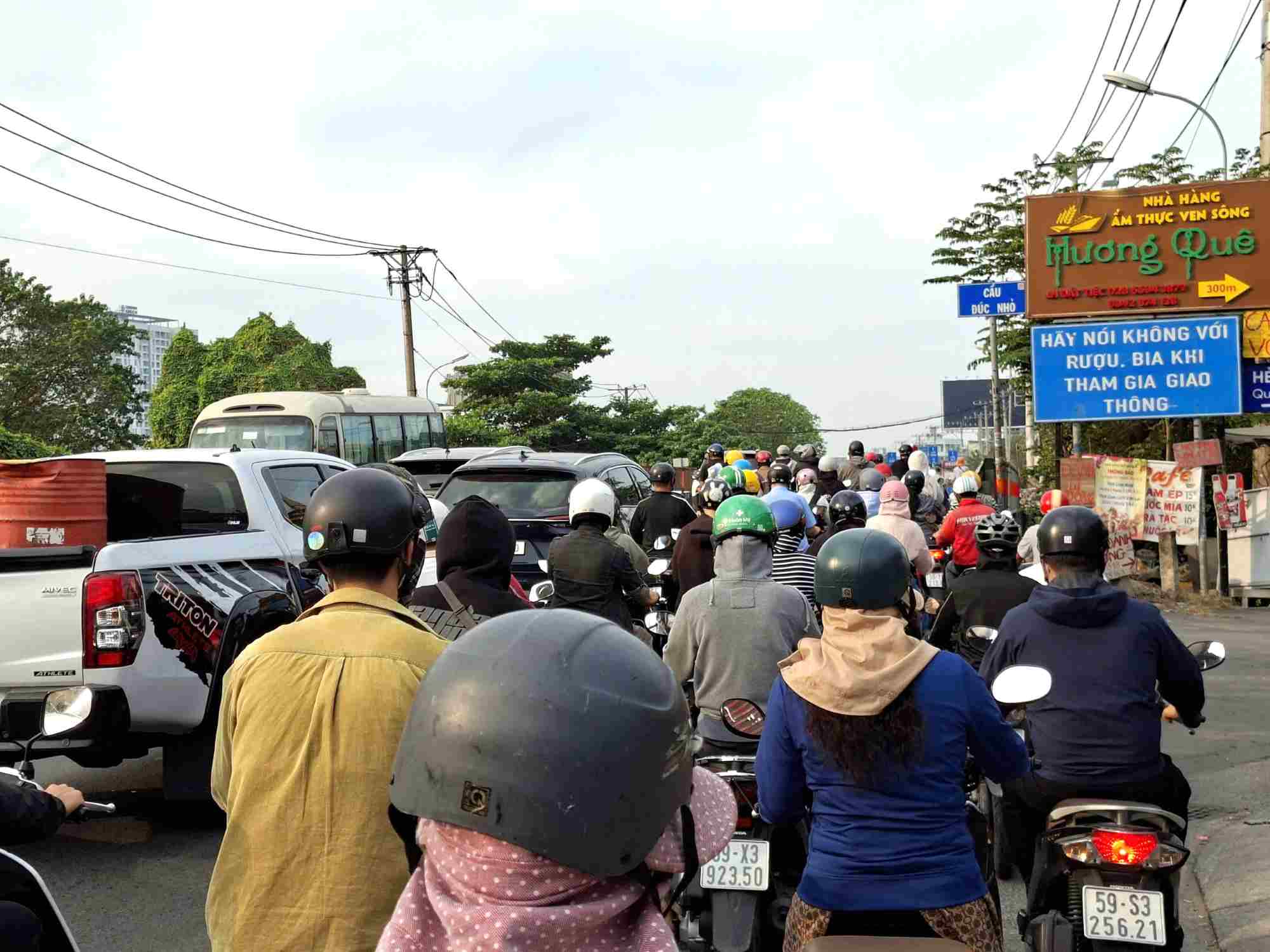
From about 9 am - the time when trucks are allowed to circulate on National Highway 13 to enter the inner city of Ho Chi Minh City to deliver goods, the congestion situation becomes even more serious.
Many days driving from Thu Dau Mot (Binh Duong) to the center of Ho Chi Minh City is only more than 20 km but takes more than 2 hours due to traffic jams" - Mr. Nguyen Van Thang (40 years old), a truck driver who regularly drives this route, said.
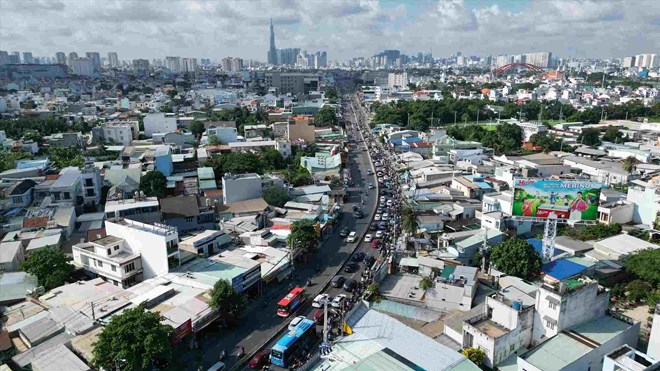
National Highway 13 is a vital traffic axis connecting Ho Chi Minh City with Binh Duong in the past and the Central Highlands provinces.
While the section through Binh Duong was previously invested and is being expanded from 6 - 8 lanes, the section through Ho Chi Minh City is currently only 4 - 6 lanes wide. This difference creates a "bottleneck", causing prolonged traffic jams for many years.
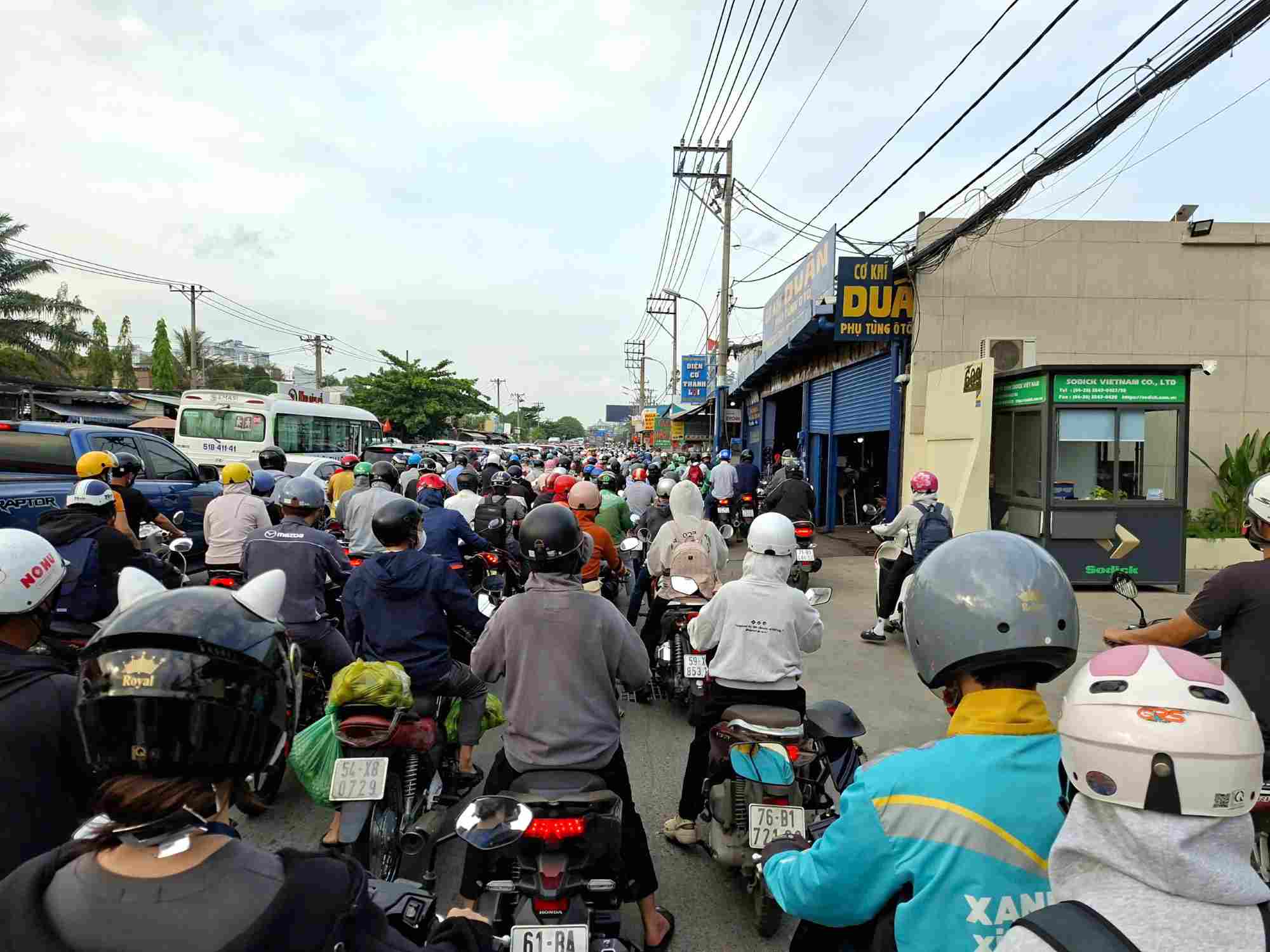
The section of National Highway 13 from Binh Trieu bridge to Binh Phuoc intersection, about 5 km long, was once part of the Binh Trieu 2 bridge and road project implemented in BOT form more than 20 years ago. However, the project was later stopped due to the BOT contract on the existing road not being continued.
After the National Assembly passed Resolution 98 in 2023, Ho Chi Minh City has a special mechanism to apply BOT form to existing infrastructure projects. National Highway 13 is one of the projects selected by the city to be implemented under this mechanism.
In February 2025, the Ho Chi Minh City People's Council approved the investment policy for the National Highway 13 expansion project with a total capital of more than 20,600 billion VND.
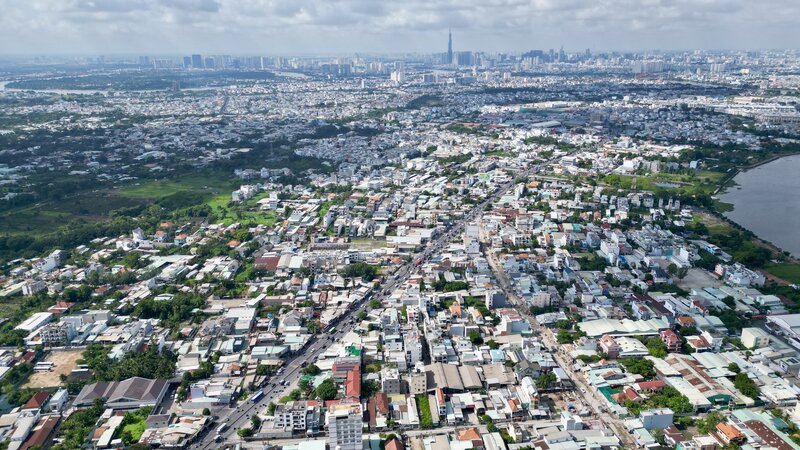
Recently, the Ho Chi Minh City Department of Construction submitted to the Ho Chi Minh City People's Committee for appraisal the feasibility study report of component project 2 to upgrade and expand National Highway 13 in the form of a BOT contract.
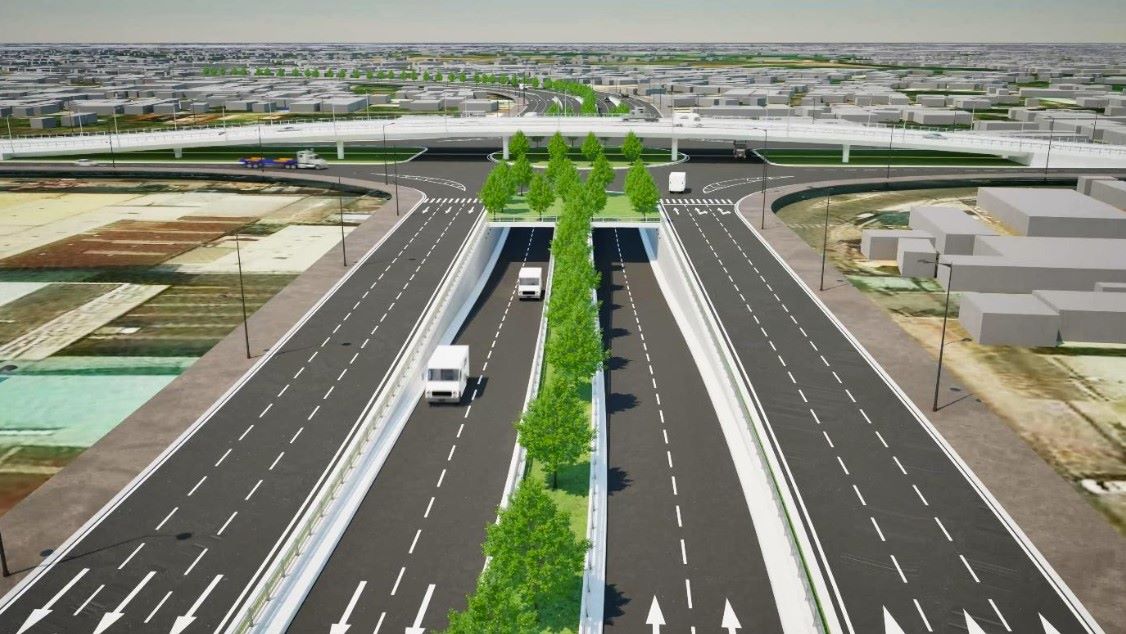
The section of National Highway 13, about 5.9 km long, will be expanded to 60 m. In which, in the middle of the route, an elevated road (overpass) about 3.55 km long with 4 lanes will be built, allowing vehicles to travel at a maximum speed of 80 km/h.
Below is a system of parallel roads with 8 - 10 lanes wide, maximum speed of 60 km/h, serving urban traffic and connecting to regional roads.
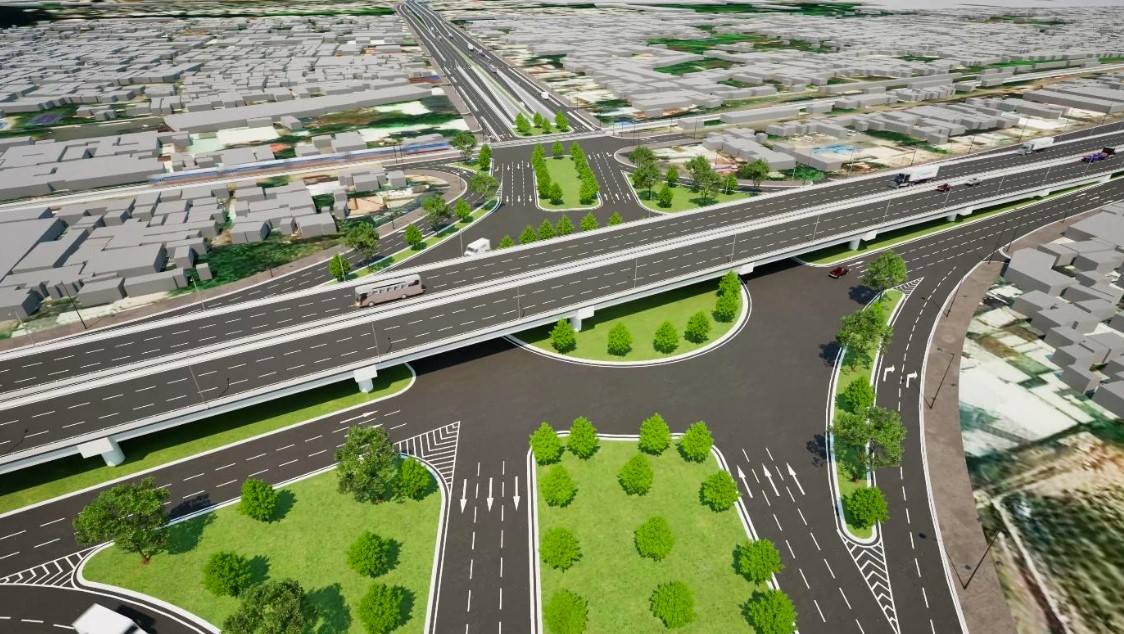
Two locations under the Binh Loi and Binh Phuoc viaducts will build two-way underpasses, with two lanes in each direction.
The two Duc Nho and Ong Dau bridges on the route will also be newly built and expanded to 8 lanes.
The total investment capital for the construction and installation part is about 6, 271 billion VND arranged by the investor. The city plans to select investors in the second quarter of this year, start construction early and complete in 2028. The toll collection time to recover capital is expected to be about 18 years and 6 months.
To have land for project implementation, the Ho Chi Minh City budget is expected to spend about 14,400 billion VND on compensation, support and resettlement.
A total of 997 households in Hiep Binh ward are affected by the project, of which 220 households must be completely cleared with about 777 people.
Currently, Hiep Binh ward is accelerating the work of compensation payment and land recovery to hand over the site for the project this year.


